
Why This Matters for Your Energy Bills
Italy's energy bills are heading higher this spring. While natural gas prices dipped 10% on Wednesday, they remain roughly 60% above February levels, and household energy costs will climb when April and May bills arrive. The reason: a geopolitical crisis in the Middle East is disrupting global gas supplies, and Italy—heavily dependent on imported liquefied natural gas (LNG)—faces the direct fallout.
Goldman Sachs forecasts an average wholesale gas price of 55 euros per megawatt-hour in April, up sharply from the 30-35 euro range earlier this year. For Italian households on variable-rate plans, this translates to noticeably higher heating and electricity charges. Industrial consumers—particularly ceramics manufacturers in Emilia-Romagna and glass makers in Veneto—face even steeper pressure on production costs.
The Price Volatility: Drop Amid Broader Increase
Italy's natural gas benchmark TTF dropped sharply on Wednesday afternoon to 48.77 euros per megawatt-hour, marking a 10.17% decline for the session. However, this technical pullback masks a much larger problem: prices surged nearly 60% earlier in the week, driven by the partial closure of the Strait of Hormuz and suspension of liquefied natural gas production in Qatar following attacks on infrastructure.
The intraday swing—which saw futures plunge as low as 46 euros before bouncing back to 48.2 euros—signals volatile trading conditions. Wholesale gas prices remain elevated at roughly 49 euros/MWh, up 60% from late February, and oil prices have stabilized around $81 per barrel, though further Gulf escalation could push Brent crude toward $100-120, amplifying transport and heating costs across Italy.
The Strait of Hormuz Bottleneck: Why This Matters to Italy
The immediate catalyst for this week's energy market chaos is the near-paralysis of shipping through the Strait of Hormuz, the narrow waterway between the Persian Gulf and the Indian Ocean. Following military exchanges between Iran, Israel, and the United States, Iran threatened to close the strait to all traffic, and major shipping insurers suspended war-risk coverage for the zone. Hundreds of tankers and LNG carriers are now anchored in Gulf waters, unable or unwilling to proceed.
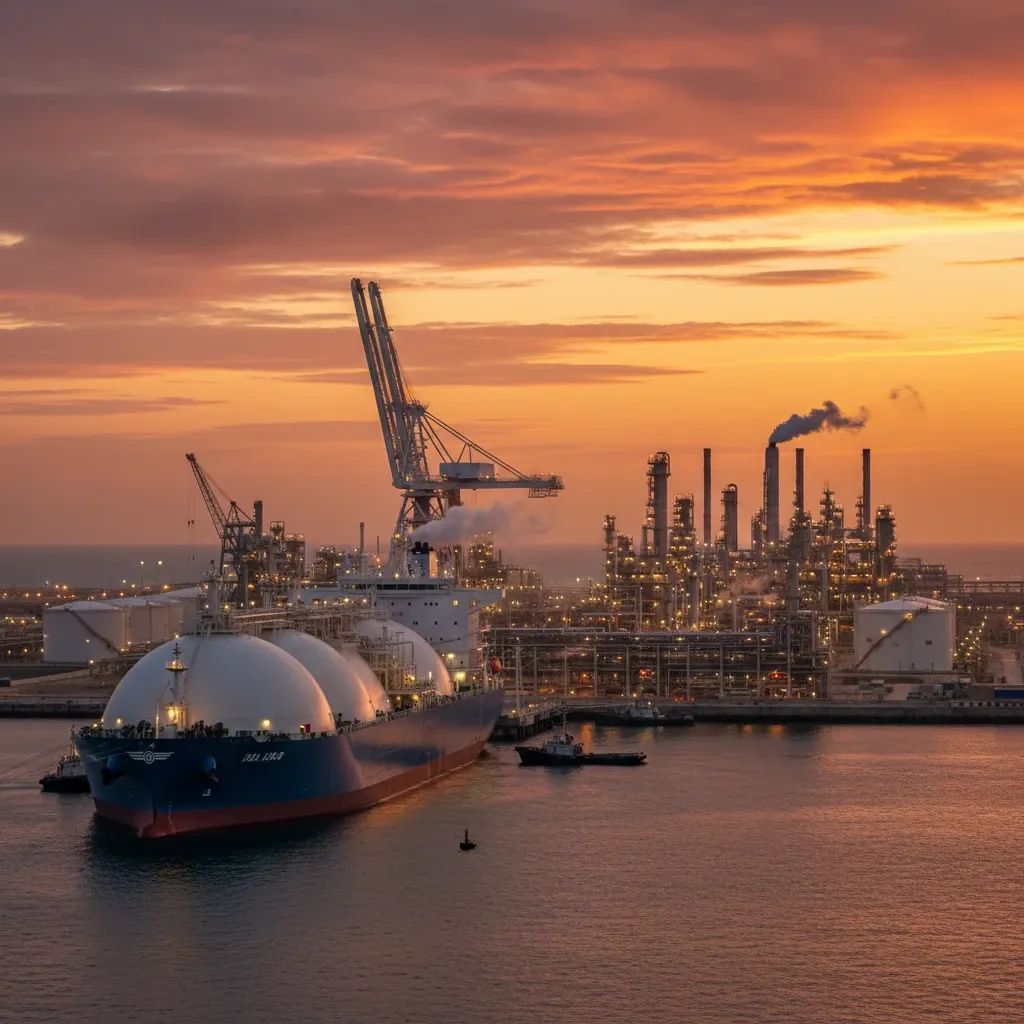
This chokepoint handles roughly one-fifth of global crude oil exports and 20-30% of worldwide LNG shipments—including massive volumes from Qatar, the world's largest LNG exporter. For Italy, this is a direct supply threat. The country imported significant LNG cargoes in 2025 to replace Russian pipeline gas, and Italy's regasification terminals at Piombino, Livorno, and Rovigo rely heavily on spot and short-term contracts sourcing molecules from the Gulf. A sustained blockade could force European TTF prices toward 74 euros/MWh (one-month closure) or even 100 euros/MWh (two-month closure), triggering energy-intensive industries to curtail production.
Qatar's Production Halt Compounds Supply Crunch
Adding to the supply shock, QatarEnergy suspended all LNG production at its flagship facilities following infrastructure attacks in early March. Qatar represents approximately 20% of global LNG export capacity, and the halt removes millions of cubic meters per day from spot markets precisely when Europe is most vulnerable.
European gas storage levels at the start of March 2026 were below year-ago comparables, leaving less cushion to absorb supply shocks. The European Commission's autumn 2025 forecast had anticipated a 16% year-on-year decline in gas prices for 2026, premised on ample LNG availability. That scenario has been upended by Middle Eastern geopolitics and infrastructure attacks, forcing a painful recalibration of forward curves. The Italy Virtual Trading Point (PSV), the national gas pricing benchmark, has mirrored the international rally, complicating hedging strategies for Italian utilities and industrial buyers.
What This Means for Italian Households and Businesses
For households, the immediate impact will manifest in the next billing cycle. Retail electricity and gas tariffs are indexed to wholesale benchmarks with a lag of roughly one to two months, meaning the mid-March spike in prices will flow through to April and May bills. The Italian government's energy subsidy schemes, scaled back in late 2025 as prices normalized, may face renewed pressure to intervene if wholesale costs remain elevated into the second quarter.
For industrial consumers, the exposure is more acute. Factories operating on variable-rate contracts or short-term hedges will see input costs rise sharply, squeezing margins in already-sluggish sectors across the Eurozone. The ceramics and glass industries, both reliant on natural gas, have historically been sensitive to energy price swings and may reduce output if costs remain prohibitive.
Transport fuel costs are also climbing. Brent crude has steadied around $81 per barrel on Wednesday, up from roughly $72 before the crisis escalated. Diesel and gasoline prices at Italian pumps typically follow crude with a two-week lag, and refiners are already signaling pass-through increases. If Brent breaches $100—a scenario Goldman Sachs views as plausible under sustained Gulf disruption—expect diesel to exceed €1.80 per liter at highway stations, with knock-on effects for freight and logistics.
Italy's LNG Dependency: A Strategic Vulnerability
Italy's pivot away from Russian pipeline gas has been executed largely through increased LNG imports, with the United States emerging as the dominant supplier. By 2026, estimates suggest the US could account for 75-80% of European Union LNG imports and 40% of total gas supply. While this diversification reduced reliance on Moscow, it has created a new dependency on American export terminals and Atlantic shipping lanes.
The current crisis underscores the vulnerability of this model. LNG is inherently more volatile than pipeline gas due to its spot-market orientation and higher logistical complexity. Italian buyers who locked in long-term US contracts have fared better, but a significant portion of import capacity is exposed to fluctuating spot prices. With new US export terminals like Magnolia LNG slated to come online in 2026, the medium-term outlook for supply is constructive—but the Hormuz crisis demonstrates how quickly geopolitical events can cascade through globalized energy markets.
What Happens Next: Outlook and Risk Scenarios
Market participants are bracing for continued volatility. Implied volatility on TTF futures has reached its highest level since summer 2023, indicating traders are pricing in a wide range of possible outcomes. The Italian PSV index is expected to track international benchmarks closely, with April projections clustering around 50-55 euros/MWh absent further escalation.
Key variables to monitor include:
• Diplomatic efforts to reopen Hormuz: Any thaw in US-Iran tensions or security guarantees for commercial shipping could rapidly ease the risk premium, potentially bringing gas prices back toward 40 euros/MWh.
• Qatari production restart: QatarEnergy has not provided a timeline for resuming operations, but a swift return could stabilize global LNG balances within weeks.
• European demand response: Warmer-than-normal spring weather or industrial curtailment could moderate upward pressure on prices.
For now, Italy's energy-dependent sectors should prepare for a sustained period of elevated input costs. The government's Ministry of Ecological Transition has signaled readiness to expedite permitting for additional LNG regasification capacity and to accelerate renewable deployment, but such measures will take months to materialize. In the near term, the best hedge remains demand flexibility and strategic inventory management.


