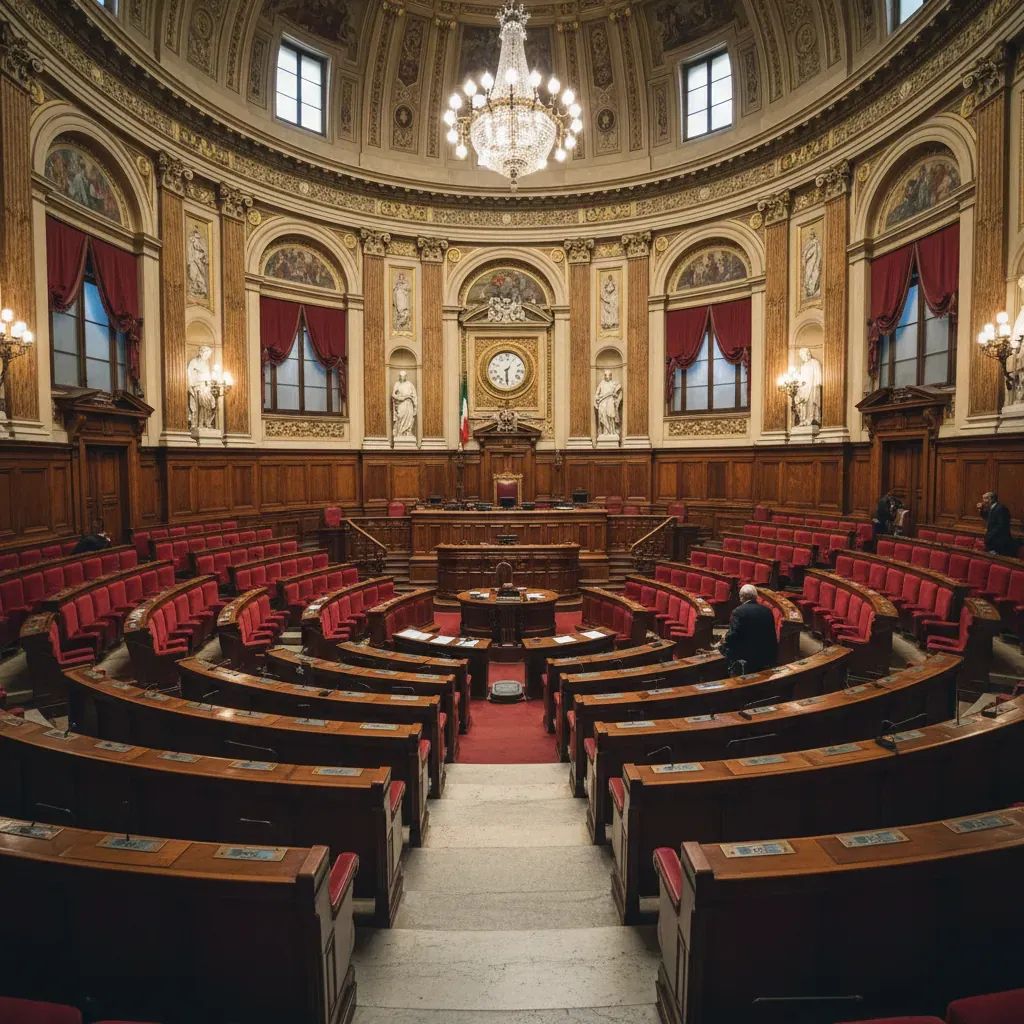
Genova's Albaro district faced unexpected street closures and a security lockdown on Saturday, July 11, 2026, after police relocated a controversial political rally hours before it began. Roberto Vannacci, leader of Futuro Nazionale, addressed over 600 supporters in Piazza Leopardi that evening, while approximately 100 counter-demonstrators assembled nearby under heavy law enforcement presence. The event, originally scheduled for Via Cesarea, was moved due to security concerns raised by the Genova Police Headquarters — leaving residents, merchants, and local officials scrambling to adjust.
Why This Matters:
• Unexpected disruption: Albaro residents and business owners received little notice before their neighborhood became a heavily fortified security zone on a busy summer Saturday
• Public order protocols: Major political events now routinely trigger venue changes and extensive police deployment in Italian cities
• Constitutional tensions: The rally highlights Italy's ongoing debate over free speech boundaries and anti-fascist constitutional values
Security Apparatus Transforms Quiet Residential Quarter
Genova's law enforcement cordoned off the entire Piazza Leopardi area beginning early Saturday morning, creating what local media described as a "blindata" — a fortified zone. Officers established barricades along every access route to the square, deployed police vehicles to physically block streets, and instituted no-parking orders that took effect Friday evening.
The Genova Police Headquarters had conducted preliminary reconnaissance sweeps on Friday night, laying groundwork for a security operation designed to keep opposing groups physically separated. Attendees entering the rally zone passed through checkpoints, while counter-protesters were confined to Via Albaro, mere meters from the main event but isolated by police lines.
The venue switch itself became a point of controversy. The Medio Levante Municipal Council (Municipio VIII Medio Levante), representing the Albaro neighborhood at the district level, publicly stated it had received no advance consultation about hosting a high-security political event in a predominantly residential and commercial area. Local business owners voiced frustration over the sudden street closures and parking restrictions during weekend trading hours — typically a peak time for Saturday shopping. Streets remained cordoned until approximately 20:00 Saturday evening, significantly disrupting weekend commerce. The lack of advance notice meant businesses couldn't adjust operations or warn regular customers of the closures.
Multiple Counter-Protests Split Along Tactical Lines
Opposition to Vannacci's appearance fractured into two distinct demonstrations. The Italian National Partisan Association (ANPI) and CGIL trade union, joined by members of the Democratic Party, maintained their originally planned gathering at Via Cesarea — the rally's first announced location. This group chose not to relocate when Vannacci's event moved.
Meanwhile, the Genova Antifascista collective shifted its mobilization to Via Albaro, determined to position itself near the actual rally site. Their approximately 100 participants chanted slogans including "Genova è solo antifascista" (Genova is only anti-fascist), framing their action as defense of the city's identity. Genova holds official recognition as a Gold Medal City of the Resistance for its role in partisan actions during World War II — a designation that carries deep meaning for residents.
Protest organizers characterized Vannacci's platform as propagating "homophobic, racist, and nationalist propaganda," citing his public positions on immigration policy, disability inclusion in schools, and what they termed his "remigrazione" proposal. Some demonstrators specifically referenced Vannacci's April 2026 podcast remarks in which he called the Constitution's anti-fascist foundation "a left-wing mantra" and "a hoax" — statements that particularly resonated in a city that had fought fascism at such cost.
What This Means for Italian Cities Hosting Political Events
Urban centers across Italy face mounting pressure to balance freedom of assembly with public safety when polarizing political figures schedule appearances. Genova's experience mirrors recent patterns in Florence, Imperia, and Chieri, where Vannacci's tour stops in spring and early summer 2026 triggered similar security deployments and counter-mobilizations.
For municipal governments, the calculus involves legal obligations to permit lawful gatherings while preventing violence. The Italian Constitution guarantees assembly rights under Article 17, but grants authorities power to intervene when public safety concerns arise. Genova's decision to relocate rather than cancel the rally reflects this legal framework, though the exclusion of district-level officials from the decision process raises governance questions about how cities communicate with their communities during security emergencies.
Commercial districts bear real economic costs when security operations close streets and limit customer access. Albaro's merchants faced revenue disruption on a summer Saturday — typically a high-traffic period. The lack of advance notice compounded frustration, leaving businesses unable to adjust operations or warn regular customers.
A Sensitive Nerve in Italian Politics
The rally touched something deeper than routine political disagreement. Italy's 1948 Constitution emerged from anti-fascist resistance, and Genova itself holds the title "Gold Medal City of the Resistance" for its World War II partisan actions. When Vannacci called anti-fascism "a left-wing mantra" in April, he challenged values many Genovese residents see as core to their city's identity and post-war history.
Legal scholars debate whether movements that echo fascist-era rhetoric without explicitly invoking Mussolini's party structure violate the Twelfth Transitional Provision, which prohibits fascist party reconstitution. Italian courts have historically applied narrow interpretations, permitting nationalist parties while banning only direct organizational successors to the original Fascist Party. Whether Vannacci's Futuro Nazionale falls within democratic norms or tests their boundaries remains contested.
For Genova's residents, Saturday's events posed practical questions beyond constitutional theory. The locked-down Albaro district, separated protest zones, and delayed political speech all demonstrated how abstract legal principles translate into concrete disruptions of daily urban life.
Vannacci's Liguria Tour Concludes Amid Heightened Scrutiny
The Genova rally marked the final stop of Vannacci's three-day Liguria regional tour, which included appearances in Riva Ligure, Sanremo, and Imperia. At each location, local anti-fascist coalitions organized protests, though Genova drew the largest counter-demonstration and most extensive police response.
During his Saturday address, which began roughly one hour behind schedule at 18:30 instead of the planned 17:30 start, Vannacci emphasized themes of immigration control and what he terms "remigrazione" — a concept his critics interpret as mass deportation of foreign-born residents. He also addressed security concerns, attributing the fortified venue to what he characterized as threats from opponents to "set the city ablaze."
The event's delay stemmed from logistical complications following the venue change, including the need to redirect attendees and reconfigure sound equipment in Piazza Leopardi. Despite the disruption, organizers reported attendance exceeding 600 people, suggesting Vannacci's movement retains mobilization capacity even under contentious circumstances.
The Genova Police Headquarters reported no arrests or injuries from Saturday's events, suggesting the security strategy achieved its immediate objective of preventing violence. Whether such intensive policing represents a sustainable approach to managing political polarization remains an open question for Italy's law enforcement and municipal authorities. As Vannacci's political presence grows — his movement opened a permanent Florence office in March 2026 amid similar protests — Italian cities may face recurring choices between permitting controversial assembly and managing the public order consequences.