
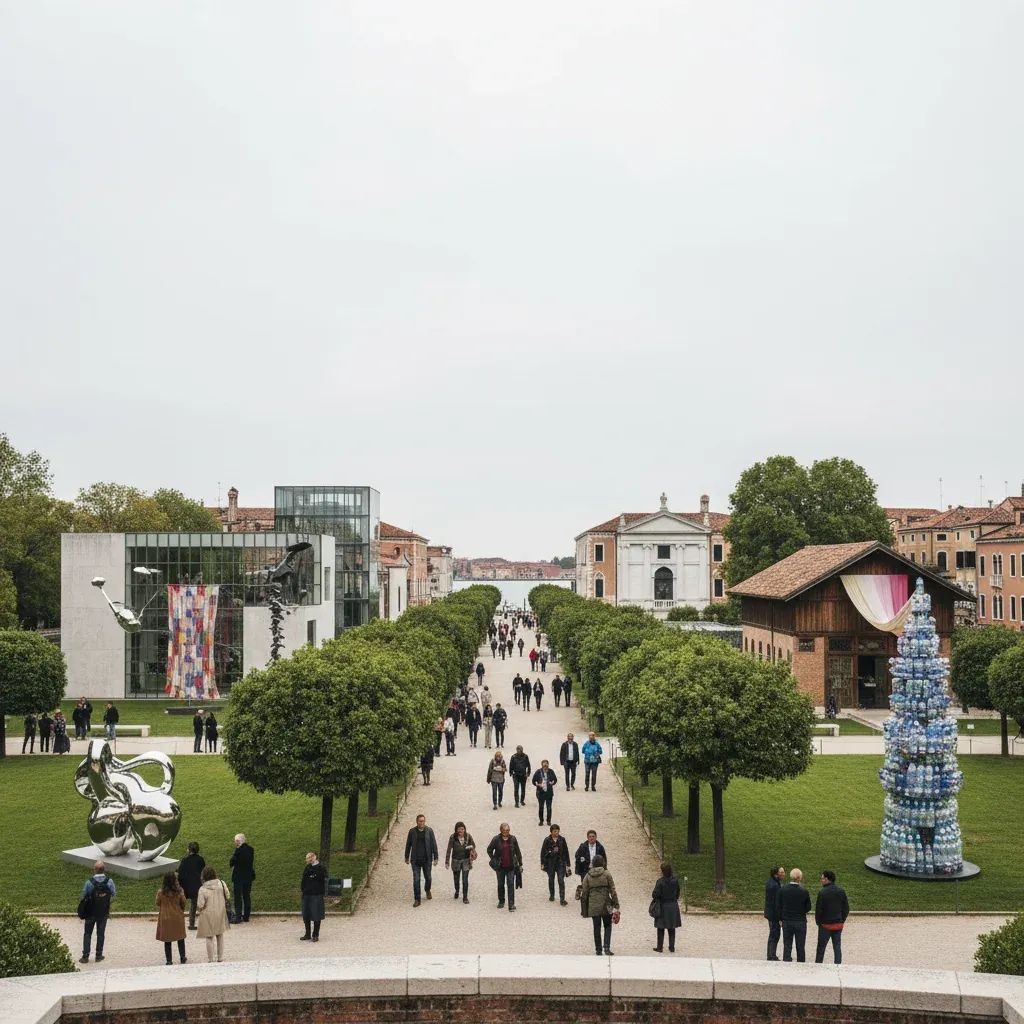
The Venice Biennale is preparing to challenge the European Commission's recommendation to cut €2M in funding tied to the reopening of the Russian pavilion at the 2026 Art Biennale, setting up a clash between cultural autonomy and EU values enforcement that will test Italy's position on sanctions compliance.
Why This Matters
• Financial impact: €2M earmarked for 2026-2028 audiovisual and immersive tech programs now in jeopardy
• Political friction: Italian officials, including the Lega party, have signaled potential state funding to replace EU contribution
• Cultural precedent: The dispute spotlights tension between artistic freedom and political alignment in EU-funded institutions
• Broader implications: For Venice residents, tourism patterns and local economic activity tied to the Biennale face uncertainty; for Italy's cultural sector nationally, the case may determine whether EU funders can impose conditions beyond traditional grant compliance
The Commission's Case Against the Biennale
On July 11, EU Executive Vice President Henna Virkkunen announced via social media that the Commission had officially recommended the European Education and Culture Executive Agency (EACEA) terminate its €2M grant to the Venice Biennale. The funding was allocated under the EU's Creative Europe program, specifically targeting audiovisual content development and immersive technology initiatives designed to strengthen European cultural innovation in digital formats.
The move follows what Brussels described as an "in-depth assessment" of the Biennale's justifications for reopening the Russian pavilion, which had been closed for the 2022 and 2024 editions following Russia's invasion of Ukraine.
Virkkunen framed the decision in values-driven terms: EU taxpayer money for culture must "promote and safeguard democratic values" that are not respected in present-day Russia. The Commission maintains that hosting the Russian pavilion contradicts the spirit of European sanctions against Moscow and risks turning cultural platforms into propaganda channels.
The funding in question was allocated under EU programs for audiovisual initiatives and immersive technology development—projects the Biennale insists represent only a marginal share of its total budget. According to EU officials, not a single euro of the grant had been disbursed when the formal suspension letter was sent to the Biennale in April.
Venice Fights Back on Procedural Grounds
In a terse statement released shortly after Virkkunen's announcement, the Fondazione La Biennale di Venezia signaled it learned of the decision through political channels on social media rather than via formal technical communication from the EACEA. The foundation stressed it had responded within the required timeline to all three official letters from the agency and is now awaiting a formal technical note before deciding on next steps.
The Biennale made clear it intends to "assert its reasons in all competent venues," language that suggests potential legal or administrative appeals. The institution has consistently argued that it acted within national and international law and within its own institutional mandate, positioning the dispute as a matter of cultural independence versus Brussels' policy directives.
Critically, the foundation emphasized that the affected programs will continue regardless of the EU funding decision, underscoring that the €2M represents a small fraction of its overall operating capital. This assertion aims to mitigate concerns that the funding cut will derail programming or damage Venice's reputation as a global cultural hub.
Political Reactions in Italy
The Commission's intervention has ignited a sharp political response in Italy. Deputy Prime Minister Matteo Salvini, leader of the Lega party, declared that "culture does not bow to Brussels' diktats" and pledged to push the Italian government to replace any EU funds that are withdrawn. This rhetoric frames the dispute as an overreach by European institutions into Italy's sovereign cultural sphere. While such language reflects domestic political tensions, EU officials maintain their decision follows standard grant compliance procedures established when funds are awarded.
Veneto Region President Luca Zaia escalated the tone further, calling the EU's move "an unprecedented act of institutional arrogance and hostility." Zaia urged Italian institutions at all levels to rally behind the Biennale, casting the funding threat as an affront to Italian cultural prestige. Again, EU representatives counter that cultural funding decisions apply uniform standards across all member states and do not constitute exceptional treatment.
These reactions reflect broader political tensions in Italy over EU authority, particularly on issues where national sovereignty and European policy intersect. The Biennale dispute provides a convenient flashpoint for parties skeptical of Brussels to assert Italy's autonomy while tapping into nationalist sentiment around one of the country's most prestigious cultural institutions.
What This Means for Residents and Cultural Stakeholders
For Venice residents and local businesses, the funding row introduces real economic uncertainty. The Biennale attracts hundreds of thousands of international visitors annually, generating tourism revenue for hotels, restaurants, and transport services. While the Biennale insists the €2M cut will not compromise core programming, any prolonged legal or political battle risks distracting management and potentially reducing the scale or ambition of exhibitions that drive visitor numbers.
For Italy's broader cultural sector, this case carries significant implications. Institutions like La Scala opera house in Milan, the Uffizi Gallery in Florence, and regional museums across the country receive EU cultural funding. If the Commission establishes a precedent of revoking grants based on political or foreign policy alignment—beyond traditional grant compliance measures—many Italian cultural institutions may face similar scrutiny. This could affect how European funding is allocated to Italian heritage sites and contemporary arts programs, ultimately reducing available resources for cultural development nationwide.
From a fiscal perspective, if the Italian government steps in with replacement funding as the Lega suggests, taxpayers may ultimately shoulder costs previously covered by Brussels—approximately €667,000 annually for 2026-2028. This raises questions about budget reallocation at a time when Italy faces competing public spending priorities in healthcare, education, and infrastructure.
The dispute also sets a precedent for EU cultural funding conditionality. If the Commission succeeds in leveraging grants to enforce political alignment on sanctions and values, other Italian cultural institutions receiving EU money may face similar scrutiny over programming choices deemed inconsistent with Brussels' policy objectives. For residents invested in Italy's cultural prestige and international standing, the outcome of this case will signal whether European cultural cooperation depends primarily on artistic merit or increasingly on geopolitical conformity.
The Russian Pavilion Context
The Russian national pavilion at the Venice Biennale has been a flashpoint since the February 2022 invasion of Ukraine. That year, both Russian artists and international curators withdrew from the pavilion in protest, and it remained shuttered through the 2024 edition. The decision by Biennale President Pietrangelo Buttafuoco to reopen the space for 2026 was framed internally as a return to normal programming and respect for the Biennale's historically apolitical stance.
However, the EU views the move differently. Brussels argues that reopening the pavilion during active sanctions against Russia sends a contradictory signal and potentially violates the spirit if not the letter of EU restrictions on cultural and economic engagement with Moscow. The Commission's position is that cultural diplomacy cannot be divorced from geopolitical realities when public funds are involved.
What Happens Next
The EACEA now holds the administrative authority to formally revoke the grant based on the Commission's recommendation. While the Commission's guidance is highly influential, the final decision rests with the agency's technical process. The Biennale has indicated it is waiting for that formal determination before pursuing any appeals or legal remedies.
Should the funding be definitively withdrawn, the Biennale has multiple avenues to contest the decision, including administrative review within EU bodies and potentially legal action in European courts on grounds of procedural fairness or cultural autonomy. Italian government intervention—either through direct funding replacement or diplomatic pressure—could also shift the calculus.
For now, the affected programs continue. The Biennale's 60th International Art Exhibition, scheduled for 2026, remains on track. But the dispute underscores a growing friction between Italy's cultural institutions and EU oversight mechanisms, particularly when cultural expression intersects with foreign policy and values enforcement. How this case resolves may set the tone for future EU-Italy cultural cooperation and the boundaries of Brussels' influence over member state institutions.


