
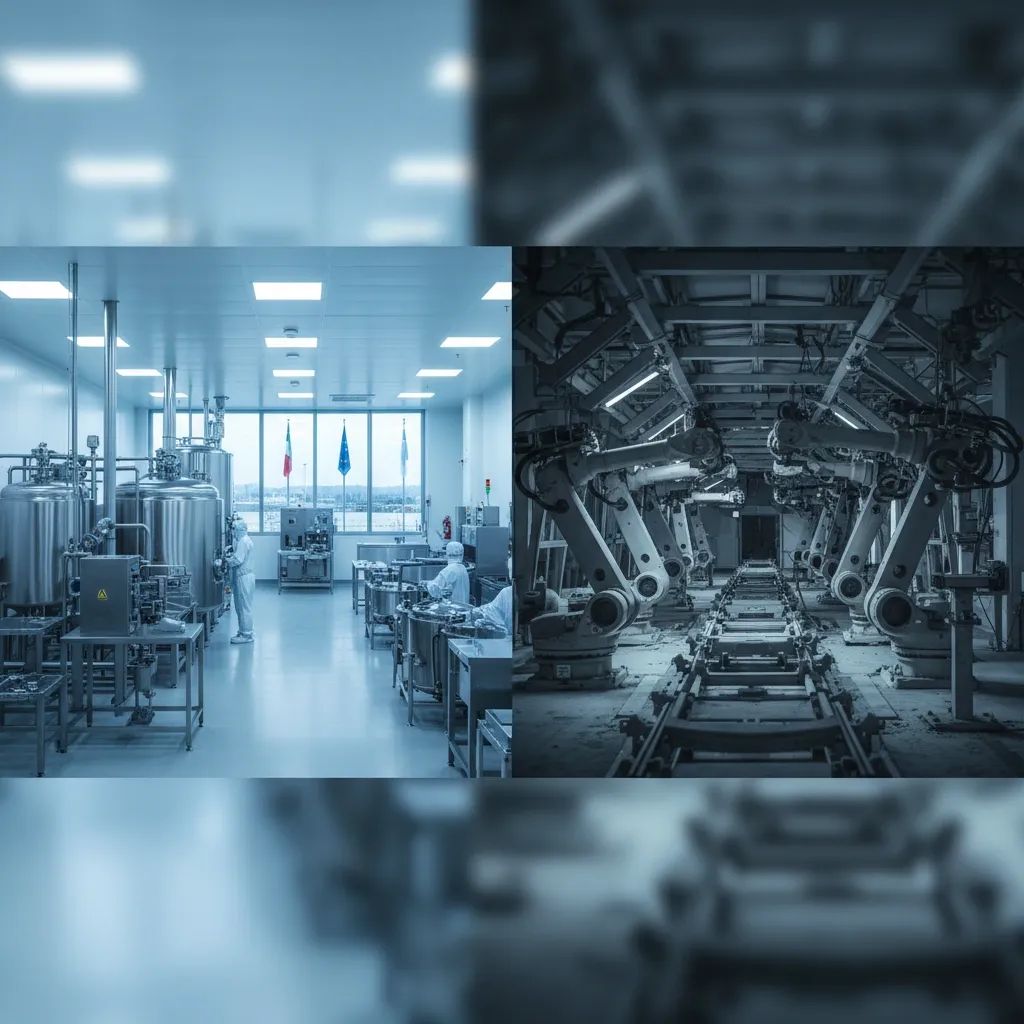
Emma Marcegaglia, steel magnate and former Confindustria president, warned at the Festival of Economics in Trento that Europe's manufacturing base is shrinking at an alarming pace, requiring immediate political intervention. She emphasized that strategic choices made now will determine whether Europe arrests its decline or continues losing ground to competitors in Asia and North America.
The Core Problem
Speaking alongside former Italian Prime Minister Enrico Letta, Marcegaglia diagnosed a fundamental weakness: Europe has become a regulatory authority rather than an economic powerhouse. Businesses face crippling uncertainty, particularly around energy costs, which remain structurally higher than in the United States. The continent's dependence on imported gas, oil, and critical raw materials—many controlled by China—leaves manufacturers exposed to geopolitical shocks.
Italy's manufacturing sector has contracted significantly over recent decades and faces ongoing challenges. The country's industrial base, particularly in automotive and traditional manufacturing, continues to experience pressure from global competition and high energy costs. Meanwhile, sectors like pharmaceuticals and electrotechnical industries show more resilience, though geographic and skills-based barriers complicate workforce transitions.
Letta's Vision for European Independence
Marcegaglia's appearance alongside Letta reflected alignment on a broader strategic agenda. Letta's "Declaration of Independence for Europe" calls for the continent to transform from a mere economic zone into a unified strategic actor. His framework proposes deeper integration across energy, connectivity, financial markets, and defense—building on the success of the single currency.
The vision emphasizes that Europe must assume greater responsibility for its own security and economic policy while remaining open to international engagement. Marcegaglia explicitly warned against isolation: "A declaration of independence is important as a political concept, but connections must remain and strengthen. We cannot close ourselves off. If all economies shut down, we move toward impoverishment."
What This Means for Residents
For those living in Italy, the debate over deindustrialization translates into immediate economic consequences. Energy costs remain a critical pressure point for Italian manufacturers, affecting profitability and reinvestment capacity. The geographic concentration of manufacturing in northern regions means that industrial decline has uneven impacts across the country.
The jobs picture is complex. While traditional sectors like automotive face headwinds, other industries offer opportunities. However, displaced workers often lack the skills or geographic mobility to transition to growing sectors. Youth unemployment remains a concern, particularly in regions dependent on manufacturing.
A Call to Young Italians
Marcegaglia directly appealed to younger generations at the Trento festival, urging them to become active participants in European integration debates. She emphasized that young people will inherit the consequences of today's policy choices and called on them to support politicians committed to deeper European coordination and oppose those favoring institutional inertia.
"With your strength, many things can change," she told the audience, recognizing that youth political engagement could influence the direction of European industrial and integration policy.
The Path Forward
Marcegaglia's position represents a pragmatic industrial perspective: Europe needs both openness and strategic autonomy. She rejects protectionism but insists that current trajectories are unsustainable without policy action on energy, regulatory simplification, and treating manufacturing as a strategic priority.
The discussion at the Trento festival captured a moment of recognition among European leaders that the status quo requires reassessment. Whether this recognition translates into coordinated policy action across EU member states remains uncertain. What is clear is that the coming years will be critical in determining Europe's long-term economic trajectory.


