
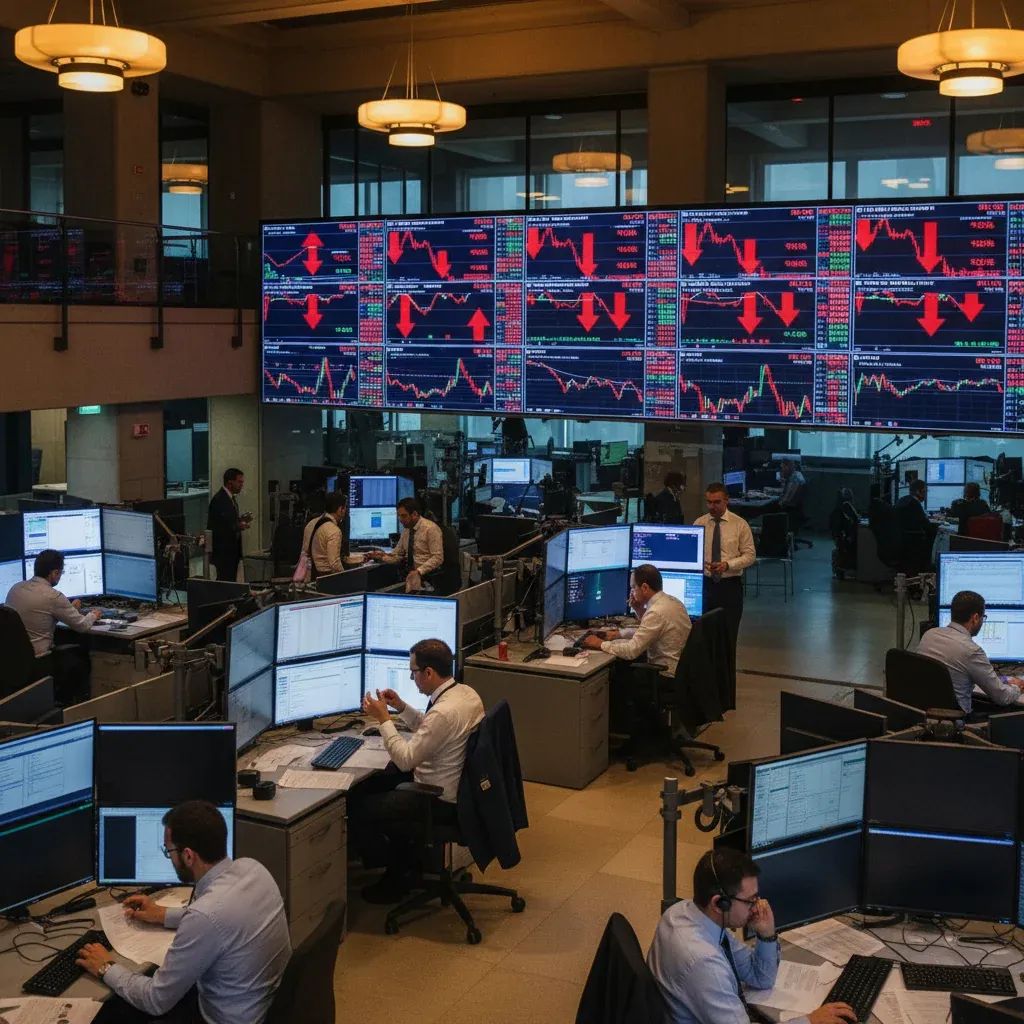
European stock markets surged to close the week on a decisively upbeat note, with Germany's DAX climbing 2.27% and Italy's FTSE MIB advancing 0.75%, as diplomatic progress between Washington and Tehran—and the full reopening of the Strait of Hormuz—unleashed a wave of investor confidence across the continent.
Why This Matters
• Energy Relief: The reopening of the Strait of Hormuz has sent oil and gas prices tumbling, easing inflation fears and cutting costs for European households and businesses.
• Market Momentum: Italian banks Mediobanca and Montepaschi surged over 2.5% each, fueled by merger speculation and fresh shareholder mandates.
• Sectoral Divergence: Utilities and energy majors stumbled as Barclays and other analysts flagged EU plans to slash system charges, threatening revenue predictability.
Germany Leads the Charge, London Lags
The Frankfurt Stock Exchange closed at the top of the European leaderboard, with the DAX index jumping 2.27% to 24,702 points. Paris followed closely, with the CAC 40 rising 1.97% to 8,425 points. London's FTSE 100 trailed with a modest 0.73% gain to 10,667 points, reflecting the UK's continued caution amid domestic political debates over energy pricing reforms.
The rally was anchored by geopolitical de-escalation. Negotiators in Washington and Tehran, with Pakistan serving as mediator, have made headway on issues ranging from Iran's nuclear program to war reparations. Reports suggest the U.S. has floated a $20 billion package in exchange for Iran abandoning enriched uranium stockpiles—a proposal that, if finalized, could reshape Middle Eastern security dynamics for years.
Most critically, Iran announced the complete reopening of the Strait of Hormuz to commercial shipping, a move confirmed by U.S. President Donald Trump. The strait, which funnels roughly 20% of global oil supplies, had been partially blockaded since late February 2026 following joint U.S.-Israeli strikes on Iranian facilities. The closure sent Brent crude soaring above $82 per barrel and triggered a 140% spike in Asian spot LNG prices. The reversal has now unwound much of that panic premium, with oil prices retreating and European gas futures cooling.
Italian Equities Extend Gains Amid Banking Euphoria
The Italy FTSE MIB climbed 0.75% to 48,386 points by midday, outperforming several regional peers. The BTP-Bund spread—a key gauge of Italy's sovereign risk—narrowed to 77 basis points, with Italian 10-year yields falling 0.9 points to 3.79% and German equivalents dipping 0.3 points to 3.02%. This tightening reflects growing confidence in Italy's fiscal trajectory and the broader eurozone's resilience.
Mediobanca led the charge with a 3.26% jump, while Montepaschi (MPS) added 2.7%. Both banks were in focus just days after their respective shareholder meetings. On April 15, MPS convened an assembly that reappointed Luigi Lovaglio as CEO for the 2026-2028 term, a dramatic reversal after he had been excluded from the outgoing board. Lovaglio's slate secured 49.9% of votes, backed by Banco BPM and Delfin, the holding company of the late Leonardo Del Vecchio's heirs.
The spotlight, however, is on the proposed merger between MPS and Mediobanca, approved by both boards on March 10, 2026. Under the terms, MPS will issue up to €1.6 billion in new shares and offer Mediobanca investors 2.45 MPS shares for every Mediobanca share held—a 3% premium to the March 10 market price. The combined entity is expected to generate €700 M in synergies. Post-merger, Delfin would hold 16.1% of the enlarged MPS, Caltagirone 9.4%, the Italy Ministry of Economy and Finance (MEF) 4.5%, and Banco BPM 3.4%.
Mediobanca's April 14 assembly approved a €0.63 per share dividend (payable from April 22) and revised full-year 2026 guidance upward, projecting revenues near €4 billion and net profit exceeding €1.4 billion. Speculation is mounting that MPS, which now controls 86.35% of Mediobanca following a public tender offer, may pursue a delisting to accelerate integration and unlock cost savings.
Ferrari and Stellantis Power Industrials Higher
Ferrari accelerated 2.3%, buoyed by strong order books and resilient demand for ultra-luxury vehicles despite global economic headwinds. Stellantis, the multinational automaker with significant Italian operations, rose 1.7%, supported by upbeat commentary from analysts on its North American and European production pipelines.
Financial services also shone. Fineco advanced 2.32%, Amplifon climbed 2.29%, and Banco BPM gained 1.95%. By contrast, Intesa Sanpaolo edged up just 0.9% and UniCredit barely moved, adding 0.2%, as investors rotated into mid-cap names with perceived merger upside.
STMicroelectronics rose 1.65% after Mizuho Securities upgraded the chipmaker to "outperform," citing improving semiconductor demand and supply-chain normalization. Brunello Cucinelli, the luxury knitwear maker, gained 1.8%, while insurers Mediolanum and Generali both ticked up 1.75%, reflecting steady appetite for defensive dividend plays.
Aerospace contractor Avio climbed 1.9%, benefiting from European defense spending commitments and Italy's expanding role in satellite and launch vehicle programs.
Utilities Under Pressure as EU Eyes System Charge Cuts
The session's clear losers were clustered in the utilities and energy sectors. Saipem, the oilfield services giant, plunged 2.79% after Intesa Sanpaolo downgraded the stock from "buy" to "neutral," citing slowing offshore project awards and margin compression.
Terna, Italy's national grid operator, fell 1.72%, Snam dropped 1%, Hera slipped 0.59%, and Enel dipped 0.15%. The sell-off followed a Barclays report warning that European authorities are preparing to slash system charges—fees embedded in electricity bills—as part of a broader package to cushion industry from elevated energy costs linked to the Iran conflict.
The European Commission is expected to unveil legislation in May 2026 that would cut electricity taxes below fossil fuel rates and potentially zero out charges for energy-intensive industries. Germany has already moved, approving €6.5 billion in federal subsidies to offset grid fees starting January 1, 2026. In the UK, the government signaled plans to decouple gas and electricity pricing, triggering a 5%+ sell-off in British utilities like SSE and Centrica on April 17.
For Italian utilities, the prospect of lower system charges threatens a key revenue stream, particularly for grid operators whose regulated asset bases depend on predictable cost recovery. Analysts caution that while the measures aim to enhance industrial competitiveness, they introduce regulatory uncertainty that could depress valuations and dividend growth.
Eni fell 0.58%, tracking the retreat in crude prices. Brent crude had spiked to $82 per barrel in early March following the Hormuz closure but has since retreated as shipping lanes reopen and Iranian output expectations normalize.
What This Means for Residents and Investors
For those living and investing in Italy, the session's divergence carries several implications:
• Household Energy Bills: The reopening of Hormuz and the EU's proposed system charge cuts should translate into lower electricity and gas bills by late 2026, offering relief after months of elevated costs.
• Bank Merger Watch: The MPS-Mediobanca deal is a high-stakes play that could reshape Italy's banking landscape. Retail investors holding either stock should monitor regulatory approvals and integration risks closely; the 49.9% approval for Lovaglio suggests internal divisions remain.
• Utilities Risk: If you hold Enel, Terna, or Snam, the regulatory shift toward lower system charges may compress medium-term returns. Consider rebalancing toward cyclical or defensive names with less policy exposure.
• Equity Appetite: The 77-basis-point BTP-Bund spread is near multi-year lows, signaling that global investors view Italian sovereign risk as manageable. This underpins the broader equity rally but also means any fiscal misstep could trigger rapid spread widening.
Broader European Context and Volatility Ahead
While the immediate catalyst for the rally was geopolitical, structural risks persist. The conflict in Iran has entered a negotiation phase, but fragility remains. Any breakdown in talks—or a resumption of Hormuz blockades—could reverse market gains overnight. European gas futures, which surged 60% in late February, remain elevated by historical standards, and Asian LNG spot prices are still recovering from triple-digit percentage spikes.
Central bank policy is another variable. The European Central Bank (ECB) had previously signaled potential rate cuts in mid-2026, but the Hormuz reopening has pushed expectations to June as inflation pressures ease. The Federal Reserve's stance on rates continues to influence European asset flows, particularly as the dollar weakens and the euro appreciates, making eurozone equities more attractive to international buyers.
Sector rotation is accelerating. Defense contractors and aerospace firms are benefiting from heightened European security spending, while AI and semiconductor names like STMicroelectronics are riding a wave of optimism about productivity gains and supply-chain resilience. Luxury goods—Ferrari, Cucinelli—remain insulated by wealthy clientele, though broader consumer sentiment is fragile.
Small-Cap Movers and Divergence
Among lower-capitalization names, Italian Sea Group rocketed 10.35% and Bff Bank surged 8.7%, driven by sector-specific catalysts and speculative positioning. Conversely, Ops tumbled 6.95% and Comer Industries fell 3.25%, highlighting the uneven distribution of gains across the market.
The day's trading underscored a central theme of 2026: volatility and divergence. Investors are increasingly selective, favoring names with clear catalysts—merger upside, regulatory tailwinds, or geopolitical beneficiaries—while punishing those exposed to policy risk or commodity swings. The era of synchronized, broad-based rallies appears over; in its place is a market demanding granular analysis and tactical agility.


