
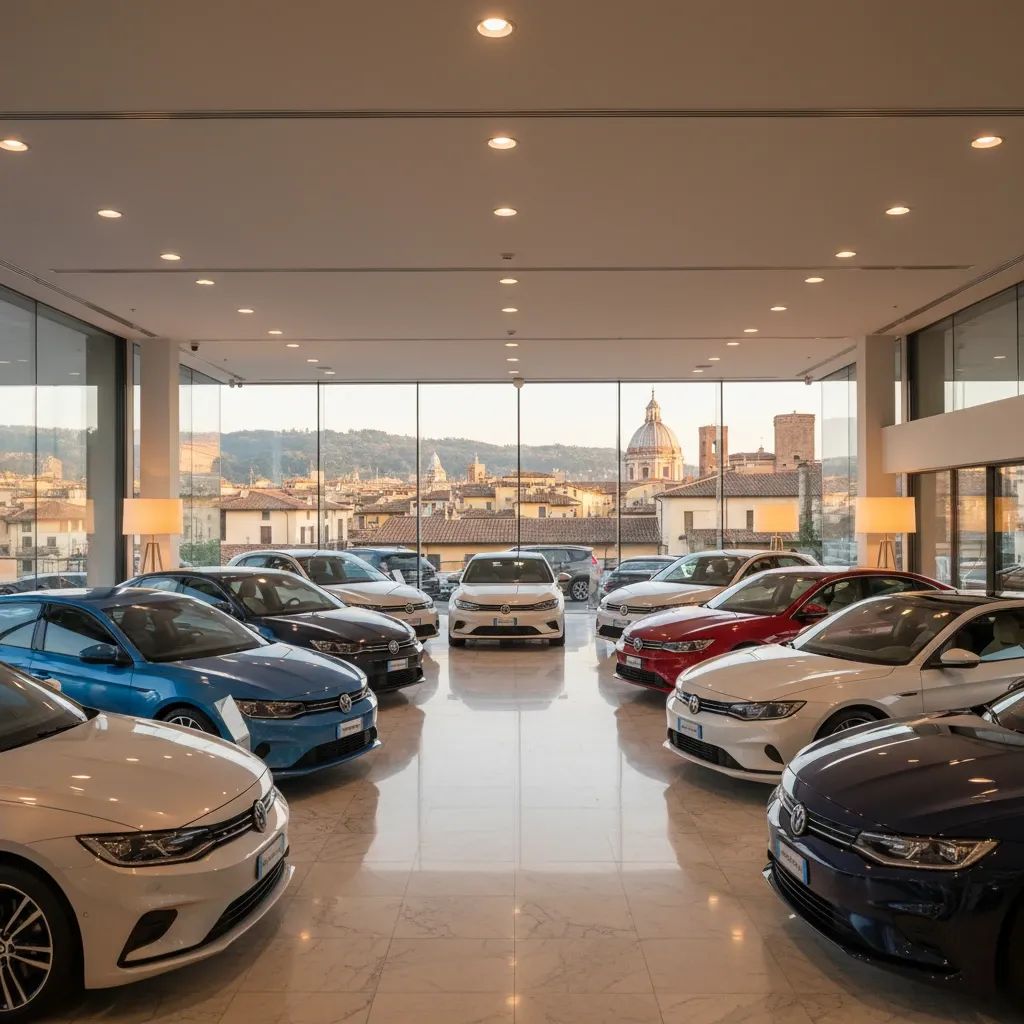
The Italian automotive sector is riding a broader European wave of momentum that saw Western Europe's car market expand by 11.1% in March 2026, reaching 1.58 million units. Yet beneath the headline growth lies a story of uneven gains, accelerating electrification, and tightening competitive pressure on legacy manufacturers including Stellantis.
Why This Matters
• Electric vehicles are reshaping the market: Battery-electric and plug-in hybrid vehicles are becoming mainstream options at dealerships across Italy, fundamentally changing the purchasing landscape for residents.
• Stellantis faces a paradox: The group sold more cars in March—228,055 units, up 6% year-on-year—yet its market share slipped to 14.4% in March from 15.1% a year earlier. This decline occurred even as absolute volumes rose, reflecting faster growth by competitors. Over the full first quarter, however, Stellantis's cumulative share edged up to 16% from 15.5%, showing that performance varied between the standalone month and the broader quarter.
• Incentives are driving adoption: Government subsidies in Germany, France, and Italy are fueling the shift toward electrified powertrains, with direct implications for buyers considering new purchases or trade-ins.
Volume Growth Masks Shifting Competitive Landscape
Western European registrations—spanning the EU, EFTA nations, and the United Kingdom—totaled 1.58 million units in March 2026, an 11.1% year-on-year surge. The first-quarter tally reached 3.52 million vehicles, up 4.1% versus the equivalent period in 2025, according to consolidated industry data. Yet the market remains roughly 15% below 2019 benchmarks, underscoring that this is recovery, not a boom.
Within that aggregate picture, every major market posted gains: Germany led with a 16% increase, France climbed 12.9%, Spain rose 11.7%, and Italy grew 7.6%. The United Kingdom notched its strongest March performance since 2019, up 6.6%, suggesting that the post-Brexit regulatory environment has stabilized enough for fleet buyers and consumers to commit capital.
For Stellantis, the numbers tell a nuanced story. The conglomerate—home to Fiat, Peugeot, Citroën, Jeep, Alfa Romeo, Opel, and other brands—delivered 228,055 cars across Western Europe in March, a 6% uplift from the prior year's 215,195 units. Cumulative first-quarter sales reached 563,490 vehicles, up 7.3% on 2025's 525,296. In the narrower EU-30 perimeter, Stellantis logged 696,676 registrations over the first three months, a 5% advance that slightly outpaced the market's 3.7% gain, pushing the group's share to 17.5%, the highest in two years.
Market Share Squeeze in a Crowded Field
In March specifically, Stellantis's Western European market share declined to 14.4% from 15.1% a year earlier, even as absolute volumes rose. This apparent contradiction reflects the reality that while Stellantis sold more cars, competitors grew faster, eroding the group's percentage of a larger overall market. Over the full first quarter, the cumulative picture showed improvement: share edged up to 16% from 15.5%, indicating that Stellantis recovered ground in April and February compared to the weak March standalone performance.
This dynamic underscores a broader competitive challenge. Chinese manufacturer BYD and Tesla are expanding rapidly through aggressive pricing and direct-sales models that bypass traditional dealer networks. BMW, Honda, Volkswagen, and Renault are also sustaining solid growth. Within Stellantis, some nameplates performed well—particularly Fiat and Lancia—yet these gains were insufficient to offset weaker performance elsewhere.
For Italy-based buyers and fleet managers, this competitive reshuffling carries practical weight. Stellantis controls several top-selling models in Italy, including the Fiat Panda and Jeep Avenger. The group's strategy increasingly emphasizes electrified options, including affordable battery-electric vehicles through partnerships, giving Italian consumers a widening menu of zero- and low-emission choices.
Electric and Hybrid Vehicles Reshape the Powertrain Mix
The March surge was overwhelmingly driven by electrified powertrains. The shift away from petrol and diesel is visible across Western Europe, with government incentive programs in Germany, France, and Italy actively promoting the transition to plug-in and battery-electric options. Charging infrastructure investment is accelerating, though availability remains concentrated in urban and suburban areas.
Petrol and diesel registrations are in structural decline. This shift has direct implications for Italian residents considering vehicle purchases: incentive schemes are layered atop EU-wide emissions mandates, nudging both private buyers and corporate fleets toward electrified options.
What This Means for Residents
Pricing pressure is building in buyers' favor. The influx of electrified models from established manufacturers and new entrants is expanding choice at various price points. Analysts expect price competition to intensify as production volumes rise and technology matures.
Incentive windows remain open but uncertain. Governments in Germany, France, and Italy have extended or refreshed subsidy programs for 2026, and these schemes are directly responsible for much of the electrification uptick. For Italy residents, national and regional schemes offer various rebates and incentives tied to vehicle emissions and environmental criteria. Prospective buyers should verify current eligibility criteria and budget availability: incentive funding is often allocated on a first-come, first-served basis or subject to annual review.
Infrastructure investment is accelerating. Public and private sectors are expanding charging networks, though availability varies by region. For those living in rural or semi-rural Italian areas, home charging remains the most practical solution, which favors homeowners with off-street parking over apartment dwellers.
Fleet and company-car policy is evolving. Italy's fiscal framework increasingly incentivizes lower-emission vehicles in corporate leasing and salary-sacrifice schemes, expanding the electric and hybrid menu available to employees selecting company cars in 2026.
Outlook and Competitive Dynamics
The European market remains roughly 15% below pre-pandemic 2019 levels despite consecutive quarters of growth. Higher average transaction prices—driven by safety technology, connectivity, and electrification—mean fewer households can afford new cars outright, sustaining robust demand for used vehicles.
For Stellantis, the challenge is clear: maintain volume momentum while defending market share against faster-growing competitors. The group's strategy emphasizes brand heritage, extensive dealer networks, and partnerships to access competitive electrified platforms.
Italian consumers and businesses stand to benefit from intensifying competition and the accelerating shift toward electrified powertrains. More models, expanded infrastructure investment, and evolving incentive programs translate into greater choice and lower barriers to adopting zero- and low-emission vehicles, particularly for drivers who can charge at home and cover moderate daily distances.


