
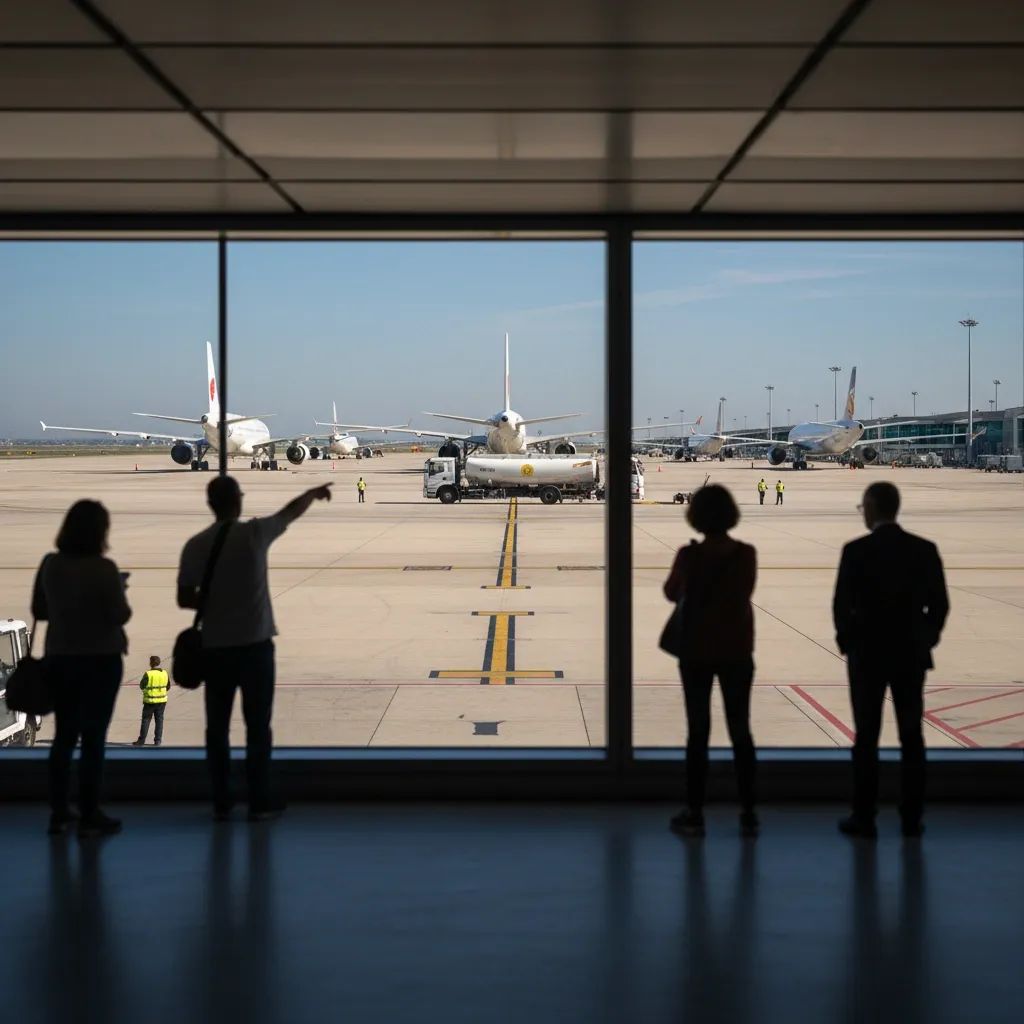
Italy's aviation industry faces potential disruption: the European Union may run short of jet fuel within weeks, a scenario that could ground flights, spike ticket prices, and disrupt summer travel across the continent. The European Commission has confirmed that while crude oil supplies to refineries remain stable, aviation fuel has become the bloc's top energy concern as geopolitical tensions threaten to choke off vital imports from the Middle East.
Why This Matters
• Jet fuel shortages could potentially affect Italy's major airports — including Rome Fiumicino, Milan, Venice, and Bologna — with the possibility of flight disruptions during the peak summer 2026 season.
• Ticket prices are already climbing as jet fuel costs have risen in recent weeks due to Middle East supply disruptions and concerns about the Strait of Hormuz.
• The European Commission will unveil emergency energy measures on April 22, potentially including dedicated provisions for aviation fuel supply.
• Italy and the EU import roughly 75% of jet fuel from the Middle East, making the region vulnerable to ongoing geopolitical tensions.
The Strait of Hormuz and Supply Concerns
The immediate threat stems from ongoing tensions in the Middle East, which have raised concerns about transit through the Strait of Hormuz, a critical maritime corridor for global oil exports. European airports depend on the Gulf region for a significant share of their jet fuel, and any prolonged disruption could create supply bottlenecks.
ACI Europe, the continent's airport trade body, has warned that extended supply disruptions could force the EU to face serious fuel shortages. Industry estimates suggest that Europe holds only about six weeks' worth of aviation fuel reserves, a margin that warrants careful monitoring as the high-demand summer travel season approaches.
The Italy Ministry of Transport and counterparts across the EU are exploring alternative supply routes, though logistical challenges and limited refining capacity mean straightforward solutions remain limited. Even if supply chains normalize, the International Air Transport Association cautions that restoring full supply levels could take time.
Refining Realities and Structural Constraints
Europe's reliance on imported jet fuel exposes structural vulnerabilities in the energy supply chain. European refineries cover roughly 70% of the bloc's jet fuel consumption, leaving the remaining 30% dependent on imports. Some Italian and European refineries are grappling with maintenance schedules and technical constraints, which could further limit output during a crisis scenario.
Several airports across Italy have reportedly been monitoring refueling protocols, recognizing that supply constraints could require operational adjustments. For travelers, any disruptions could translate into potential flight cancellations, reduced schedules, and higher fares as airlines navigate surging fuel costs.
The European Commission has indicated that the upcoming energy package may include fuel-specific interventions, though details remain to be finalized. Preliminary discussions among EU officials include exploring enhanced monitoring of refining capacity across member states, alongside efforts to optimize refinery operations.
What Airlines and Airports Are Demanding
Airlines for Europe (A4E), the industry group representing major carriers, has called for immediate EU action. Their requests include establishing a coordinated EU fuel monitoring system, potential adjustments to aviation-related regulatory costs, and improved coordination on fuel procurement strategies. The group has also emphasized the need for clearer emergency reserve protocols specifically for aviation fuel.
A4E has highlighted a regulatory gap: current EU emergency petroleum reserve rules do not specify dedicated minimums for aviation fuel, which means shortages could occur even when overall oil stocks appear adequate.
An EU transport ministers' coordination meeting is planned for late April to assess supply chain vulnerabilities and discuss potential coordination measures to maintain air connectivity. Among the options under discussion are operational measures to optimize fuel efficiency, such as improving flight route coordination and optimizing airport operations.
The Sustainable Fuel Question
Sustainable aviation fuels (SAF) are positioned as a long-term solution to both emissions and fossil fuel dependency, but they cannot address the immediate crisis. The EU's ReFuelEU Aviation regulation sets targets for SAF adoption in the coming years, but current SAF production remains limited and expensive.
In 2024, sustainable sources represented a small fraction of jet fuel used at European airports, with most derived from used cooking oil and other waste materials. Synthetic e-fuels, produced using renewable electricity, remain significantly more expensive than conventional kerosene and are not yet manufactured at commercial scale in Europe.
The European Commission has outlined plans to support SAF production scaling over the medium to long term through various funding and incentive mechanisms, including support through the EU Emissions Trading System. But scaling production will take years, and Europe must address immediate supply challenges through other means.
Italy, like other EU members, must balance crisis management with long-term investment in sustainable fuel infrastructure.
Impact on Italian Travelers and the Economy
For residents and businesses in Italy, potential supply disruptions carry both immediate and longer-term implications. Major hubs including Rome Fiumicino, Milan Malpensa, and Venice Marco Polo could face operational challenges if fuel constraints emerge. Airlines may need to adjust routes, frequencies, or pricing structures to manage fuel availability and costs.
The economic ripple effects could extend beyond tourism. Italy's export-driven industries, which rely on air cargo for high-value goods, could face increased costs if fuel prices spike. Business travel recovery could also face headwinds.
The Italian government is expected to coordinate with broader EU measures while potentially exploring bilateral agreements for alternative fuel supplies. Diplomatic engagement with regional partners is under consideration.
For now, travelers should monitor airline communications, consider refundable booking options where available, and remain flexible about potential itinerary adjustments. The coming weeks will be critical in determining whether Europe can manage its jet fuel supply chain effectively through the summer 2026 season.


