
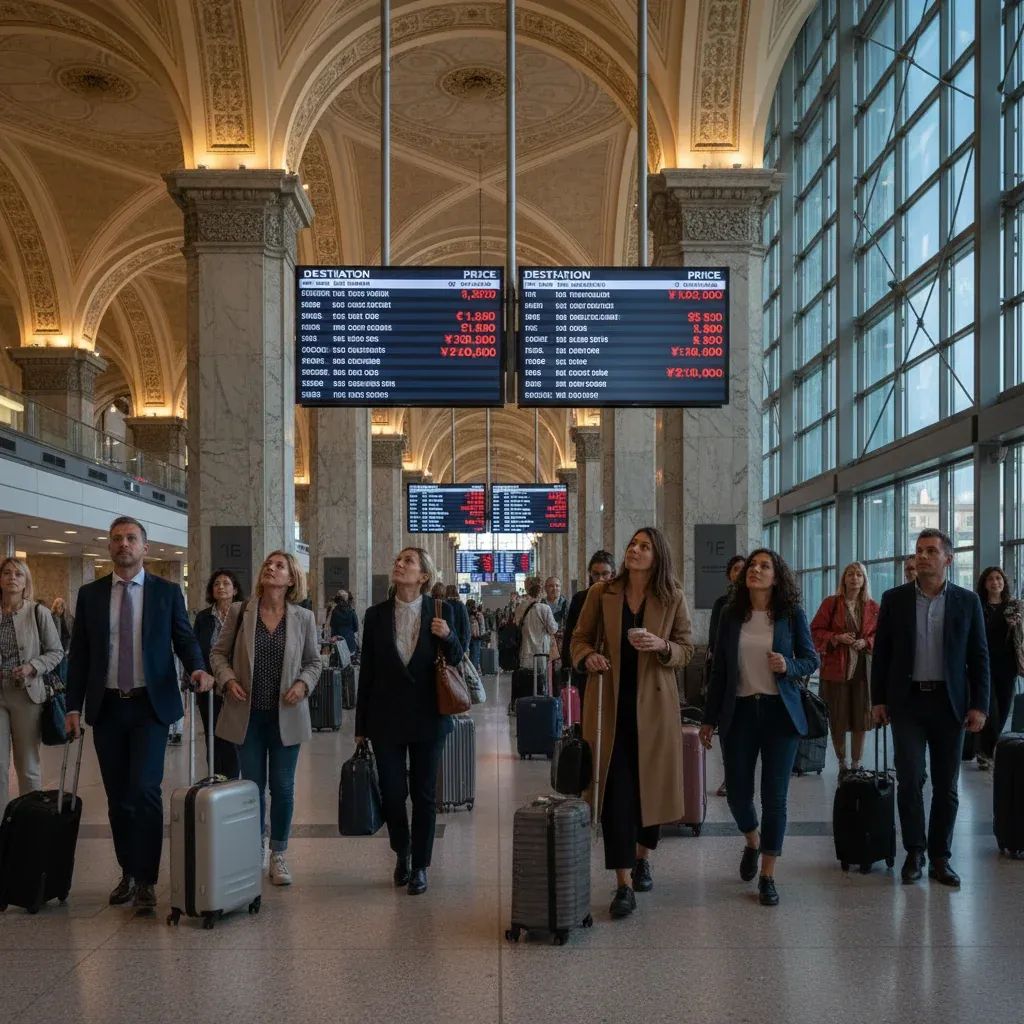
The Italian government's extension of fuel excise tax cuts through May 1 will provide only marginal relief to motorists facing what consumer groups are calling a €1.3 billion collective hit this Easter, as diesel prices hover above €2.10 per liter—a 30% surge compared to last year's holiday weekend.
Why This Matters
• Long-distance travel costs have ballooned: A Milan-to-Catania round trip now costs €312 in fuel alone, up €70 from Easter 2025.
• Diesel drivers bear the brunt: The government's January equalization of fuel excise taxes disproportionately affected diesel, which jumped 30% year-over-year versus just 2.7% for gasoline.
• Regional price gaps persist: Bolzano now charges €2.16 per liter for diesel—more expensive than highway rest stops for the first time on record.
• Government intervention costs €500M: The excise cut extension through the spring holiday period is financed partly by increased VAT revenue and partly by carbon permit sales.
The Iran Shock and Italy's Energy Vulnerability
The closure of the Strait of Hormuz in March triggered what analysts are describing as the largest petroleum supply disruption in modern history. Roughly 20% of global oil and a significant portion of liquefied natural gas transit through that 21-mile-wide chokepoint between Iran and Oman. Brent crude futures surged past $120 per barrel, with some forecasts warning of $170 if maritime trade remains blocked for three months.
Italy's exposure runs deeper than most European economies. The country imports 57% of its diesel consumption—approximately 3M tonnes annually—through routes dependent on Hormuz transit. The electricity grid's continued reliance on natural gas means wholesale power costs track commodity swings almost in real time, amplifying inflationary pressure across the economy.
S&P Global Ratings and the Bank of Italy have both revised 2026 GDP growth forecasts downward, now projecting inflation at 2.6% for the year, driven predominantly by energy commodity spikes.
What It Costs to Drive the Peninsula
Consumer advocacy groups Assoutenti and Codacons released parallel analyses this week mapping fuel expenses for common holiday routes. The numbers are stark.
A diesel-powered vehicle traveling from Turin to Palermo will burn through approximately €370 in fuel for the round trip, excluding tolls. That figure represents an €86 increase over the same journey last Easter. Milan to Catania climbs to €312, while Bolzano to Lecce and Genova to Catanzaro each demand around €255. Even the Bologna-to-Reggio Calabria corridor, a shorter haul, requires €246.
"For some routes, refueling costs between departure and return exceed €300," noted Gabriele Melluso, president of Assoutenti. The association's calculations assume average diesel consumption across mid-size sedans and SUVs, the dominant vehicle categories on Italian highways during holiday weekends.
Codacons expanded the analysis nationwide, estimating 60M vehicles will circulate during the Easter week. With roughly 40% of Italy's fleet running on diesel and 41.4% on gasoline, and assuming an average of two fill-ups per vehicle over the holiday period, the collective overspend relative to 2025 totals €1.28 billion.
The diesel penalty is especially pronounced. At an average of €2.096 per liter for self-service stations as of April 3 (compared to €1.609 last year), each 50-liter tank costs an additional €24.35. Gasoline, by contrast, rose from €1.716 to €1.763 per liter—a modest €2.35 extra per tank.
The Excise Tax Equalization Controversy
The disproportionate diesel inflation traces directly back to the government's decision at the start of 2026 to harmonize excise duties between gasoline and diesel. The realignment was framed as a fiscal modernization and environmental measure, but consumer groups argue it has effectively erased the benefit of the temporary excise reduction enacted in March.
The Ministry of Enterprise and Made in Italy (Mimit) instituted a 24.4-cent per liter cut on March 18, extended through May 1 by a cabinet decree approved April 3. That intervention is projected to cost €500M, funded by €200M in additional VAT receipts generated by higher fuel volumes and €300M from unsold EU carbon emission trading system (ETS) allowances.
Yet the nominal savings rarely materialize at the pump. Unione Nazionale Consumatori (UNC) and Codacons both highlight that the effective discount on diesel now hovers below €1 per 50-liter tank, once the excise equalization and crude price rally are factored in.
Infrastructure Minister Matteo Salvini announced complementary measures, including a voluntary 5-cent per liter price reduction by highway concession operators and enhanced price transparency monitoring. The Guardia di Finanza has inspected over 1,900 fuel stations since the Iran conflict escalated, though no systemic price-gouging violations have been reported.
Impact on Residents and Travelers
For households planning to drive south or reunite with family in distant regions, the financial calculus has shifted. A family of four traveling from Milan to Puglia now faces fuel expenses equivalent to two weeks of groceries or a month's utility bill in many provincial cities.
The differential between highway and off-highway pricing has widened. Assoutenti recommends motorists avoid filling up at rest stops, instead using the Mimit price comparison website or smartphone apps like "Prezzi Benzina" to identify the cheapest stations near highway exits. Prices can vary by as much as 15 cents per liter within a 10-kilometer radius.
Alternative transport options offer mixed value. FlixBus and Itabus long-distance coach services advertised advance-purchase fares from Milan to Naples starting at €19, though seats for Easter weekend sold out weeks ago. Trenitalia and Italo high-speed rail tickets between major city pairs range from €45 (Economy class, booked months ahead) to over €120 for last-minute purchases. Regional trains remain the most economical but add hours to travel time.
For families of three or more, driving often remains cheaper than rail—until the fuel spike pushes that balance past the tipping point. The psychological threshold appears to be around €250 for fuel alone; beyond that, many reconsider the car.
Regional Price Landscape
Diesel prices vary considerably across the country. As of April 4, the Province of Bolzano led the nation at €2.16 per liter, edging out even the highway network's €2.145 average. Calabria followed at €2.158, with Liguria at €2.148. The national self-service average stood at €2.130.
Gasoline shows less regional variation, averaging €1.777 per liter on local roads and €1.811 on highways. Southern Italy and alpine provinces traditionally see higher pump prices due to longer distribution chains and limited competition among suppliers.
The highway fuel monopoly—long criticized for inflated pricing—has lost its dubious distinction as Italy's most expensive option. Off-highway stations in Bolzano and parts of Calabria now command premiums once exclusive to rest stops.
Economic and Inflation Outlook
The Bank of Italy projects energy-driven inflation will shave 0.3 percentage points off 2026 GDP growth, now estimated at 0.7% for the year. Household purchasing power is expected to contract, particularly in the second quarter as the excise cut expires and crude prices remain elevated.
Natural gas price volatility compounds the challenge. The Dutch TTF benchmark nearly doubled to over €60 per megawatt-hour in mid-March, and Italy's gas-reliant power generation means electricity bills will rise in tandem. Industrial sectors dependent on diesel—logistics, construction, agriculture—face margin compression.
The government extended a 20% tax credit for agricultural enterprises as part of the April 3 decree, acknowledging the sector's acute vulnerability. Trucking associations have lobbied for similar relief but have not yet secured commitments.
Practical Strategies for Motorists
Beyond route planning and price-shopping apps, several tactics can mitigate costs. Carpooling platforms like BlaBlaCar report a 40% uptick in ride postings for the Easter corridor, allowing drivers to offset expenses by sharing seats.
Fuel-efficient driving habits—maintaining steady speeds around 90 km/h, minimizing air conditioning use, and reducing roof rack loads—can improve consumption by 10% to 15% on highway trips. Tire pressure checks before departure also yield measurable savings.
Some municipalities and regional governments are exploring temporary public transport subsidies for holiday travel, though no coordinated national program has emerged. Lombardy and Emilia-Romagna have allocated modest funds to discount regional rail passes through April.
The excise cut expires May 1, and no extension has been signaled. Barring a rapid resolution to the Strait of Hormuz crisis or a sharp retreat in crude prices, motorists should anticipate sustained elevation through the summer travel season.
Broader Energy Security Debate
The Easter fuel shock has reignited debate over Italy's energy strategy. Opposition parties and environmental groups argue the excise cut is a costly Band-Aid that delays necessary investment in renewable capacity and electric vehicle infrastructure. The government counters that immediate relief is essential to prevent social unrest and economic contraction.
Italy's electric vehicle adoption rate remains below 5% of new car sales, limiting the near-term impact of high fossil fuel prices on transportation alternatives. Charging infrastructure outside major metropolitan areas is sparse, and range anxiety persists among potential buyers.
The European Union has allocated funds for cross-border energy resilience, but disbursement timelines stretch into 2027. Italy's dependence on imported refined products—rather than simply crude oil—means domestic refining capacity upgrades would offer limited insulation from global shocks.
Consumer groups continue to press for a differentiated excise policy that reflects the outsized diesel price surge. Whether the government will revisit the January equalization before the next electoral cycle remains uncertain.
For now, Italians planning Easter trips face a stark choice: absorb the cost, compress travel plans, or seek alternatives that may sacrifice convenience and flexibility. The €300 fill-up has become the emblem of a holiday season shadowed by geopolitical turbulence and domestic energy fragility.


