
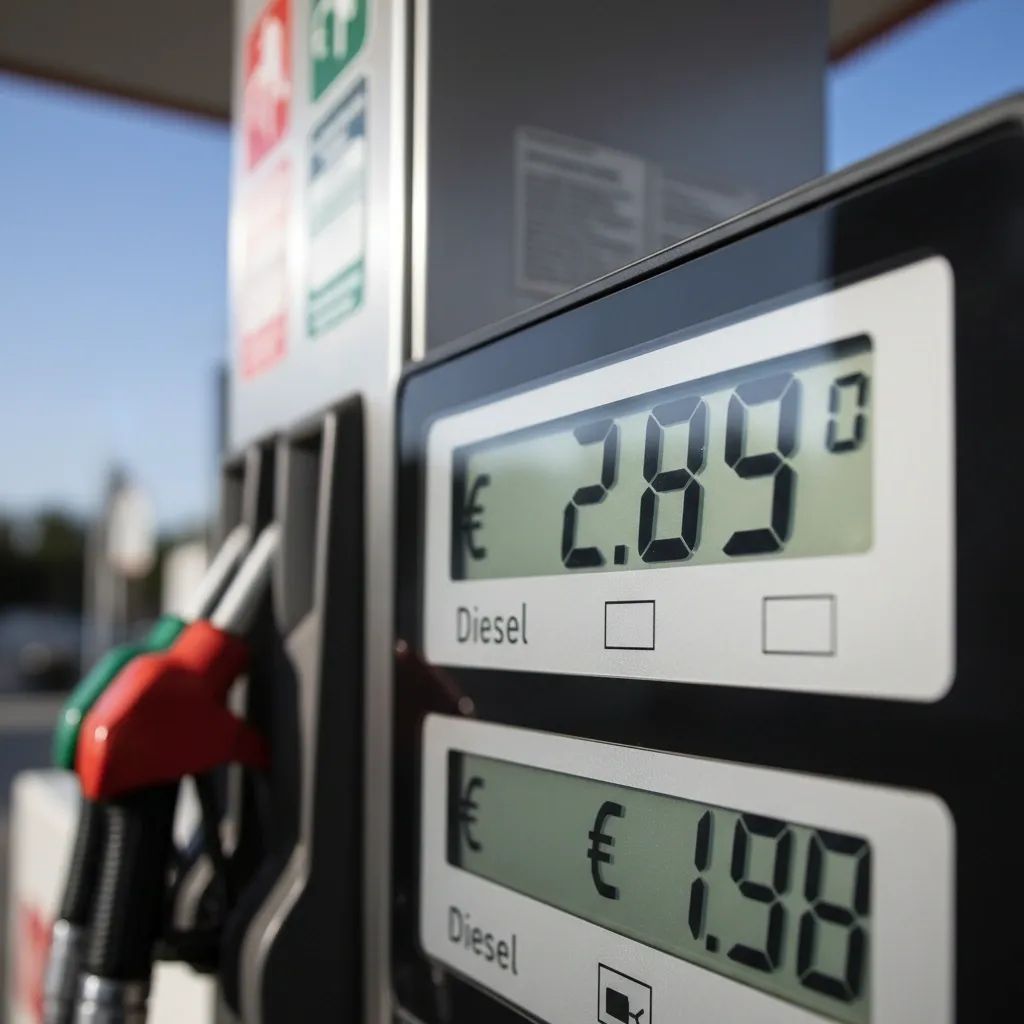
Italy's highway operators have agreed to temporarily cut fuel prices at motorway service stations by 5 cents per liter for 20 days, following pressure from the Ministry of Infrastructure and Transport led by Minister Matteo Salvini. But consumer advocates warn the modest discount will barely make a dent in wallets already battered by diesel prices exceeding €2.14 per liter at rest stops nationwide.
Why This Matters
• Timing is critical: The discount must launch before Easter travel or it becomes nearly worthless for the holiday exodus.
• Real savings are minimal: A 5-cent reduction translates to just €2.50 on a full tank, barely offsetting months of price escalation.
• Government tax cuts eroded: Earlier excise reductions of 24.4 cents have been almost entirely consumed by subsequent price hikes.
Highway Operators Respond to Political Pressure
Aiscat, the Italian Association of Highway and Tunnel Concessionaires, issued a statement acknowledging the "necessity of addressing the effects of the current international situation." The trade group confirmed it has immediately begun coordinating with all sector operators to implement the price reduction "in a short timeframe."
The initiative comes amid broader scrutiny of Italy's notoriously expensive motorway fuel stations, where prices routinely exceed urban pumps by 15-20%. With international crude markets volatile and domestic inflation still elevated, the Italy Ministry of Infrastructure sought voluntary cooperation from concession holders rather than pursuing regulatory intervention.
Salvini, who oversees the nation's transport infrastructure, framed the proposal as a collaborative effort to shield consumers during a period of heightened travel demand. The 20-day window appears strategically designed to cover the Easter holiday period and the days immediately following, when millions of Italians traditionally take road trips.
Consumer Groups Dismiss Measure as Inadequate
Codacons, one of Italy's most prominent consumer rights organizations, issued a swift rebuttal to the announcement, calling the discount "a drop in the ocean" given current pricing realities at highway stations.
According to Codacons calculations, diesel at motorway rest stops has reached an average of €2.144 per liter. A 5-cent reduction brings the effective savings on a standard 50-liter tank to approximately €2.50—a figure the group characterizes as negligible for families already stretching budgets to accommodate higher living costs.
More troubling, the consumer watchdog points out, is how prior government interventions have been swallowed by subsequent price increases. When Rome implemented an excise tax cut of 24.4 cents earlier in response to energy market turbulence, diesel prices initially dropped. But creeping increases since then mean current prices are now only 1.8 cents lower than pre-discount levels. The real saving on a diesel fill-up today compared to before the tax cut? A mere €0.90.
What This Means for Motorists
For drivers planning Easter getaways or routine highway travel, the practical impact hinges entirely on implementation speed. Codacons emphasized that if the discount launches after Easter weekend, when highway traffic returns to normal volumes, the benefit evaporates. Most fuel purchases at motorway stations occur during holiday periods when travelers have no alternative but to refuel en route.
The organization argues that even with immediate rollout, the measure fails to address structural issues: Italy's highway fuel prices remain among the highest in Europe, driven by a combination of concession agreements, geographical isolation of service areas, and limited competition. Urban stations, which face more direct competition, typically offer diesel for 10-15 cents less per liter than their motorway counterparts.
For residents budgeting for spring travel, the advice is clear: fill up before entering the motorway. The modest discount, while technically reducing costs, does little to close the gap between highway and city pricing.
Broader Context of Italy's Fuel Price Struggles
Italy has grappled with fuel affordability for years, with taxes comprising roughly 60% of the pump price—among the steepest tax burdens in the European Union. Previous governments attempted temporary excise reductions during energy crises, but these have repeatedly been undermined by crude oil price volatility and currency fluctuations affecting imports.
The Italy Ministry of Infrastructure has limited direct authority over fuel pricing, which is largely dictated by international markets and domestic tax policy set by the Ministry of Economy and Finance. Voluntary agreements with private concessionaires represent one of the few levers available for short-term relief without legislative action.
Highway operators themselves are caught between public pressure and commercial realities. Many concession contracts include clauses allowing fuel retailers at service areas to set prices independently, meaning Aiscat's coordination effort involves negotiating with multiple layers of subcontractors and lease agreements.
The Political Calculation
Salvini's involvement signals the government's awareness of public frustration heading into the Easter period, traditionally one of the year's heaviest travel windows. With local and regional elections looming in several regions, demonstrating responsiveness to cost-of-living concerns carries electoral weight.
However, consumer groups argue symbolic gestures without meaningful financial impact risk backfiring. Codacons publicly acknowledged "appreciating the effort" while simultaneously labeling it insufficient—a diplomatic way of saying the measure fails to meet the moment's urgency.
Practical Advice for Drivers
Given the limitations of the highway discount, residents planning road trips should consider these strategies:
Pre-fill before motorway entry: Urban stations consistently offer better value, even accounting for minor detours.
Use price comparison apps: Several mobile applications track real-time fuel prices across Italy, helping identify the cheapest nearby options.
Plan refueling stops: If a highway fill-up is unavoidable, choose service areas near major junctions where competition between nearby stations can moderate prices slightly.
Monitor rollout timing: Watch for announcements confirming exactly when the 5-cent reduction takes effect. If it launches post-Easter, the benefit is marginal at best.
The temporary discount, while technically reducing costs, underscores a larger truth about Italy's fuel market: structural reforms, not short-term fixes, are needed to bring highway prices in line with European norms. Until then, motorists will continue navigating one of the continent's most expensive refueling environments, with modest discounts offering little more than psychological relief.


