
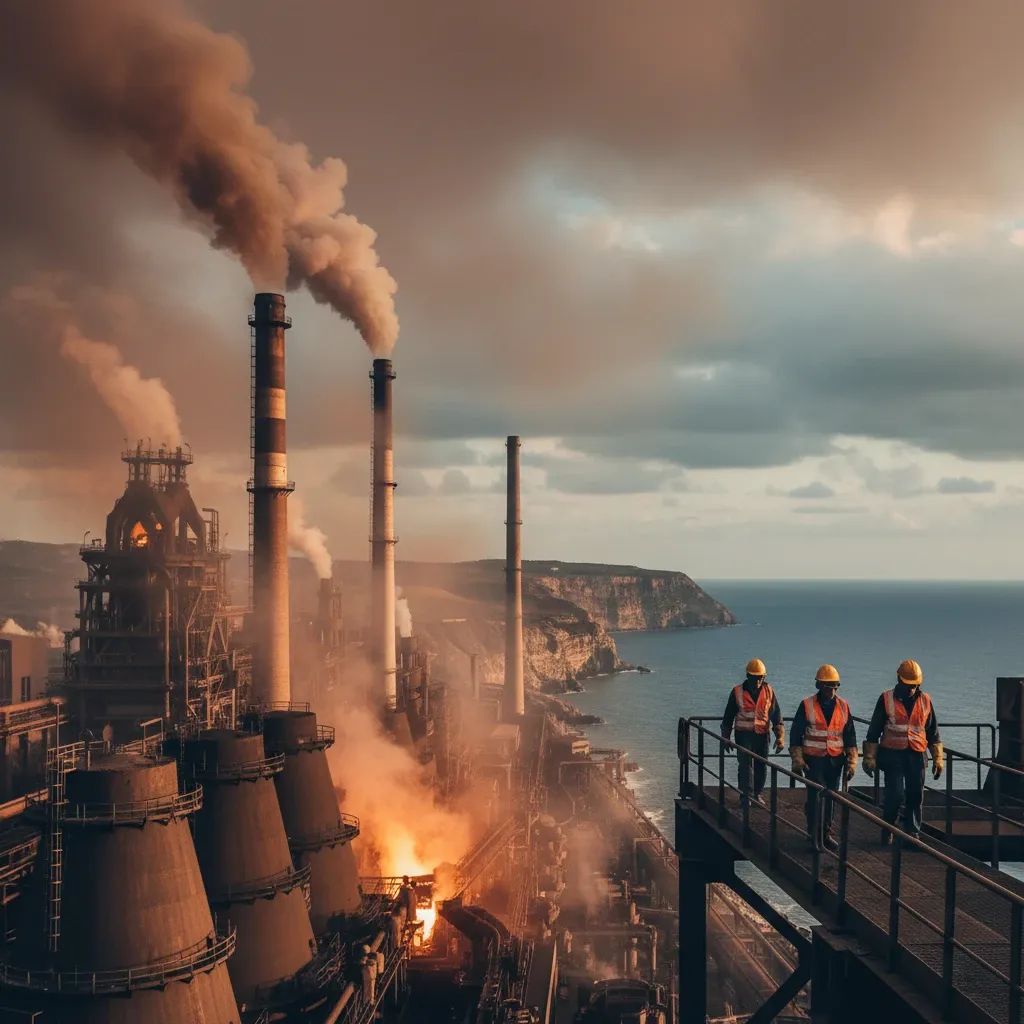
Cogne Acciai Speciali has inaugurated a €8M green hydrogen facility at its Aosta steelworks on June 30, 2026, positioning the plant among the first in Italy to integrate renewable hydrogen into its metalworking operations—a shift that demonstrates both technical feasibility and the substantial cost challenges facing Italian manufacturers pursuing decarbonization.
Why This Matters
• Decarbonization milestone: The facility will displace roughly 115,000 cubic meters of natural gas per year, cutting CO₂ output by 230 metric tons annually.
• NextGenerationEU funding: The project secured public money from Italy's Piano Nazionale di Ripresa e Resilienza (PNRR) under the Green Revolution & Ecological Transition mission.
• Cost challenge: Green hydrogen in Italy represents a significant cost premium compared to natural gas, underscoring the subsidy dependency of early-adopter plants in the industrial transition.
• Production capacity: The facility will produce hydrogen for heat-treatment furnaces, representing targeted decarbonization of specific production phases rather than comprehensive mill-wide conversion.
How the System Works
Cogne's hydrogen facility draws power from two on-site renewable sources: a new Dora Baltea River micro-hydro station and a rooftop photovoltaic array spread across the plant's buildings. The system will feed pure hydrogen into a thermal-treatment oven that previously burned natural gas. By integrating renewable generation within the factory perimeter, Cogne avoids grid electricity surcharges and the logistical complexities of external hydrogen supply.
The setup represents what CEO Massimiliano Burelli describes as "a virtuous integration of renewable generation and hydrogen use"—a model that Cogne says opens the path toward more sustainable steel production. The company has stated an ambition toward reducing emissions across its product portfolio through renewable-powered processes.
What This Means for Italy's Steel Belt
Italy is home to a cluster of specialty-steel makers—Cogne among them—that export high-grade alloys to automotive, aerospace, and tooling sectors. The nation's steelmaking sector faces pressure to decarbonize under EU climate regulations, with most legacy blast-furnace operations facing retirement deadlines by 2035. Transitioning to hydrogen-powered or electric-arc-furnace systems requires substantial capital investment and supportive policy frameworks.
Green hydrogen production remains costly in Europe, and Italy's industrial sector has highlighted the tension between decarbonization mandates and economic competitiveness. Public co-financing through EU and national programs like the PNRR is essential to making such transitions feasible for individual mills. Whether the cost gap can narrow through technology scale-up and supportive market mechanisms remains a central question for the sector's future.
Impact on Aosta and the Valle d'Aosta Region
For the Valle d'Aosta, Cogne's plant represents both an economic investment and a test case for renewable-powered industrial processes. The hydrogen facility demonstrates the potential to leverage the region's hydroelectric resources for manufacturing decarbonization. NextGenerationEU funding criteria require measurable job retention and skills development, so Cogne has committed to training programs in hydrogen-system operation and renewable-energy integration for its workforce.
Local environmental stewardship remains important: the Dora Baltea hydro infrastructure must adhere to minimum-flow regulations designed to protect aquatic habitats. The region's rivers are already extensively developed for energy generation, so any expansion of hydroelectric capacity will require careful environmental assessment.
Timeline and Next Steps
The facility inaugurated on June 30, 2026, marks the beginning of operational hydrogen production at Cogne. The company will monitor system performance and integration with existing heat-treatment processes.
What This Means for Residents and Stakeholders
For employees and local suppliers: Cogne's green-hydrogen initiative may create opportunities in hydrogen-system maintenance, renewable-energy infrastructure, and industrial engineering. The company has indicated it will prioritize Valle d'Aosta–based contractors where technical capacity exists.
For industrial buyers: Cogne may begin offering carbon-footprint documentation that accounts for hydrogen substitution in specific product lines. Procurement teams should evaluate how such certifications align with sustainability reporting requirements.
For policymakers and other manufacturers: Cogne's facility will generate operational data on hydrogen integration in heat-treatment applications—insights relevant to regional incentive programs and future decarbonization initiatives. Smaller mills considering similar approaches should engage early with regional energy agencies to assess available hydro and solar resources.
The Road Ahead
Green hydrogen in Italian steelmaking remains a high-cost transition supported by public funding rather than a market-driven shift. The Cogne facility demonstrates that renewable hydrogen can be integrated into specific furnace applications at an industrial scale, but broader adoption across Italy's steel sector will depend on sustained policy support, technology cost reductions, and customer willingness to value low-carbon steel.
The plant stands as a concrete example of how renewable-powered manufacturing can function in Alpine industrial contexts—and as a test case that will inform future decarbonization efforts across Italy's specialty-steel sector.


