Italian Senator Ilaria Cucchi has stepped into the national debate over the custody death of Abderrahim Fakir in Bologna, drawing stark parallels to her own family's decade-long battle for justice and warning that a familiar pattern of victim-blaming has already begun.
The intervention comes as prosecutors examine the July 19 death of Fakir, a 42-year-old warehouse and porterage worker from Morocco, who lost consciousness while being restrained by police officers in the Pilastro neighborhood. The case has ignited protests, prompted government statements, and reopened longstanding questions about accountability when deaths occur during law enforcement interventions in Italy.
Why This Matters
• Six people under investigation: Two Bologna police officers and four emergency medical workers are now in a preliminary registry (modello 45 bis) for suspected manslaughter under a new legal framework designed to protect public servants.
• Bodycam and witness footage: Prosecutors are reviewing police-worn cameras and resident videos showing Fakir immobilized for over two minutes, crying for help before losing consciousness.
• Political pressure mounts: Senator Cucchi has proposed legislation to assign police misconduct investigations to an independent force—carabinieri probing police cases, and vice versa—to prevent conflicts of interest.
• Family rejects violence: Fakir's niece publicly distanced the family from riots that erupted in Bologna's city center following the death, insisting her uncle's memory not be "stained" by destruction.
The Cucchi Connection: A Template for Grief
Ilaria Cucchi, a senator for the Greens and Left Alliance (Avs), knows the path Fakir's family now faces with intimate precision. Her brother Stefano Cucchi died in October 2009, seven days after his arrest by carabinieri in Rome. He weighed 37 kilograms at the time of death. It took more than a decade, multiple trials, and a whistleblower's confession before two carabinieri were definitively convicted of manslaughter in 2022, with sentences of 12 years each. Additional officers were convicted for cover-up operations.
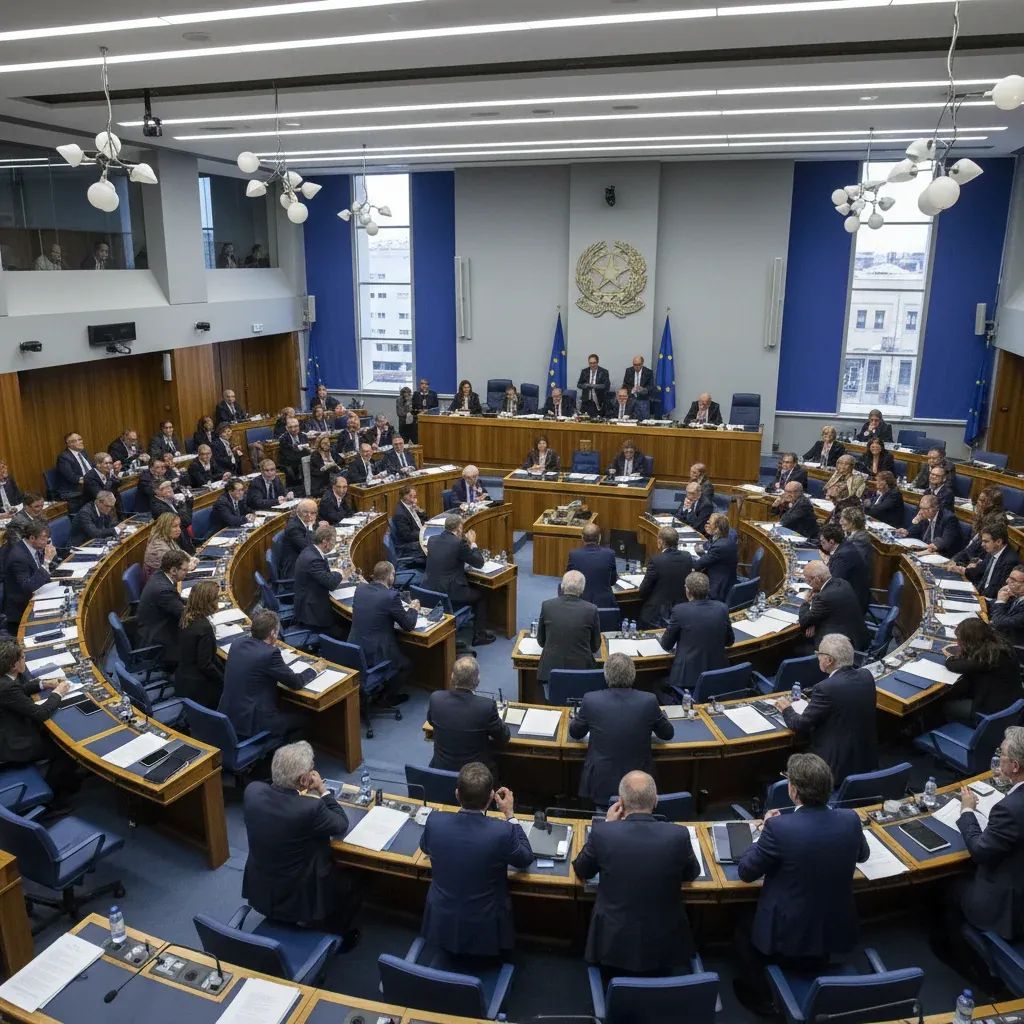
Speaking at a Senate press conference alongside Fakir's niece Yossra Fakir, Senator Cucchi described hearing the young woman's testimony as "reliving a pain." She warned that the same machinery of defamation her family endured is already in motion: "They're already saying he died because of his own fault. Does that remind you of anything?"
Cucchi's frustration centers on what she calls "the trial of the dead"—a process in which victims are posthumously criminalized while investigations are conducted by colleagues of the accused officers. She noted that early reports attributed crimes to Fakir that belonged to unrelated cases. "Do you realize what's happening?" she asked. "The first investigations are being carried out by the colleagues of the alleged perpetrators."
What Happened in Bologna
On the morning of July 19, residents near via Svevo in the Pilastro district called police to report a man behaving erratically, shouting and damaging a car in a garage. Two officers from the Bolognina Pontevecchio police station responded and radioed for medical backup, citing a suspected psychiatric crisis.
According to investigative reconstructions, Fakir allegedly struck the police patrol car and resisted attempts to calm him. Officers deployed pepper spray and pinned him to the ground with assistance from a civilian bystander, holding his wrists behind his back with knees pressed to his body while attempting to handcuff him.
Video footage released by the family shows Fakir repeatedly shouting "Help, enough" for more than two minutes. Four Italian Red Cross emergency workers stood nearby but did not intervene during the restraint. Resuscitation efforts began only after Fakir fell unconscious. He was pronounced dead shortly afterward.
The Bologna Public Prosecutor's Office opened an immediate investigation. For the first time, authorities applied the modello 45 bis registry, a new mechanism introduced under Italy's recent security decree. Here's what this means in practice: instead of being formally charged immediately, the six individuals involved—two officers and four medics—are placed in a preliminary registry while prosecutors gather evidence. This provides them legal protection against premature accusations during active investigations, but it also means the investigation process may take longer. Residents should expect the full timeline to extend through the forensic and testimonial review phases before formal charges or conclusions are reached.
An autopsy has been ordered, and investigators are analyzing bodycam recordings from police, resident videos, and witness statements to reconstruct the sequence of events. Prosecutors have stated they will examine not only the widely circulated restraint footage but also the period before emergency responders arrived, including the initial police radio call.
Political and Diplomatic Fallout
Prime Minister Giorgia Meloni described the incident as "unacceptable" and pledged a thorough inquiry. Elly Schlein, secretary of the center-left Democratic Party, stated bluntly: "When a man dies during a detention operation, the state has failed."
The Moroccan government has formally requested a rapid and comprehensive investigation. Fakir, who had lived in Italy for seven years in the municipality of Sasso Marconi with his wife, had a pending asylum application filed in 2024 and worked in a warehouse porterage company.
The Italian Red Cross issued condolences and confirmed it is cooperating with judicial authorities and an internal review launched by Bologna's local health authority (AUSL).
Impact on Residents and Legal Reform
For anyone living in Italy, the Fakir case underscores unresolved tensions in how the state handles deaths in custody. Senator Cucchi's proposed legislation—still under committee review since November 2022—would mandate that police misconduct probes be handled by carabinieri, and carabinieri cases by police, severing the investigative link between colleagues.
Her broader reform package includes mandatory identification codes on uniforms during public order operations and binding regulations for bodycam use, measures intended to protect both citizens and officers by creating a clear evidentiary record.
The modello 45 bis framework, applied here for the first time in a high-profile case, represents a legal evolution but also raises questions. Critics argue it can delay accountability by insulating officers from immediate scrutiny; proponents say it protects public servants from premature accusations when they act under duress.
Family Demands Justice, Rejects Violence
Yossra Fakir's appearance at the Senate was marked by visible emotion. "We dissociate ourselves from the clashes and disorder that happened in the square in Bologna and afterward," she said, her voice breaking. "Seeing the city center mistreated like this strikes us deeply. Bologna does not deserve this."
She emphasized her uncle was "not a number or a case, but a person with a life and a family demanding answers." The family has retained lawyer Fabio Anselmo, the same attorney who represented the Cucchi family and other high-profile custody death cases, including Federico Aldrovandi and Riccardo Magherini.
Protests following Fakir's death turned violent, with property damage in Bologna's historic center. The family's public distancing from the riots reflects a strategic and moral stance: they seek institutional accountability, not street confrontation.
How Long Does Justice Take?
This pattern isn't new. Stefano Cucchi's case took 13 years to reach definitive convictions. Multiple trials, appeals, and a separate investigation into cover-up efforts all extended the process. For residents following the Fakir case now, understanding this timeline matters: custody death cases in Italy typically become years-long battles before families see accountability.
The pattern Senator Cucchi described—victim criminalization, colleague-led investigations, protracted legal battles—has repeated across multiple cases. Each one becomes a test of whether Italy's judicial system can hold its own enforcement apparatus accountable or whether families must wage years-long campaigns to pierce institutional solidarity. Your awareness of how these cases unfold can help residents understand what Fakir's family faces ahead.
What This Means for Residents
If you live in Italy, particularly in urban centers where police interventions are routine, the Fakir case may signal shifts in how such incidents are documented and investigated. The use of bodycams, now increasingly standard, creates a parallel evidentiary stream that can corroborate or contradict witness accounts.
The pending legislative reforms could eventually create structural separation in misconduct probes, reducing the appearance—or reality—of conflict of interest. For now, the dual inchiesta (investigation by prosecutors and internal review by the involved agency) remains the norm.
The application of the modello 45 bis suggests that future cases involving officers may follow this annotated-registry path rather than immediate formal charges, a procedural nuance with significant implications for transparency and timelines.
For foreign residents, particularly those from North Africa, the Fakir case resonates as a reminder of vulnerability during encounters with authority, especially in moments of psychological distress. The presence of medical personnel who did not intervene raises additional questions about protocols when mental health crises intersect with law enforcement.
Senator Cucchi's voice in the Senate—amplified by her family's lived ordeal—provides a rare institutional platform for families navigating these tragedies. Her warning that "the trial of the dead" is already underway serves both as lament and as tactical alert: the fight for truth begins the moment the victim can no longer speak.