Asian equity markets closed Monday in positive territory, with investors showing cautious confidence despite ongoing geopolitical uncertainty surrounding negotiations between the United States and Iran. For observers in Italy, the session reflects global market sentiment at a time when energy prices are climbing and European indices are expected to open weaker.
Key Developments:
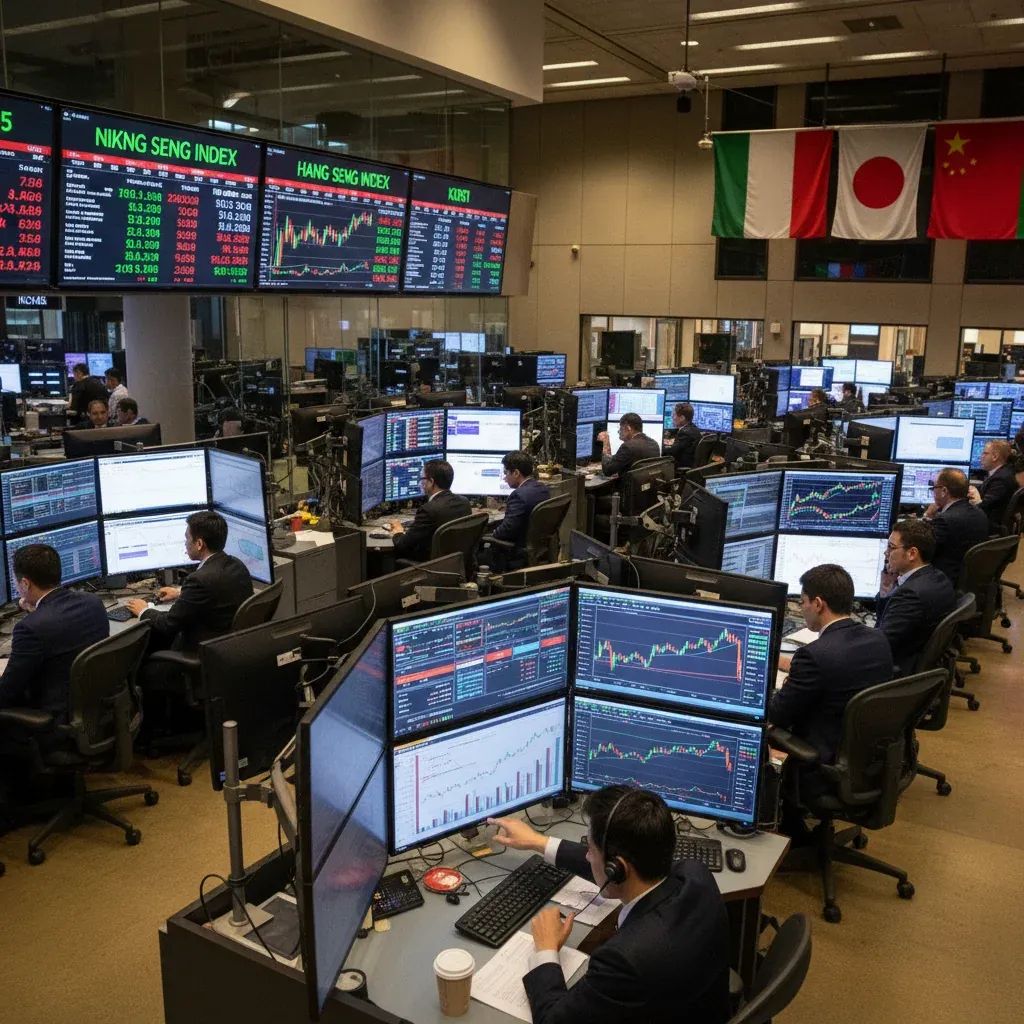
• Asian markets advance: Tokyo, Hong Kong, Shanghai, and Seoul all posted gains Monday, with the Tokyo Stock Exchange rising 0.60% and Hong Kong's Hang Seng adding 0.7%.
• European futures decline: Contracts for Milan's FTSE MIB and other continental exchanges point to a cautious start this week.
• Energy prices climbing: Oil and gas prices are rising amid ongoing Iran-US negotiations, with Brent crude trading above $100 per barrel.
• China maintains monetary stance: The People's Bank of China held benchmark lending rates steady for the 11th consecutive month.
Asian Equities Close Higher
The Tokyo Stock Exchange advanced 0.60% Monday, supported by technology and semiconductor stocks benefiting from optimism around artificial intelligence. The Japanese yen remained relatively stable at 158.83 per dollar.
Hong Kong's Hang Seng added 0.7%, while mainland China's Shanghai Composite climbed 0.6% and the Shenzhen Component gained 0.52%. South Korea's KOSPI rose 0.4%, and India's Mumbai exchange posted a 0.5% increase. The regional gains suggest investors are positioning for eventual diplomatic progress, though uncertainty remains elevated.
Energy Markets Reflect Strait of Hormuz Tensions
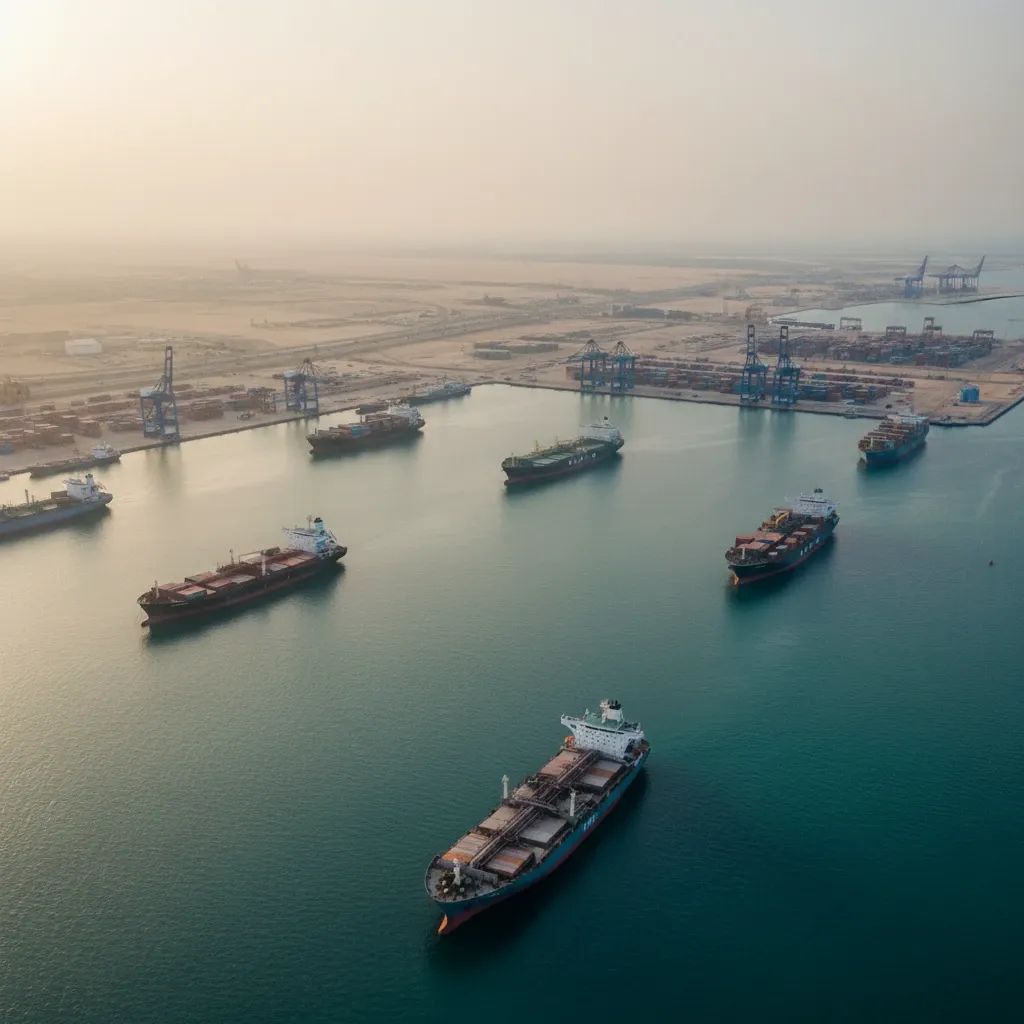
The Iran-US standoff has kept the Strait of Hormuz—a critical energy chokepoint—under intermittent blockade since early March. Approximately 20 million barrels of oil per day transit this waterway, representing roughly 20% of global oil consumption.
Indirect talks mediated by Oman and Qatar continue, though progress remains uncertain. The situation has contributed to Brent crude rising from around $80 per barrel in late February to above $100, with some sessions near $105. West Texas Intermediate has followed a similar trajectory.
According to S&P Global Ratings, Italy—which imports approximately 58% of its fossil fuel needs—faces concerns over sustained elevated energy prices. The International Monetary Fund has warned that elevated energy costs could present challenges for European economic growth if disruptions persist.
What Market Observers Are Watching
For those monitoring market developments, several factors warrant attention:
Energy-intensive sectors such as manufacturing and logistics are seeing input cost pressures. The European Central Bank's response to any inflation developments could affect borrowing costs across the eurozone.
Analysts note that if Brent crude stabilizes below $95, market sentiment may improve considerably. Conversely, prices sustained above $110 could prompt revisions to growth expectations and increased volatility in European equity markets.
The next few weeks will be important in determining whether diplomatic efforts progress or whether energy market concerns persist as a headwind for European economic outlook.
Beijing Maintains Accommodative Monetary Stance
The People's Bank of China announced Monday that it would maintain its Loan Prime Rates at historic lows for the 11th consecutive month. The one-year LPR remains at 3.0%, while the five-year rate stays at 3.5%.
China's economy expanded 5.0% year-on-year in the first quarter of 2026, exceeding expectations of 4.7%. For Italy, Chinese monetary policy has indirect consequences for global trade flows and shipping volumes through ports like Genoa and Trieste, though any disappointment in Chinese growth later this year could affect demand for European exports.
European Opening Expected Lower
Futures contracts for major European indices closed lower Monday, signaling that Milan, Frankfurt, Paris, and Madrid are likely to open in negative territory. The divergence between Asian strength and European weakness reflects different exposures to energy market developments and varying domestic growth prospects.