
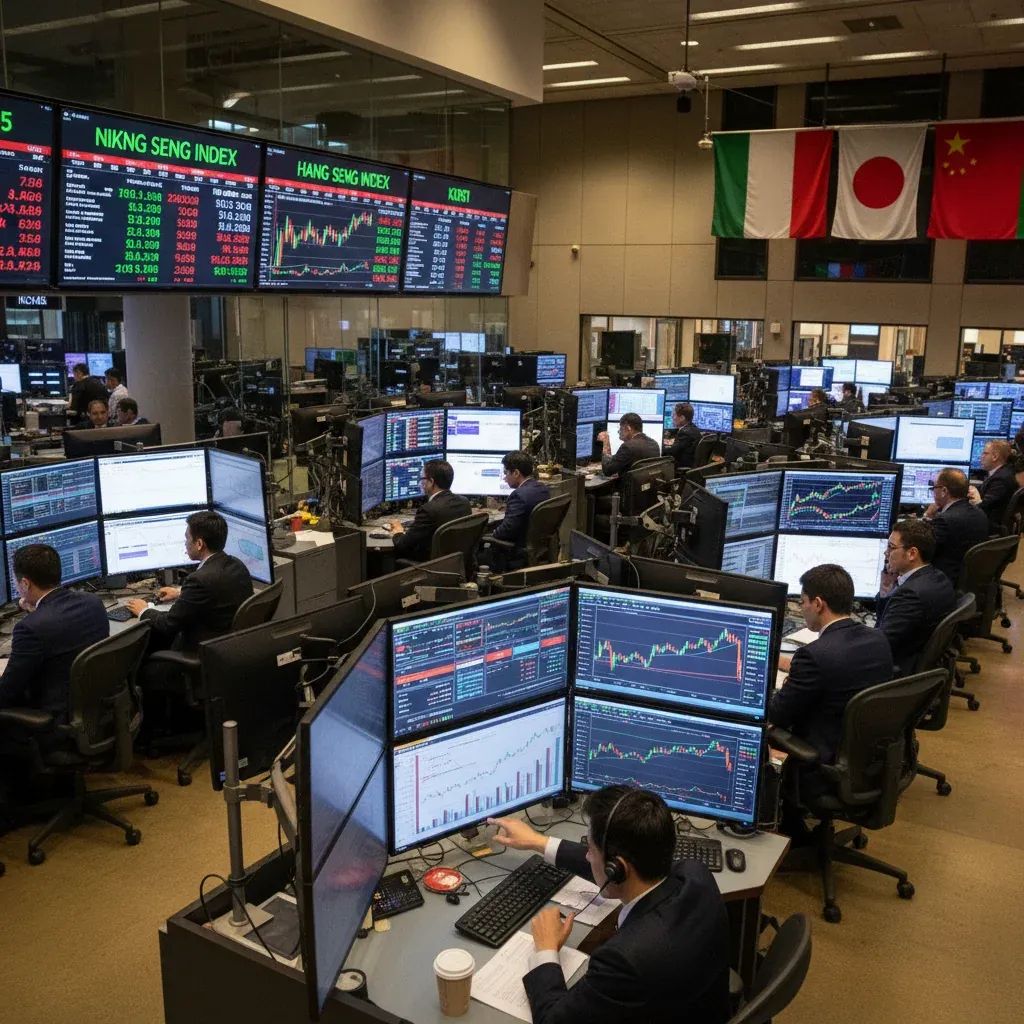
Asian equity markets climbed on Wednesday as diplomatic signals from the Middle East sent oil prices below the $100-per-barrel threshold, offering relief to investors and Italian households alike. The Nikkei 225 in Tokyo edged up 0.44%, Seoul's Kospi index led with a 2.1% rally, and Mumbai's benchmark climbed 1.6%. Hong Kong added 0.4%, while Shanghai inched ahead 0.04% and Shenzhen dipped -0.7%.
What This Means for Italy
Energy costs and household budgets: Crude below $100 per barrel offers potential relief on Italy's energy front. Since Italy imports virtually all its crude, retail gasoline and diesel prices are closely tied to global benchmarks. A sustained break below $100 could gradually ease fuel costs at the pump, providing modest relief for commuters and businesses already managing elevated logistics expenses. Natural-gas prices, which also track geopolitical developments in the Gulf, could see moderated pressures if supply disruptions ease.
Investment exposure: Italian pension funds and retail investors with Asia-Pacific equity allocations benefited from Wednesday's gains. Multi-asset portfolios held by Italy's insurers and asset managers, many carrying emerging-market positions, saw modest rebounds after recent market volatility.
Currency factors: The Japanese yen appreciated slightly against the dollar to 158.98 while weakening versus the euro to 187.38. For Italy-based importers sourcing electronics and machinery from Japan, currency movements affect purchase costs. Italian exporters to Japan face mixed dynamics as they balance input costs against export competitiveness.
What's Ahead
Investors across Italy and the Eurozone will watch today's Eurozone industrial production figures, which reveal whether manufacturing activity—including Italy's textile, machinery, and automotive sectors—is weathering current uncertainties. From France, harmonized inflation data will provide clues on price pressures across the single-currency bloc, with implications for European Central Bank policy decisions.
Across the Atlantic, the Federal Reserve's Beige Book and consumer-confidence readings will be published alongside weekly crude-inventory data. Given the Fed's influence on global risk appetite, any signals about inflation or economic conditions could affect European and Asian markets.
The Diplomatic Picture
Investor optimism centers on renewed diplomatic prospects for resolving Middle East tensions, which could stabilize the Strait of Hormuz—a critical maritime route through which roughly 20% of global petroleum flows. After earlier disruptions, current signals suggest tentative progress toward normalizing supply flows, though significant challenges remain unresolved.
For Italian households and savers, this moment underscores how interconnected global markets have become. Developments thousands of kilometers away can influence energy costs, investment values, and the policy environment that affects mortgage rates and savings returns. Financial advisers recommend maintaining balanced, diversified portfolios appropriate to individual risk tolerance and time horizons.


