
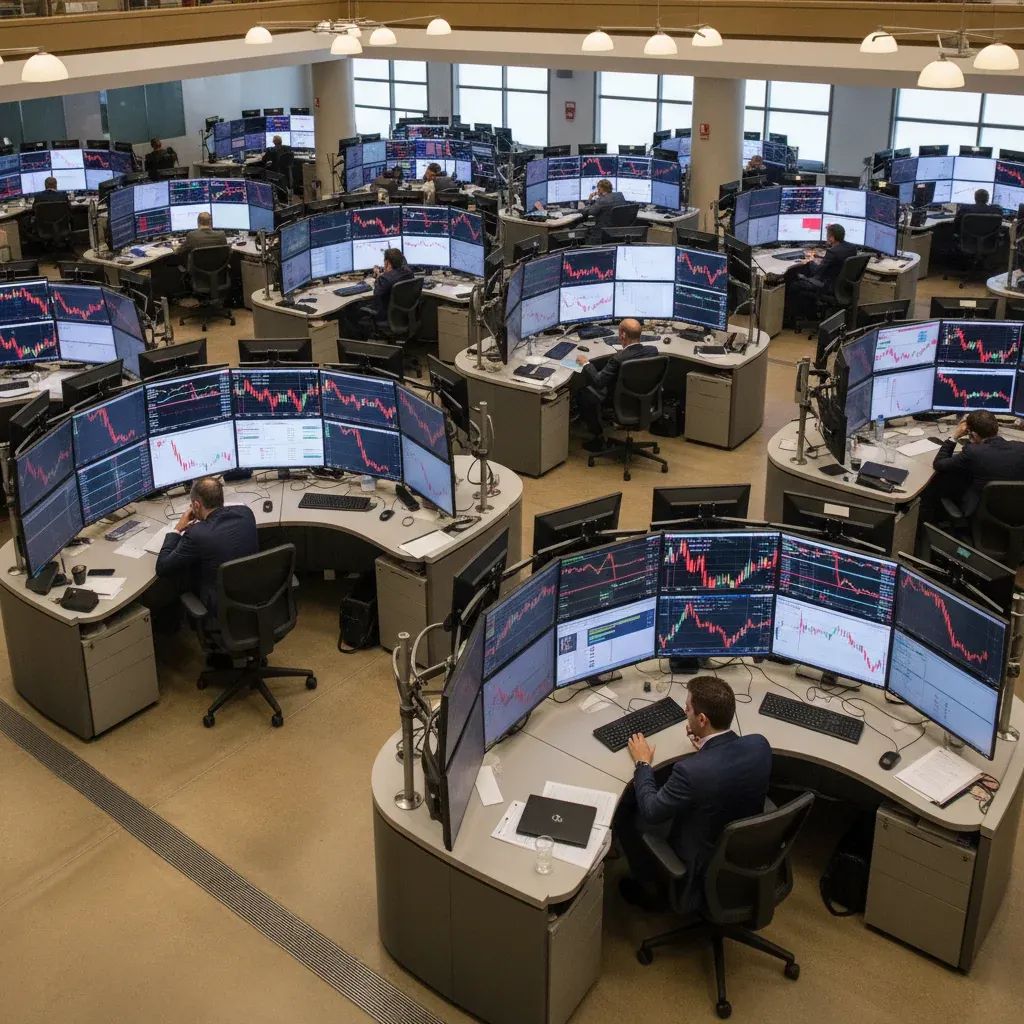
Investors and savers woke to a rare bright spot in global markets today: Asia's major stock exchanges surged between 3% and 7% following an eleventh-hour diplomatic breakthrough between Washington and Tehran. The two-week ceasefire, brokered by Pakistan and China just hours before a US ultimatum expired, includes the immediate reopening of the Strait of Hormuz—a move that sent energy prices tumbling and shifted expectations for Italy's inflation trajectory and the European Central Bank (ECB)'s next policy move.
Why This Matters:
• Energy relief: Brent crude plunged 14–16% to around $94 per barrel; gas prices dropped 20%, potentially easing household bills and transport costs across Italy in coming weeks.
• Inflation reprieve: The ECB had been weighing a rate hike; today's developments may delay or cancel that move, keeping borrowing costs stable for Italian mortgages and business loans.
• Market momentum: Italian pension funds and ETFs with Asian equity exposure saw immediate gains; the Nikkei 225 closed up 5.39%, while South Korea's KOSPI jumped 6.87%.
• Fragile calm: The ceasefire expires April 22; broader peace talks begin April 10 in Islamabad, and the outcome remains uncertain.
What Triggered the Rally
The Japan Nikkei 225 led the charge with a 5.39% surge, recovering nearly all losses sustained during the prior week's escalation. Seoul's KOSPI posted its best single-day performance in months at 6.87%, while Hong Kong's Hang Seng advanced 3.2%. Shanghai and Shenzhen composite indices rose 2.5% and 4.18%, respectively, and Mumbai's Sensex climbed 3.82%.
The gains reversed a bruising Monday session on April 7, when the Nikkei had shed 7.83% and the KOSPI 5.57%, dragged down by fears that a US military strike on Iranian oil infrastructure would choke global supply and trigger stagflation. Chipmakers—particularly Samsung Electronics, which issued upbeat Q1 forecasts—led the tech-driven rebound, benefiting from reduced geopolitical risk premium and expectations that lower energy input costs will protect margins.
The Hormuz Factor: Why Energy Markets Cratered
The Strait of Hormuz funnels roughly one-fifth of the world's crude oil and 20–30% of global liquefied natural gas (LNG) toward Asian importers—primarily China, Japan, South Korea, and India. Iran's implicit threat to disrupt shipping had pushed Brent above $110 per barrel and West Texas Intermediate (WTI) above $105 in late March, while European gas futures spiked nearly 30% as traders priced in supply shocks.
With the ceasefire announcement, Brent slid to $93–$95, a 14–16% drop, and WTI fell 15–18%. Natural gas contracts shed roughly 20%. For Italy, which imports the bulk of its gas via pipeline from North Africa and Russia but relies on LNG spot cargoes when those flows tighten, the price collapse offers breathing room. Wholesale electricity prices had climbed 18% month-over-month in March; analysts now expect April averages to stabilize or decline, translating to lower bills for households and small businesses by late spring.
Impact on Italian Residents and Businesses
Inflation and ECB Policy
Energy price volatility had raised concerns about inflation staying elevated in the coming months, which could have prompted the ECB to consider tightening policy. Today's energy decline changes that calculus and eases pressure for immediate rate increases. For Italian homeowners carrying variable-rate mortgages, this means monthly payments are more likely to remain stable through the coming months. Corporate borrowers, especially in energy-intensive sectors like ceramics, steel, and logistics, also gain a temporary reprieve from rising financing costs.
Fuel Costs and Consumer Spending
Pump prices in Italy had reached elevated levels in early April, among the highest in the European Union. Assuming the Hormuz reopening holds and refining margins normalize, fuel prices could see meaningful declines within the coming weeks, saving households money on transport costs. That extra disposable income may flow into discretionary spending just as the spring season accelerates, benefiting retail and hospitality operators.
Portfolio Exposure
Italian pension funds and insurance companies hold allocations to Asian equities and emerging-market bonds. Today's rally added gains to balanced portfolios with Asian equity exposure, a welcome offset to losses incurred in March. Retail investors using platforms to buy Asian ETFs also saw their holdings rebound.
The Diplomacy Behind the Deal
The ceasefire hinges on resolving long-standing disputes between the US and Iran, including sanctions, asset unfreezing, and military presence in the region. Peace negotiations are set to begin April 10 in Islamabad, with Pakistani and Chinese mediators facilitating. The outcome of those talks will determine whether today's market gains prove durable or merely a brief pause before renewed turbulence.
What Lies Ahead
Despite today's gains, analysts caution that volatility will persist. The truce expires April 22, and any breakdown in negotiations could reignite supply fears and send oil back upward. Energy analysts warn that even if Hormuz remains open, refinery bottlenecks and logistical lags mean consumer prices for diesel, heating oil, and jet fuel will take weeks to fully reflect lower crude benchmarks.
For now, the message from Asian markets is clear: geopolitical risk premiums have compressed and energy anxiety has eased. Italian savers with diversified portfolios enjoyed a welcome upswing, but prudent risk management dictates caution until the April 10 Islamabad talks yield tangible progress—or reveal insurmountable gaps. The next two weeks will determine whether today's rally marks the start of a sustained recovery or merely a false dawn before the next storm.


