
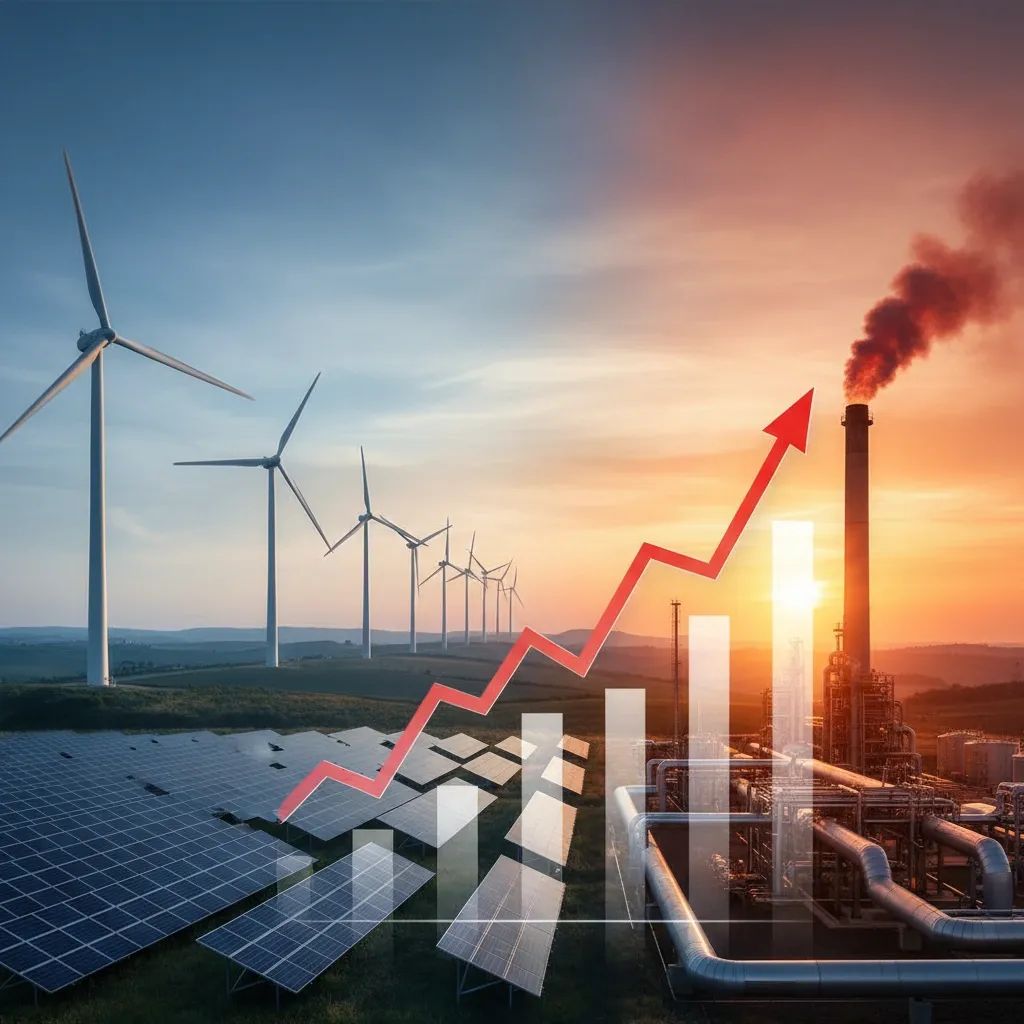
Italy's energy market faces renewed pressure as European natural gas futures opened at €60.61 per megawatt-hour (MWh), marking a 1.16% daily gain and signaling a potential spike in household and business energy costs heading into autumn. The Amsterdam Title Transfer Facility (TTF), Europe's benchmark for natural gas pricing, reflects mounting anxiety over supply disruptions from the Persian Gulf—a challenge that may push Italy's already vulnerable energy sector into deeper reliance on expensive spot-market imports.
Why This Matters
European natural gas prices have climbed significantly, with year-over-year gains reaching approximately 90%. For Italian households, a sustained increase in wholesale electricity prices could translate into rising household costs. According to the Institute for Energy Economics and Financial Analysis (IEEFA), a 60% increase in wholesale electricity prices could add approximately €120 per year to European household electricity bills. In Italy, where the grid is disproportionately reliant on natural gas, the impact follows similar patterns to other European nations.
European gas reserves are projected to reach approximately 67% capacity by late October, a level that increases winter vulnerability. Ongoing disruptions in the Strait of Hormuz—which handles a significant share of global LNG exports—are affecting supply lines and keeping prices elevated.
Why Gas Prices Are Climbing Again
The current rally in natural gas futures is driven by a convergence of geopolitical stress, supply chain friction, and seasonal demand. Energy analysts have revised price forecasts upward, with expectations that gas prices could remain elevated through late summer. The primary driver is the prolonged disruption of LNG shipments from the Persian Gulf, where intensified military tensions have interrupted maritime traffic through the Strait of Hormuz.
Forecasters estimate the supply reduction represents a significant portion of global LNG flows, with normalization now pushed back to October instead of the previously anticipated earlier recovery. Meteorological forecasts also predict elevated cooling demand across northwestern Europe heading into autumn, which will spike electricity demand just as the continent races to fill storage ahead of winter.
On a year-over-year basis, EU gas prices have surged approximately 90%. Italy's Punto di Scambio Virtuale (PSV), the national gas pricing index, has tracked the TTF closely, reflecting infrastructure bottlenecks and Italy's heavy dependence on imported LNG.
What This Means for Italian Households and Businesses
Italy remains one of the most exposed economies in Europe to gas price volatility. With gas-fired power plants generating a significant share of the country's electricity, wholesale gas prices translate almost directly into retail energy bills.
Unlike countries such as Spain or Switzerland, which have diversified into solar, wind, and hydroelectric power, Italy's generation mix remains gas-heavy, leaving consumers and small businesses vulnerable to spot-market spikes. Industrial users—particularly in manufacturing sectors like ceramics, glass, and chemicals—face elevated cost pressures, which could ripple through supply chains and consumer prices.
The Italian government has not yet announced new subsidies or price caps for the current period, though officials have signaled readiness to intervene if prices reach levels of concern. Previous support measures, including one-off bill rebates and reduced VAT on gas, have concluded.
Europe's Storage Crunch and Winter Outlook
European gas storage levels have been strengthening as the refill season progresses. The continent must inject gas at an accelerated pace to meet winter demand, but supply constraints and competition from global buyers are complicating that effort. Storage facilities are expected to reach significant capacity levels by the end of October, though this remains subject to supply disruptions and demand patterns.
Italy's own storage operators, including Stogit (Snam Group), are subject to EU-wide filling mandates. The country has ramped up LNG imports via terminals in Livorno, Rovigo, and the Piombino floating storage and regasification unit (FSRU), yet remains a price-taker in an increasingly competitive global market.
Geopolitical Pressure Points
The Strait of Hormuz has emerged as a critical chokepoint for Europe's energy security. The waterway channels LNG cargoes from Qatar—the world's largest exporter—as well as shipments from Oman and the UAE. Military activity and heightened tensions have disrupted shipping schedules and driven up insurance and freight costs, all of which feed into final delivered prices.
Analysts warn that further escalation could support elevated price levels. A sudden de-escalation or ceasefire could see prices decline, underscoring the market's dependence on geopolitical factors beyond Europe's direct control.
Italy's Ministry of Ecological Transition has emphasized diversification of supply routes, including increased pipeline flows from Azerbaijan via the Trans Adriatic Pipeline (TAP) and potential new LNG contracts with regional suppliers. However, these measures take time to negotiate and scale, offering limited relief in the immediate term.
Longer-Term Price Outlook
Energy forecasters project the EU gas price will remain elevated in the near term, with expectations of continued price support from global LNG market dynamics. Demand for natural gas is expected to evolve as efficiency gains expand and renewable capacity grows across Europe.
Europe's transition away from Russian pipeline gas has left it more dependent on spot LNG purchases and therefore more exposed to price swings in the global market. For Italian investors and businesses, this environment suggests continued volatility through the coming months.
What Italian Residents Can Do Now
For households and small businesses, the immediate priority is to monitor your current contract terms through the Italian Regulatory Authority for Energy, Networks, and Environment (ARERA), which publishes quarterly updates on regulated tariffs and any government intervention measures on its official website.
Locking in fixed-rate contracts is advisable where available, particularly ahead of the October–March heating season. Variable-rate plans tied to the PSV or TTF will track wholesale price movements closely, exposing consumers to further increases if geopolitical tensions persist.
Energy efficiency measures—including insulation upgrades, smart thermostats, LED lighting, and high-efficiency appliances—can reduce consumption and partially offset higher per-unit costs. Regional incentives and tax deductions remain available for efficiency investments across Italy.
Larger consumers should explore group purchasing schemes and direct contracts with suppliers, which can offer better terms relative to retail tariffs. Industrial users may also consider on-site renewable generation to reduce grid dependence.
Stay informed through official ARERA communications for updates on any government support measures or tariff adjustments that may be announced in the coming months.


