
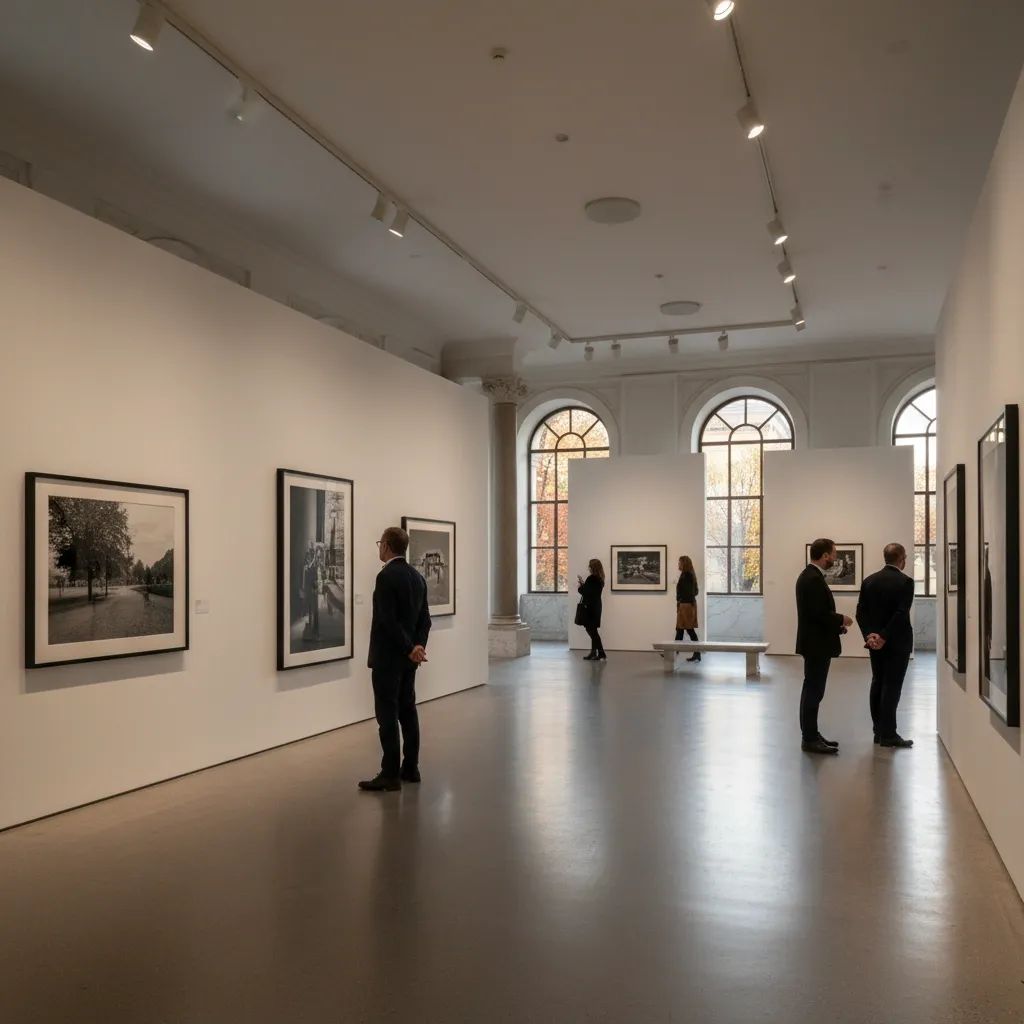
The Italian city of Bari will host one of the world's most powerful photographic exhibitions this autumn, bringing the raw reality of global migration crises directly to the Puglia region. The 13th annual World Press Photo Exhibition will feature Carol Guzy's haunting image "Separated by ICE," which captured the 2026 Photo of the Year award—a moment frozen in time that documents the human cost of United States immigration enforcement.
For residents and visitors in southern Italy, this marks a rare opportunity to witness firsthand the images that define our current era. The exhibition, scheduled for fall 2026, will display not only Guzy's winning photograph but also the two runner-up finalists and all category winners from a competition that drew 3,747 photographers from 141 countries submitting 57,376 images.
Why This Matters
• Cultural access: Bari continues its 12-year partnership as one of 120 cities worldwide hosting the exhibition, cementing the city's role as a Mediterranean cultural hub.
• Migration context: The winning photograph documents U.S. immigration enforcement—a topic with deep resonance in Italy, which has faced its own migration policy debates and Mediterranean arrivals.
• Free documentary journalism: The exhibition showcases images that major news organizations commissioned, offering Italians direct access to global photojournalism without paywalls.
The Winning Image: A Family Torn Apart
Guzy's photograph, captured on August 26, 2025, shows Luis, an Ecuadorian migrant, being arrested and separated from his wife Cocha and their three children—ages 7, 13, and 15—outside a courtroom at the Jacob K. Javits Federal Building in New York. The image freezes a moment of inconsolable grief: family members clinging to Luis as Immigration and Customs Enforcement agents prepare to detain him following an immigration hearing.
According to his family, Luis had no criminal record and served as the sole financial provider for his household. His detention left the family facing immediate economic hardship alongside profound emotional trauma. The Javits Building was one of the few U.S. federal facilities where photographers retained access to document family separations—a policy window that allowed Guzy to capture what she describes as a "necessary document" of lives impacted by enforcement actions.
The four-time Pulitzer Prize winner developed her approach through what she calls "visual empathy," a skill rooted in her previous career as a nurse. Working for the Miami Herald through ZUMA Press and the iWitness Institute, Guzy has dedicated herself to documenting these courtroom scenes as part of her broader project "ICE Arrests at New York Court."
What This Means for Italian Audiences
The exhibition arrives in Bari at a time when migration remains a defining political and social issue across the European Union. Italy has grappled with its own policies regarding Mediterranean arrivals, detention centers, and family separation protocols. Viewing documentation of U.S. enforcement practices provides a comparative lens for Italians to examine their own nation's approach to migration management.
Cime, the Italian brand ambassador and one of the World Press Photo Foundation of Amsterdam's largest European partners, organizes the Bari exhibition. While specific dates, venue details, and ticket pricing have not yet been announced, the organization typically provides advance notice through official channels. Previous editions have drawn significant crowds to the Puglia capital, with visitors traveling from across southern Italy to view the collection.
The exhibition format allows viewers to engage with images across six regional categories—Africa, Asia-Pacific and Oceania, Europe, North and Central America, South America, and Western, Central and Southern Asia—each subdivided into Singles (individual images), Stories (photo series), and Long-Term Projects. This structure, introduced in 2021, aims to promote diversity in both storytelling and storytellers, moving away from Western-dominated narratives.
Beyond the Winning Frame
Other notable winners provide context for the global challenges documented in this year's collection. Halden Krog's "When Giants Fall" and Kiana Hayeri's work for The New York Times titled "Children Who Do Not Exist" captured African stories often invisible in mainstream media. Edwina Pickles documented the "Bondi Beach Terror Attack" for The Sydney Morning Herald, while Ethan Swope's "Los Angeles on Fire" series chronicles climate-driven urban catastrophe.
European representation includes William Keo's "Extramuros" project for La Bibliothèque Nationale de France and Die Zeit, exploring themes of isolation and resilience. South American photographer Priscila Ribeiro's "A Territory of Hope" and Diego Ibarra Sánchez's long-term project "Hijacked Education" round out a collection spanning warfare, climate crisis, civil rights struggles, and human endurance.
The international jury that selected these winners emphasized how the images collectively document "the contradictions, questions, and uncertainties facing all of humanity"—from armed conflicts to environmental destruction, from migration flows to the fight for dignity in the face of institutional power.
Viewing Practicalities
Those interested in attending the Bari exhibition should monitor announcements from Cime and the World Press Photo Foundation for exact dates, venue location, and ticketing information. The exhibition typically remains accessible for several weeks, with educational programming and guided tours often accompanying the visual displays.
The photographs represent more than aesthetic accomplishment or journalistic achievement—they function as historical records of this moment in global affairs. For Italians navigating their own national conversations about migration, borders, and humanitarian responsibilities, the exhibition offers a window into how other democracies grapple with similar tensions between security concerns and human dignity.
As autumn approaches and Bari prepares to welcome these images, the exhibition will transform gallery walls into spaces where policy becomes personal, where statistics take on faces, and where the distance between "elsewhere" and "here" collapses into shared recognition of our common humanity under pressure.


