The European Central Bank's prolonged battle with inflation took a step in the right direction as June data confirmed a cooling trend across the continent's largest economies, though energy price volatility linked to ongoing regional tensions in the Persian Gulf continues to cast a long shadow over household budgets and monetary policy decisions.
Why This Matters
• Germany's consumer prices rose 2.3% year-on-year in June, down from 2.6% in May—still above the ECB's 2% target but moving in the right direction.
• France saw inflation fall to 1.8%, driven by a 4.2% drop in energy costs, offering relief at the pump and on heating bills.
• Fuel prices in Italy continue climbing, with gasoline now averaging €1.87 per liter at self-service stations nationwide, squeezing commuters and logistics firms.
• The Eurozone-wide inflation rate preliminary reading for June came in at 2.8%, below consensus forecasts but still elevated enough to keep further ECB rate hikes on the table.
Energy Volatility Remains the Wild Card
While headline inflation figures across Europe are moderating, the real story lies in energy markets—a persistent source of instability that officials cannot yet declare under control. Germany's Federal Statistics Office (Destatis) confirmed that energy prices climbed 3.4% year-on-year in June, a rate above the average inflation level and directly tied to ongoing security incidents in the Strait of Hormuz.
This strategic chokepoint handles roughly one-fifth of global oil consumption and a significant share of liquefied natural gas exports from Qatar. Recent incidents affecting vessels and energy infrastructure have sent shockwaves through commodity markets. Although the increase in German energy costs was less pronounced than in prior months, analysts warn that any escalation could trigger a fresh surge in fuel and heating expenses.
On commodity exchanges, natural gas futures on the Amsterdam TTF hub dipped below €50 per megawatt-hour this week—a modest reprieve after earlier spikes above €60. Meanwhile, Brent crude has oscillated around $78 per barrel, with West Texas Intermediate settling at $72.01, down 2% on the day. Qatar's decision to halt efforts to restore maximum LNG production capacity following damage to one of its tankers underscores the fragility of supply chains in the region.
What This Means for Residents
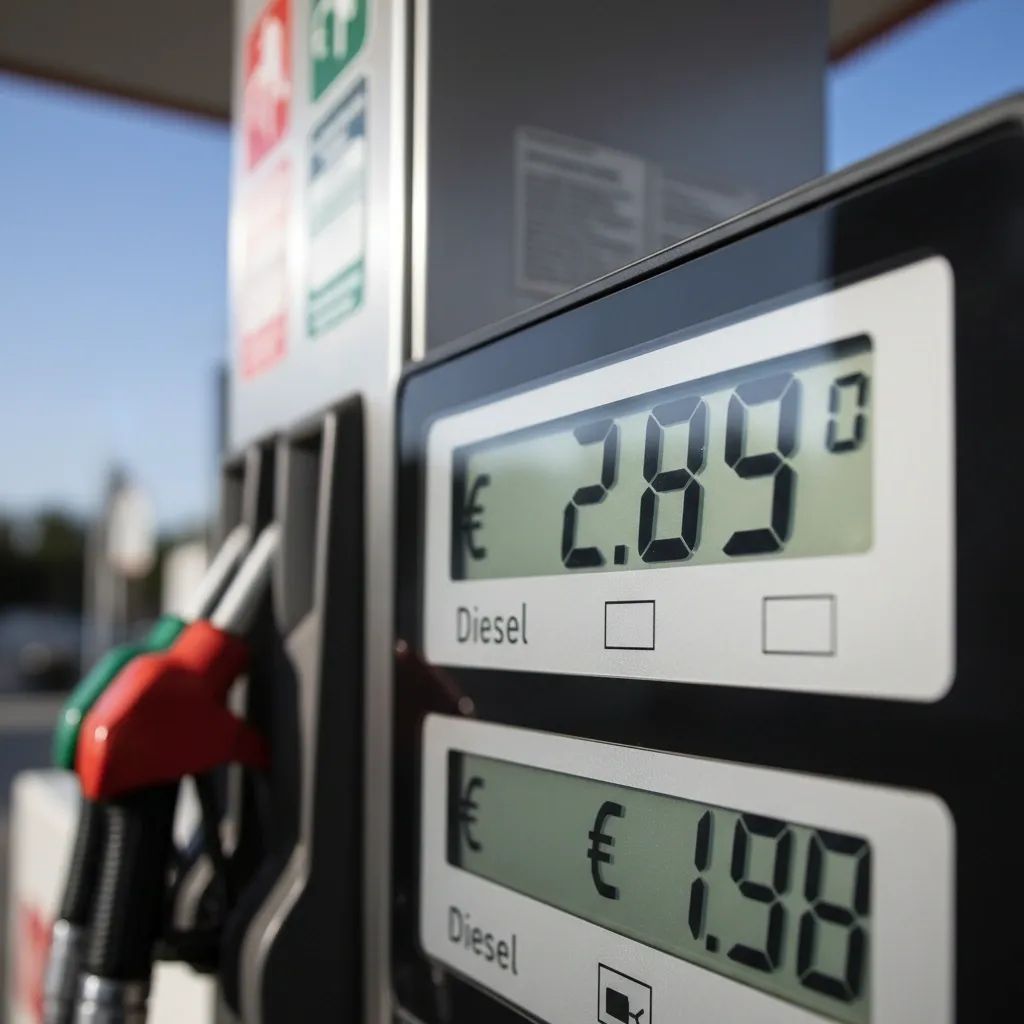
For individuals and businesses operating in Italy, the inflation trajectory in neighboring economies offers a mixed picture. On one hand, the slowdown in France and Germany suggests that the broader European price spiral may be losing momentum. On the other, Italian fuel prices continue their relentless climb, with self-service gasoline now at €1.87 per liter on highways and €1.97 for diesel—figures that translate to higher costs for everything from grocery deliveries to weekend road trips.
Here's what you should know right now: If you rely on your car for work or commuting, consider locking in fuel purchases where possible or exploring carpooling options. The Italy Ministry of Enterprises and Made in Italy (MIMIT) tracks these prices daily, and the trend has been unambiguous: upward. Businesses reliant on transport and logistics are absorbing higher operating expenses, many of which eventually filter down to consumers in the form of pricier goods and services.
Heating bills for the coming winter also remain a concern. Although natural gas prices have eased slightly from earlier peaks, they remain elevated compared to historical norms. Households in northern Italy, where winter heating demand is highest, should expect continued pressure on energy budgets unless market conditions improve in the Persian Gulf region.
Core Inflation Still a Concern for ECB
The European Central Bank has been walking a tightrope. According to market reports, in June the Governing Council raised its three key interest rates, bringing monetary policy into tightening mode after an extended period of holding rates steady. This marked a significant shift following a cycle of cuts that began in mid-2024.
ECB President Christine Lagarde has emphasized a data-dependent approach, meaning each policy meeting could yield surprises. The central bank's latest projections estimate Eurozone inflation will be pressured through 2026 and 2027, with expectations for gradual moderation toward the 2% target. However, these forecasts hinge on energy prices stabilizing—a big assumption given geopolitical risks.
Core inflation—which strips out volatile food and energy components—stood at 2.4% in June for the Eurozone, down slightly from 2.5% in May. This measure is closely watched because it reflects underlying price pressures that monetary policy can more directly influence. The persistence of elevated core inflation signals that wage growth and service sector costs are still running hot, partly due to tight labor markets and lingering supply chain disruptions.
Investment strategists at S&P Global Ratings and KPMG have both revised their 2026 inflation estimates upward, citing renewed stagflation risk—a toxic combination of sluggish growth and rising prices. The consensus now clusters around a 3.0–3.1% average for the year, with the risk skewed toward higher outcomes if Persian Gulf tensions intensify further.
Global Context: Why This Matters for Italian Trade
Globally, inflation pressures are uneven. While China reported slower consumer price growth in June, the country's producer prices remained elevated, signaling that manufacturers face climbing input costs but weak domestic demand prevents them from passing those costs to consumers. For Italy-based importers and exporters trading with China, this dynamic matters: expect cheaper consumer goods but potentially higher costs for raw materials and industrial inputs—a mixed picture that affects supply chain economics and profit margins for Italian manufacturers.
Policy Flexibility and Fiscal Constraints
At the Eurogroup meeting this week, finance ministers from Eurozone countries acknowledged a proposal to extend fiscal flexibility to cover measures aimed at strengthening energy resilience and accelerating the green transition. The statement stressed the importance of adhering to recommended net spending paths and maintaining fiscal sustainability, even as governments seek flexibility to invest in strategic infrastructure.
For Italy, this dialogue is particularly relevant. The country's public debt burden remains among the highest in Europe, and any deviation from fiscal targets could trigger market nervousness or rating downgrades. At the same time, investing in renewable energy capacity and reducing dependence on volatile fossil fuel imports aligns with both climate commitments and energy security imperatives.
Outlook: Cautious Optimism with Caveats
The June inflation data offers a glimmer of hope that the worst of the price surge may be behind Europe. France's sharp drop to 1.8% and Germany's steady decline to 2.3% suggest that moderating energy costs are beginning to help. The Eurozone's preliminary 2.8% reading, while still above target, beat analyst forecasts and marks a clear improvement from the 3.2% registered in May.
However, risks remain heavily tilted to the upside. Regional tensions in the Persian Gulf show no sign of abating, and any disruption to oil or gas flows through the Strait of Hormuz could send prices soaring again. Some analysts have modeled scenarios where energy prices could spike significantly if regional security deteriorates.
Bottom Line for Italy-Based Stakeholders
The inflation story in mid-2026 is one of divergence: France is cooling rapidly, Germany is edging downward, and Italy is caught in the crosscurrents of falling European energy prices and persistently high domestic fuel costs. ECB monetary tightening means borrowing costs will likely stay elevated into 2027, while geopolitical uncertainty in the Persian Gulf keeps energy markets on edge.
For residents, take these steps now:
• If you're considering a large purchase requiring financing (car, home improvement), lock in rates before further potential ECB hikes
• Review your energy contracts—fixed-rate options may offer protection against further price spikes
• Budget for elevated fuel and heating costs through winter 2026
• Monitor ECB announcements closely; decisions directly affect mortgage payments, loan rates, and consumer credit costs
The European economy is not out of the woods, but it is beginning to see daylight.