
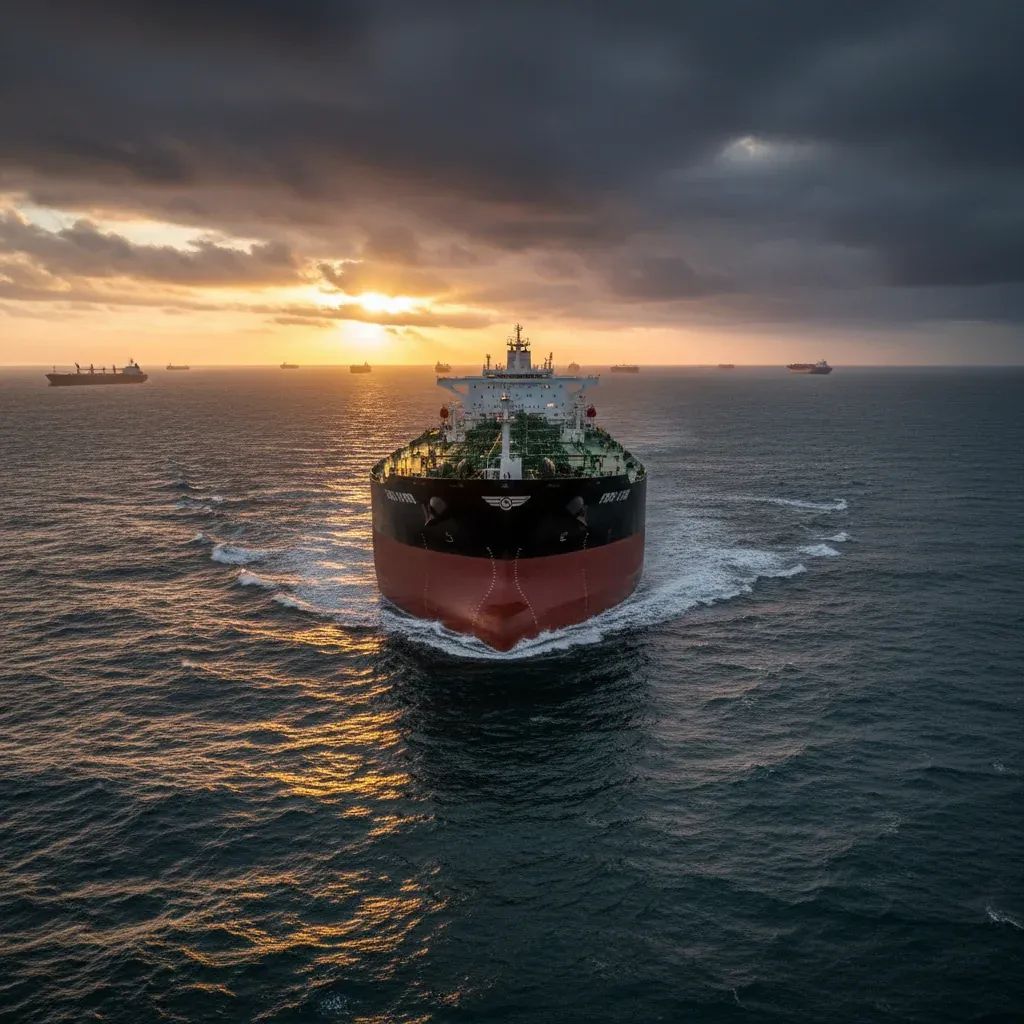
US Central Command has confirmed that two American destroyers have entered the Strait of Hormuz to begin a demining operation aimed at clearing naval mines laid by Iran's Islamic Revolutionary Guard Corps (IRGC), following Tehran's deployment of mines in late February 2026.
The Operation
The USS Frank E. Peterson and USS Michael Murphy, both guided-missile destroyers, passed through the strait on April 11 as part of a complex demining mission. Additional US forces, including underwater drones, are expected to join the operation in coming days. Admiral Brad Cooper, Centcom's commander, stated that the operation seeks to "ensure the strait is completely free of naval mines previously positioned by the Pasdaran" and promised to share safe navigation corridors with the maritime industry.
Iran's Response
Iran's Islamic Revolutionary Guard Corps responded swiftly to the US announcement. According to Iranian state television (IRIB), the IRGC Naval Command declared that "any attempt by military vessels to cross the Strait of Hormuz will be dealt with severely." Tehran has rejected Washington's claims that the destroyers successfully entered the strait, with Iranian authorities asserting they "turned away" one American destroyer. The IRGC Navy stated that passage would be "granted to civilian ships only under certain conditions."
The Strategic Significance
The Strait of Hormuz, just 21 nautical miles wide at its narrowest point, is one of the world's most critical energy chokepoints. It carries a substantial portion of global oil and liquefied natural gas trade. The standoff began in late February 2026 following military operations in the region, after which Iran deployed mines throughout the strait and declared it "effectively closed."
Mine Threat and Challenges
Iran's naval mine inventory is substantial, estimated at several thousand devices spanning decades of technology. The arsenal includes contact mines such as the Maham-1 from the 1980s and more sophisticated models equipped with magnetic or acoustic sensors. According to reports, Iranian officials have acknowledged difficulty locating all deployed mines, raising concerns about accidental detonations even after a potential political settlement.
Neither Iran nor the United States has extensive mine-clearing capacity in the region, making the demining effort both urgent and technically challenging. The shallow depth and narrow navigation channels of the strait amplify vulnerability to mine warfare, which remains a cost-effective asymmetric tactic.
What This Means for Italy
For people living in Italy, the disruption at Hormuz has implications for energy costs. Italy imports oil and gas from the Middle East and relies on stable global supply chains. Disruptions at this critical waterway can contribute to pressure on crude prices and liquefied natural gas rates, potentially affecting Italian household utility costs and business operations dependent on imported energy.
The broader economic impact could have effects across the eurozone. Supply chain disruptions and higher energy costs can influence inflation trends, which in turn affects interest rate decisions by policymakers. Italian exporters and logistics companies may also face higher insurance premiums and extended transit times if commercial shipping routes are affected.
Path Forward
If the demining operation succeeds and a safe corridor is established, Central Command plans to publish verified routes for commercial shippers. However, the maritime industry has signaled caution, with insurers already addressing coverage and premiums for vessels in the region.
Behind the military operations, diplomatic efforts are reportedly underway. The crisis underscores the fragility of global energy infrastructure and the importance of diversified supply routes. For Italy and the broader European Union, this situation reinforces the significance of energy security and the ongoing energy transition agenda.
The coming weeks will determine whether diplomatic channels can prevent further escalation in one of the world's most critical waterways.


