
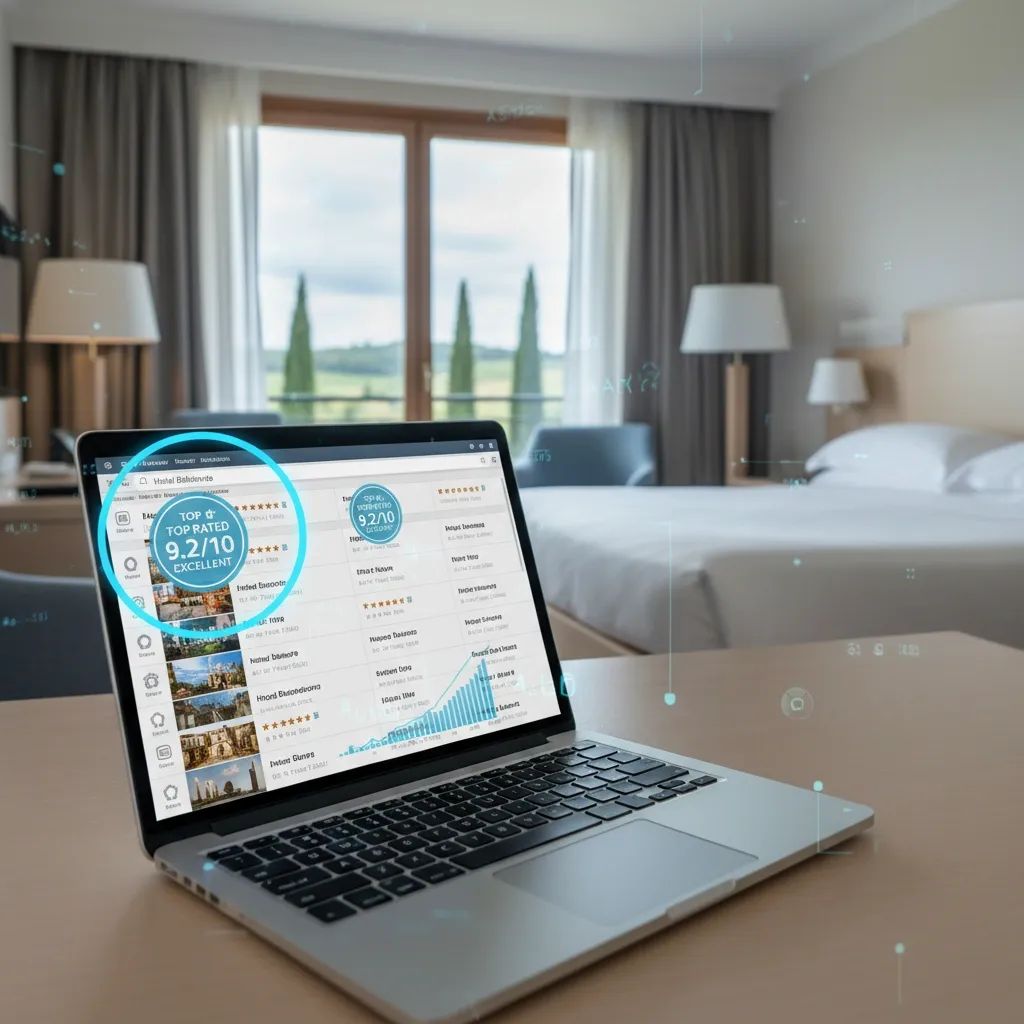
Italy's competition regulator has launched a formal investigation into Booking.com, alleging the platform systematically elevates hotels that pay steeper commissions while disguising this commercial arrangement as a quality endorsement. For anyone booking accommodation in Italy—a market where the vast majority of hotel reservations now happen online—the move matters because it directly addresses whether the properties you see first are genuinely superior or simply better at paying the platform.
Why This Matters
• Opacity costs money: Hotels labeled "Preferred Partner" rank higher based partly on commission payments rather than purely objective quality metrics, potentially steering you toward properties that aren't necessarily better value.
• Market concentration risk: Booking.com processes a substantial share of digital hotel bookings in Italy, giving it significant power over how accommodation choices appear to millions of users.
• Recent enforcement: Italian authorities launched this investigation following earlier regulatory engagements, suggesting ongoing compliance concerns about the platform's ranking practices.
How the Game Works Now
Booking.com runs tiered visibility programs designed to reward participating properties with better positioning in search results, larger visual badges, and promotional placement. The company presents these programs as quality filters based on property performance metrics. Hotels participating in these programs pay commissions that exceed the standard rate.
The Italy Competition Authority (AGCM) suspects the mechanics work differently in practice. Its investigators theorize that program participation is primarily determined by willingness to pay elevated commissions, with positioning advantages granted based on payment tier rather than objective quality differentiation. Once inside these programs, properties are marketed with language emphasizing quality and service standards.
The AGCM's concern centers on the fact that many hotels meeting identical quality benchmarks remain excluded from premium positioning simply because their owners declined to participate in or could not afford the higher-commission programs. This creates a visibility hierarchy based substantially on financial terms rather than genuine quality differentiation.
The Consumer Deception Risk
When you search for hotels in Rome, Milan, or any Italian city on Booking.com, the algorithm determines what you see. Properties with program badges appear prominently, typically at the top of results. Visual differentiation—badges, highlighting, and descriptive text emphasizing their standards—makes them perceptually distinct and signals platform endorsement.
The AGCM's concern is that this perception may be misleading. The prominence isn't primarily earned through exceptional guest experiences or competitive pricing. It's connected to commission payments and program participation. A hotel that offers comparable rooms, service quality, and pricing to its non-program counterpart may rank significantly lower in results simply because its owners chose not to participate in the higher-commission programs.
This matters because accommodation choices affect your budget significantly. If you're nudged toward a more expensive property based on visibility alone, rather than genuine quality or value differences, you may be making an economically worse decision. The AGCM argues this represents a consumer deception issue, especially given Booking.com's dominant position in Italy's travel market.
Algorithm Transparency Remains the Real Issue
Booking.com's search-ranking system incorporates numerous signals including guest reviews, booking patterns, cancellation rates, property amenities, and response times to inquiries. These factors generally correlate with user satisfaction and have legitimate weighting.
However, the specific role played by commission tier and program membership in the ranking algorithm remains opaque. This lack of transparency creates regulatory friction. When a property ranks highly, is it because travelers consistently book it and leave excellent reviews, or because its owners opted into an expensive program? From the user's perspective, there's no way to know. The algorithm remains a black box, and the platform's presentation doesn't clearly segregate organic quality signals from paid promotional placement.
The distinction matters significantly. A ranking driven by genuine user satisfaction signals that guests are genuinely happy. A ranking driven by commission payments and program participation signals primarily that the property owner made a financial calculation. One benefits consumers; the other primarily benefits the platform and properties willing to pay higher commissions.
What Happens Next, and Why It Matters for Your Bookings
Inspections were conducted at Booking.com's offices, with authorities gathering documents and communications related to these programs. The investigation process will typically involve Booking.com submitting responses and potentially negotiating remedial commitments with regulators.
Possible outcomes could include revised disclosure language, clearer labeling distinguishing paid placements from organic rankings, or algorithm adjustments ensuring commission tier doesn't disproportionately influence ranking relative to genuine quality metrics.
For travelers in Italy, the practical implication is straightforward: don't treat program badges as definitive quality signals. These indicate a commercial arrangement, not necessarily superiority. When searching for accommodation, adopt a skeptical approach by comparing prices across Booking.com, the hotel's own website, and competitors like Expedia or Hotels.com. Read guest reviews carefully, focusing on recent feedback. Use Booking.com's filtering tools to sort by guest rating rather than default order. For stays exceeding a few nights, contact hotels directly to negotiate rates.
For hoteliers in Italy, the investigation underscores the tension between platform dependency and pricing autonomy. Booking.com's market dominance means visibility access significantly impacts occupancy targets, yet participation often requires accepting higher commissions and reduced pricing flexibility. The investigation's outcome may reshape this dynamic by forcing platforms to more clearly distinguish between organic quality signals and paid promotional mechanisms.
The investigation will likely establish clearer boundaries around acceptable algorithmic weighting. Until then, Italy's travelers should understand that platform prominence correlates with willingness to pay as much as with genuine quality or value.


