
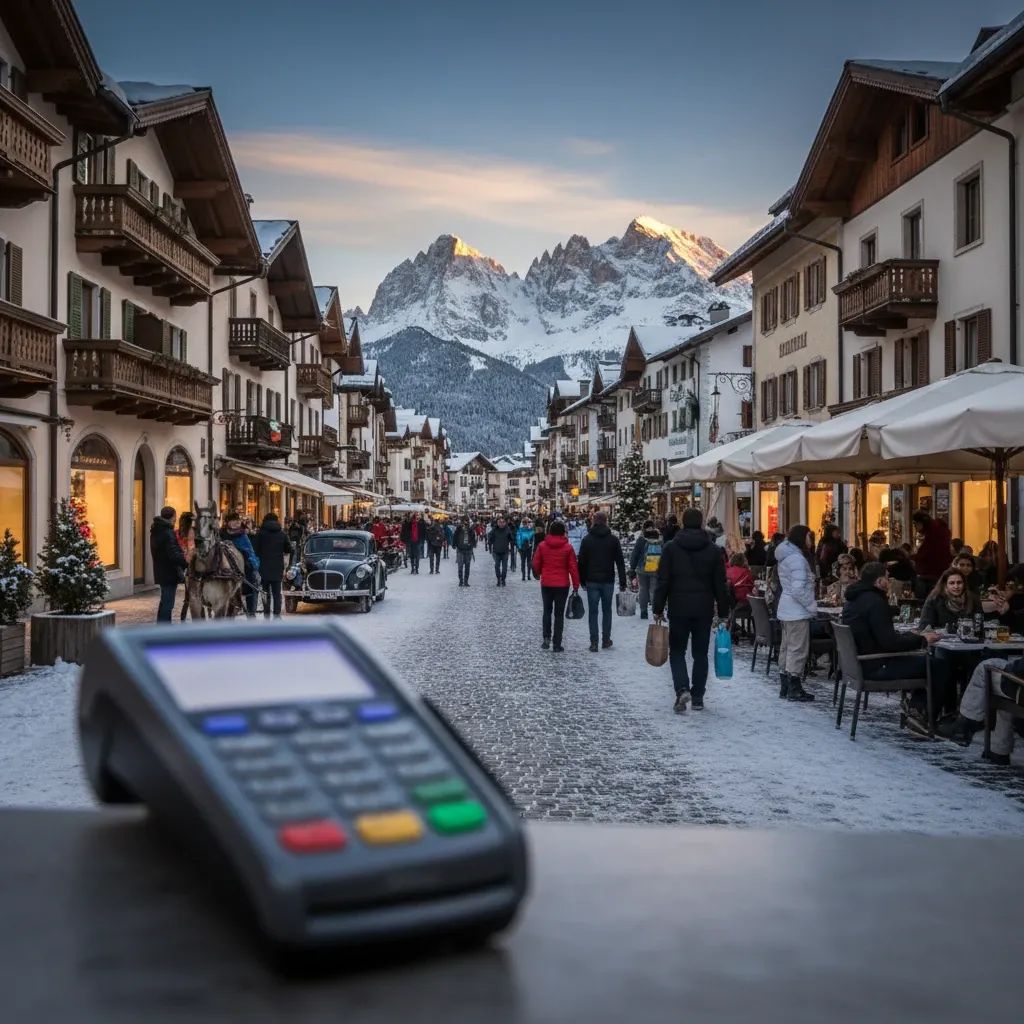
The Bank of Italy has confirmed that foreign visitor spending maintained upward momentum in January 2026, delivering a positive start to what tourism operators hope will be another record-breaking year. International tourists spent €3.01 billion during the month, up 3.8% from the €2.9 billion recorded in January 2025, underscoring Italy's enduring appeal as a European travel destination despite a typically quiet winter period.
Why This Matters:
• Trade surplus advantage: Italy's tourism balance posted a €399M surplus in January alone, as Italians spent €2.6 billion abroad—far less than what foreign visitors injected into the domestic economy.
• GDP contribution sustained: The sector's 2025 surplus was confirmed at €22.7 billion, equivalent to 1% of national GDP, reflecting robust performance in a key economic sector.
• Economic significance: Tourism remains a critical pillar of Italy's current account and supports millions of jobs across hospitality, transport, food services, and cultural institutions.
What the Data Shows
Italy's tourism receipts have now grown consistently for over two years. The January 2026 figures suggest that momentum has not stalled despite seasonal headwinds typical of winter months. The Bank of Italy's data—gathered through sample surveys, border interviews, mobile phone geolocation, and administrative records since 1996—indicates that winter city breaks and cultural tourism continue to drive spending even during traditionally quieter periods.
Growth continues across diverse source markets. Visitors from European Union countries and travelers from outside the EU both contributed to the overall expansion in 2025, reflecting diversified tourism demand. Traditional heavyweight markets like Germany, the United States, France, and the United Kingdom remain dominant visitors to Italy.
Impact on Residents and the Economy
For those living in Italy, sustained foreign tourism spending translates into tangible economic benefits. The sector supports millions of jobs across hospitality, transport, food services, and cultural institutions. Accommodation providers and major transport hubs like Rome Fiumicino and Milan Malpensa depend significantly on international visitor flows.
Tourism-related sectors—including restaurants, cafés, cultural attractions, and retail—collectively benefit from substantial foreign spending. For small and medium-sized enterprises in historic city centers, international visitors often represent a significant portion of revenue, particularly during peak periods.
However, the same demand has contributed to rising rents, crowding in urban cores, and strains on public infrastructure. Cities like Venice, Florence, and Rome have implemented or debated measures such as visitor caps, entry fees, and restrictions on short-term rentals to balance economic gain with quality of life for residents.
What the Data Revision Means
The Bank of Italy confirmed its 2025 tourism surplus estimate at €22.7 billion, representing 1% of national GDP. This performance reflects tourism's role as a stabilizing force for Italy's balance of payments and a key source of foreign exchange.
Even in a context of global economic uncertainty, the 2025 surplus remains historically strong and demonstrates the sector's resilience. For policymakers, this underscores tourism's importance as a critical economic driver.
Looking Ahead
Industry forecasts for 2026 are cautiously optimistic, with the January data lending credence to expectations of continued growth. However, infrastructure capacity—particularly in accommodation and transport—poses potential constraints if demand continues to expand rapidly. For residents, the challenge is ensuring that economic benefits translate into improved public services and infrastructure investment rather than merely increasing property values and urban congestion.


