
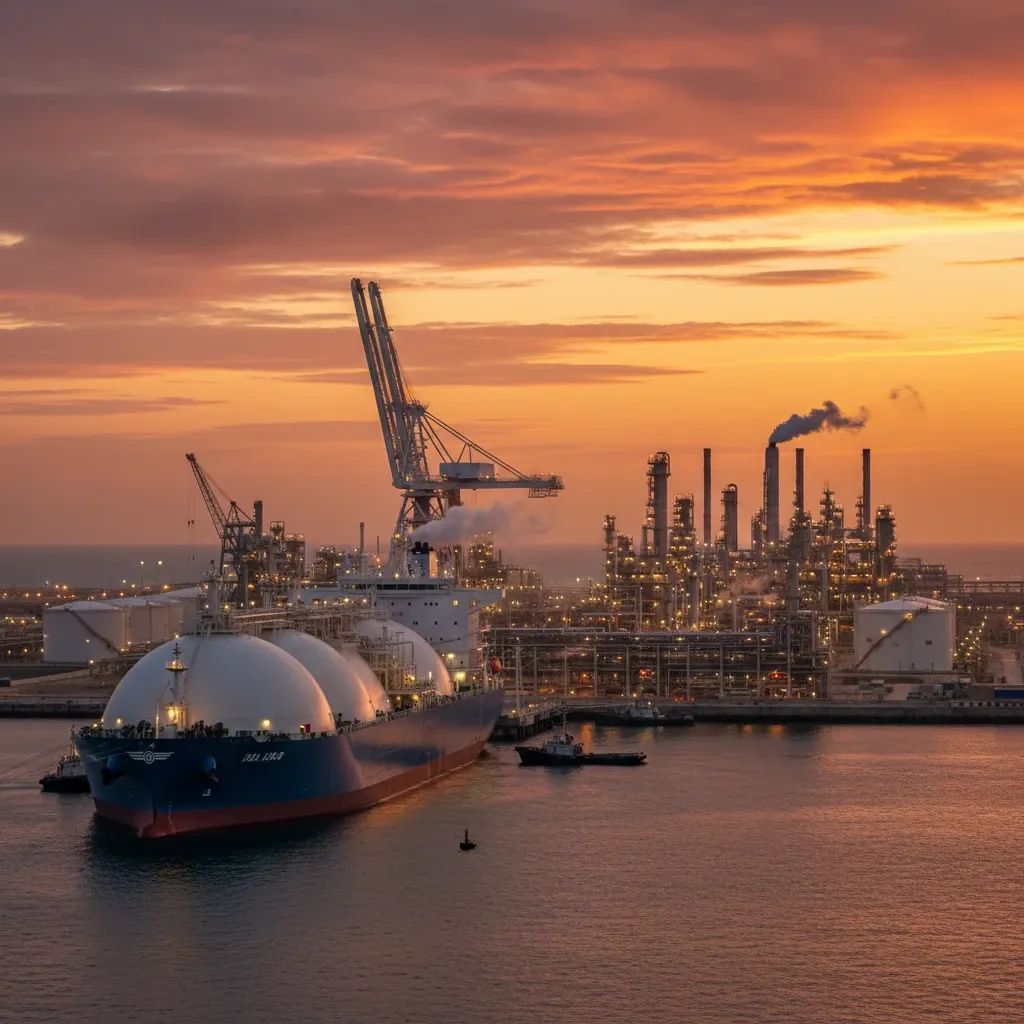
Wholesale gas prices plunge 15% as Hormuz reopens
European wholesale natural gas prices experienced a dramatic drop this week following news of a temporary ceasefire between Washington and Tehran. The announcement promises to reopen the Strait of Hormuz, a critical waterway through which roughly 20% of the world's oil and significant volumes of liquefied natural gas flow daily. For Italy, the impact could translate to lower energy bills—but the relief remains fragile and temporary.
The TTF futures contract traded in Amsterdam—the European benchmark for natural gas pricing—fell 14.9% to close at €45.3 per megawatt-hour (MWh). Italy's own trading hub, the PSV (Punto di Scambio Virtuale), tracked this movement downward, easing from crisis highs of €0.544 per standard cubic meter (Smc) reached in March to approximately €0.466/Smc by mid-April. This wholesale market shift is significant because retail energy suppliers typically adjust consumer tariffs within weeks based on these movements.
What This Means for Italian Households and Businesses
Potential household savings: For a typical Italian family consuming roughly 800 cubic meters of gas annually for heating and cooking, energy consultancies estimate that a sustained drop to current wholesale levels could reduce annual bills by €80–€150, depending on local utility rates and how quickly your supplier adjusts tariffs. Larger households or those in colder regions could see savings exceeding €200 annually if prices hold steady.
Industrial relief: Italy's energy-intensive manufacturers—particularly in ceramics, steel, and chemicals—have operated on razor-thin margins during months of elevated prices. A durable drop in wholesale costs could ease production expenses and potentially prevent further factory relocations to lower-cost energy regions.
Timeline for bill changes: The ARERA regulatory authority typically updates protected-category consumer prices quarterly, but wholesale movements of this magnitude often prompt faster revisions. Most households should see updated tariffs reflected in bills within 4–8 weeks. Commercial customers on indexed contracts typically see changes within days to weeks.
Why the Hormuz Strait Matters
Since late February 2026, tensions between Iran, the United States, and Israel effectively closed the Strait of Hormuz to most shipping. Iran restricted transit and imposed heavy tolls and security requirements, causing vessel traffic to plummet by more than 96%. With this critical energy chokepoint nearly shut, European gas prices spiked sharply.
At the worst point in March 2026, Brent crude surged past $126 per barrel, while the TTF benchmark approached €55/MWh—levels not seen since the acute phase of the Russia-Ukraine conflict. Italy, which imports the vast majority of its natural gas—much of it in the form of LNG from Gulf exporters like Qatar—felt the pressure acutely. The country's PSV hub climbed 49% from February to March, directly impacting energy costs across the economy.
This week's truce represents the first concrete de-escalation. Under the agreement, Tehran has pledged to allow vessels to pass through Hormuz without excessive tolls and military coordination requirements. In exchange, Washington has scaled back naval operations in the Gulf and is exploring broader diplomatic talks. Markets reacted immediately: crude oil fell below $100 per barrel, and natural gas followed.
Why You Should Remain Cautious
While the wholesale price drop is real, several important caveats apply:
The truce is fragile and temporary. The ceasefire is set to last only two weeks. The underlying disputes remain unresolved—Iran still demands formal control over Hormuz transit and the right to impose permanent tolls, terms that Gulf Arab states and Western powers have rejected. If negotiations collapse or hostilities resume, prices could reverse sharply.
Storage levels remain historically low. European underground storage stood at just 28.8% of capacity in mid-March 2026—the lowest seasonal reading in four years. The EU target is 90% storage fill by September 30. Even with lower prices, rebuilding reserves in time for next winter's heating season remains a tight logistical challenge.
Volatility persists. Financial analysts caution that if the Hormuz closure resumes, TTF prices could spike toward €90/MWh, levels that would force industrial demand destruction across Europe. Trading Economics forecasts the TTF contract at €53.38/MWh within 12 months, incorporating both seasonal demand and lingering geopolitical risk premiums.
What You Should Do Now
Monitor your ARERA tariff updates: Check your energy supplier's website and ARERA's official communication channels (www.arera.it) over the coming weeks. Suppliers must notify customers of tariff changes in advance. Don't assume you'll automatically receive a lower bill—verify that your contract terms have been updated.
Lock in fixed-rate contracts if possible: If you're a small business or have flexibility in your energy contract, ask your supplier about fixed-rate terms that capitalize on current lower wholesale prices. This hedges against renewed geopolitical disruptions.
Continue energy-saving measures: Even with lower prices, conservation remains important. Use programmable thermostats, improve insulation, and avoid wasteful consumption. You'll benefit from lower unit costs while helping reduce overall energy demand.
The Bigger Picture: Italy's Energy Security Challenge
For Italy's government, the Hormuz episode underscores a strategic reality: excessive reliance on distant chokepoints for essential energy creates vulnerability. Rome has accelerated permitting for new LNG import terminals on the Adriatic coast and is negotiating long-term supply contracts with Algeria, Azerbaijan, and East Mediterranean producers to reduce Hormuz dependency.
The European Commission is also reviewing storage mandates and exploring a joint LNG purchasing mechanism modeled on emergency platforms created during the Ukraine crisis. Italy has backed these proposals, arguing that collective bargaining power would reduce price volatility and limit leverage for any single supplier or transit state.
Investors have recalibrated accordingly. Italian utility stocks rallied on the Hormuz truce news, and Eni, the country's energy major, has reaffirmed commitments to expanding LNG regasification capacity and investing in renewable technologies.
Looking Ahead
The 14.9% drop in TTF futures offers immediate relief to Italian consumers and a welcome respite for policymakers grappling with inflation. Yet the fragility of the Hormuz truce, depleted storage levels, and uncertain Middle Eastern diplomacy mean energy volatility is far from over.
For Italians, the practical takeaway is clear: expect potential bill savings in coming weeks as retail tariffs adjust to wholesale movements, but remain cautious about assuming this relief is permanent. Monitor your energy bills, lock in favorable contract terms if possible, and support the government's longer-term push for energy diversification. The truce may have opened Hormuz temporarily, but Europe's energy insecurity remains a defining challenge for years to come.


