
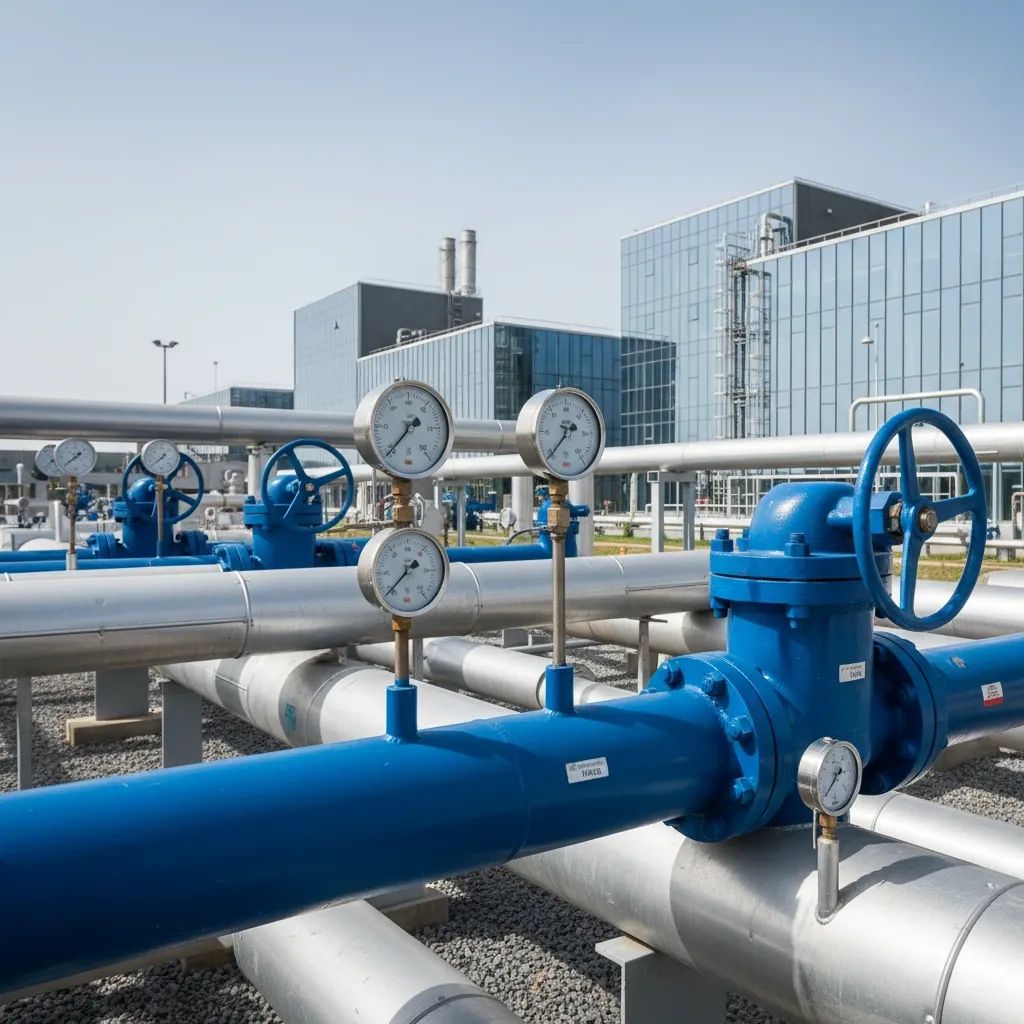
The Italy energy market has registered a notable relief as European natural gas prices dropped 4.5% to close at €32.03 per megawatt-hour (MWh) on the Amsterdam Title Transfer Facility (TTF) benchmark, a development that could affect future heating bills and electricity tariffs for households and businesses across the country.
Why This Matters:
• Potential utility cost moderation: The price decline, if sustained, could translate into moderated gas bill increases for Italian households in coming months, particularly as winter demand tapers.
• Geopolitical volatility remains: U.S.-Iran tensions continue to inject uncertainty into global energy flows, with the Strait of Hormuz — through which 20% of global LNG passes — still a potential chokepoint.
• Storage cushion in Italy: Unlike several European neighbors, Italy's gas reserves stand at 52%, the highest on the continent, providing a buffer against supply shocks.
• Weather-driven price swings: Unseasonably mild temperatures forecast for late February could further ease demand pressure, though any return to cold snaps would reverse the trend.
What This Means for Italian Households and Businesses
For residents and commercial operators across Italy, the €32.03/MWh closing price represents a tangible easing of wholesale energy cost pressures. The Italy Energy and Network Regulatory Authority (ARERA) had already implemented a 10% increase in protected customer tariffs for February 2026, bringing rates to €1.1302 per standard cubic meter. However, this latest downward movement in wholesale prices could moderate further increases or even trigger reductions in the April tariff review, depending on sustained trends.
Businesses with energy-intensive operations — from manufacturing plants in Lombardy to agricultural greenhouses in Sicily — will monitor whether this decline persists through March. The drop also benefits power generators who rely on gas-fired plants to supplement renewable output, particularly during periods of low wind production that have characterized this winter.
The Geopolitical Wild Card: Hormuz and Iran Tensions
While European gas markets enjoyed a 4.5% decline, escalating tensions between Washington and Tehran continue casting uncertainty over energy security. The Strait of Hormuz serves as the primary transit route for approximately one-fifth of global liquefied natural gas (LNG) shipments. Any military confrontation disrupting this corridor would immediately send shockwaves through global energy markets.
On February 19, prices spiked to €33.19/MWh as tensions intensified, only to retreat when U.S. officials hinted at a "limited strike" rather than broader military action. This volatility illustrates the market's extreme sensitivity to diplomatic signals. For Italy, which imports record volumes of LNG primarily from the United States and Qatar, any sustained closure of Hormuz would necessitate emergency rerouting of cargoes, driving up costs.
Storage Levels: Italy's Strategic Advantage
One critical factor separating Italy from several European neighbors is the robust state of its natural gas reserves. As of mid-February 2026, Italian storage facilities held 52% of total capacity, positioning the country as the continental leader. This contrasts sharply with the broader European Union average of 35.21% and Germany's concerning 23-30% fill rate.
The Italy Ministry of Environment and Energy Security had set an aggressive target of 90% fill by October 2025, which was nearly achieved at 92%. Throughout the winter heating season, Italy has drawn down reserves at a measured pace, benefiting from diversified import infrastructure including LNG terminals at Rovigo and Livorno and pipeline connections through Austria and Algeria.
This storage cushion provides greater flexibility to weather supply shocks. The Italian Gas Storage Association projects that under normal temperature scenarios, national reserves should exit winter at approximately 32-35% of capacity, within acceptable safety margins.
Weather Forecasts and Demand Dynamics
The immediate catalyst for Thursday's price decline was a shift in meteorological projections. After an "exceptionally cold" January and early February driving heating demand to multi-year highs, weather models now indicate above-average temperatures for Germany, France, and northern Italy through month's end.
This warming trend matters significantly because space heating accounts for the bulk of residential and commercial gas consumption during winter. For Italian consumers, this means the punishing cold of January — which contributed to ARERA's 10% tariff increase — is likely to give way to reduced consumption in late February and early March.
However, March weather patterns remain unpredictable, and a return to below-average temperatures could rapidly reverse recent price declines. The challenge is compounded by weak wind power generation this winter. When renewable output falls short, gas-fired power plants must fill the gap, adding non-heating demand independent of weather conditions.
The LNG Supply Picture
Underpinning Europe's ability to navigate this winter without Russian pipeline gas is an unprecedented surge in liquefied natural gas imports, with Italy serving as a major entry point. The country's regasification terminals have operated near capacity, processing LNG cargoes primarily from United States export facilities, as well as shipments from Qatar and Algeria.
This LNG dependence represents both solution and vulnerability. While American LNG abundance has prevented catastrophic shortages, Italy and Europe now face exposure to U.S. export policy decisions, Asian demand competition, and Middle Eastern geopolitical instability. Trading desks monitor not only European conditions but also Asian weather forecasts, as a cold snap in Northeast Asia can divert LNG cargoes eastward, tightening European supply.
Price Trajectory and Market Context
The €32.03/MWh closing price reflects adequate LNG supply, stable Norwegian pipeline flows, and moderate weather. Over the past month, TTF prices declined 7.51%. Year-over-year, the drop is more dramatic: prices are down more than 30% compared to February 2025.
Yet context matters. While current prices feel manageable compared to 2022 crisis levels — when TTF briefly touched €345/MWh — they remain roughly double the 2010-2019 average. Market analysts project TTF prices trading around €33-38/MWh through mid-2026, assuming no major supply disruptions.
Consumers typically see wholesale price movements reflected in retail bills with a 6-8 week delay, meaning late February's decline might not appear on household statements until April. For businesses on floating-rate contracts tied to TTF benchmarks, the impact is more immediate.
The Regulatory Framework
Italy's energy policy framework has evolved significantly since the 2022 crisis. ARERA's protected tariff mechanism shields approximately 3 million households deemed economically vulnerable from full market price exposure. The recent 10% February increase to €1.1302/Smc reflects regulatory balancing between cushioning consumers and maintaining supplier viability. Further adjustments will come in the April review.
The Italy Ministry of Environment and Energy Security has set targets to reduce natural gas consumption 15% by 2030 through efficiency improvements and renewable deployment. However, gas still accounts for approximately 40% of electricity generation and dominates residential heating.
What Residents Should Watch
For people living in Italy, several indicators will signal whether current price relief continues:
Storage withdrawal rates: Weekly data from Gas Infrastructure Europe shows how rapidly reserves are being drawn. Italy's current 52% level provides cushion, but the trajectory through March matters more than the current snapshot.
Weather forecasts: Reliable 10-14 day temperature projections become increasingly important as winter transitions to spring. Unexpectedly cold March weather historically catches markets off-guard.
Middle East developments: Any escalation beyond rhetorical posturing — particularly military action near the Strait of Hormuz — would override all other factors and send gas prices sharply higher.
ARERA tariff announcements: The April 2026 tariff announcement, typically issued in late March, will incorporate recent wholesale trends and signal the direction for protected customers.
The Energy Transition Context
Thursday's price movement represents a single data point in Italy's longer energy transition journey. Natural gas plays a transitional role, emitting roughly half the carbon of coal while providing flexible backup for intermittent renewable generation. Yet price volatility over the past three years has exposed economic vulnerability in continued gas dependence.
Italy added record renewable capacity in 2025, though the pace must increase to meaningfully reduce gas consumption by 2030. For individual households, the economic case for heat pumps and solar panels has strengthened considerably. Government subsidies covering 40-65% of installation costs for efficiency upgrades remain available through 2026.
Looking Ahead: The Summer Refill Season
As winter heating demand wanes, attention will shift to the crucial summer refill season. Europe must replenish storage facilities during months of low demand to prepare for next winter. The price at which this refilling occurs matters enormously for 2026-2027 heating costs.
For Italy, the combination of strong storage position, diversified import infrastructure, and continued LNG supply growth provides cautious grounds for optimism. The country has demonstrated resilience through a difficult transition away from Russian gas. Yet the energy security landscape remains fragile, vulnerable to events from the Persian Gulf to the South China Sea. The €32.03/MWh closing price offers temporary relief but underscores the ongoing challenge of balancing affordability, security, and environmental goals.


