
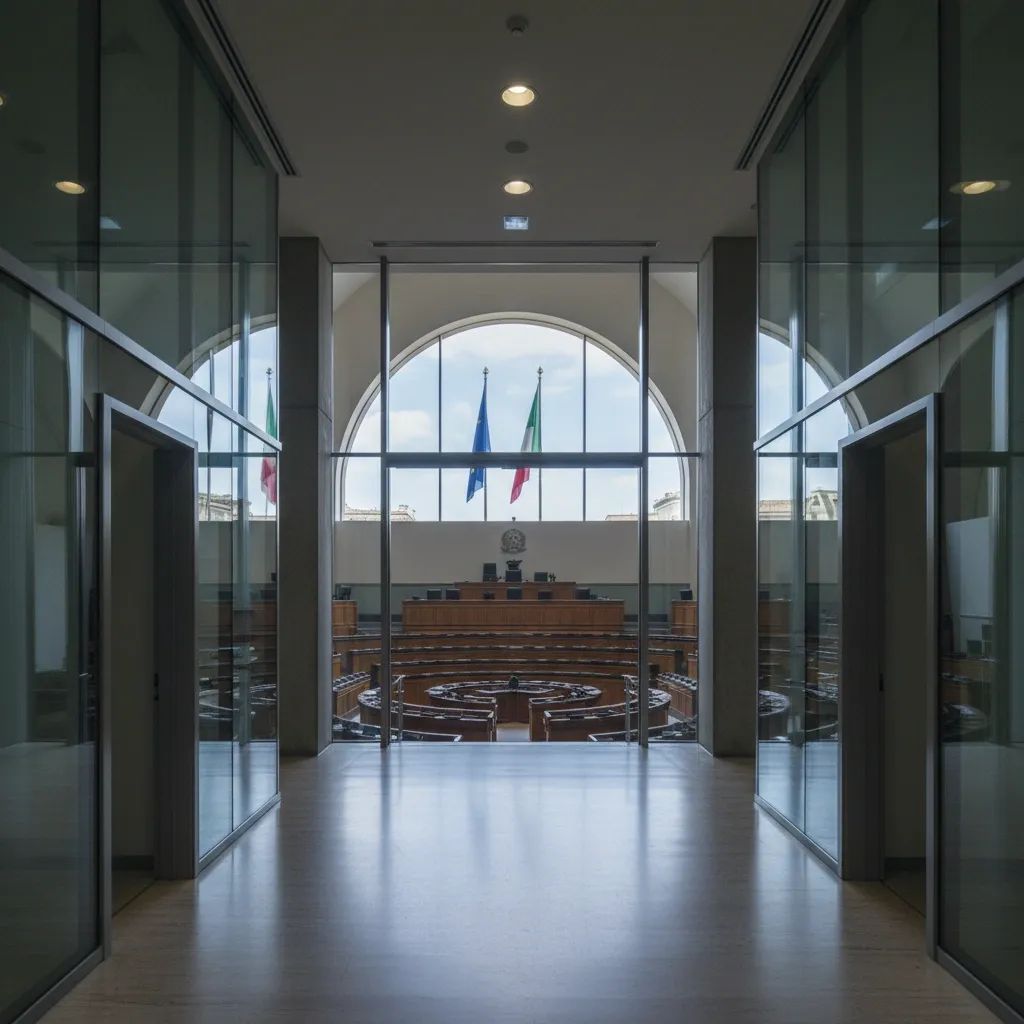
The Italy political landscape gained another volatile player as Roberto Vannacci, the former general turned far-right leader, used his party's inaugural assembly to embrace insults and position his movement as outsiders fighting a corrupt establishment. Speaking to roughly 1,700 delegates gathered at Rome's Auditorium della Conciliazione on June 13-14, Vannacci declared his supporters "the scum and the waste" of Italian politics—a deliberate reclamation of derogatory language aimed at his group.
Why This Matters
• New electoral pressure: Futuro Nazionale now claims over 100,000 members and polls between 4.5-5.2%, enough to shift Italy's right-wing coalition dynamics.
• Sovranist platform: The movement champions remigration policies targeting non-assimilated foreigners and eurosceptic reforms that challenge EU authority.
• Prime Minister Meloni distances herself: Just two days before the assembly, Italy PM Giorgia Meloni publicly stated Vannacci does not represent "the true right," signaling coalition tensions.
From Military Command to Political Provocation
Roberto Vannacci built his reputation as a military officer commanding elite units and leading operations across multiple continents before shifting to politics. Elected to the European Parliament in July 2024 on the Lega ticket, he quickly rose through the ranks. Yet by early 2026, he split from Lega to launch Futuro Nazionale, arguing the traditional right had grown timid and bureaucratic. His messaging proved effective: within months, the party enrolled more than 100,000 supporters across Italy, with Veneto among the most mobilized regions.
Embracing the Outsider Label
Vannacci opened the two-day constituent assembly with a combative tone, attacking both mainstream media and centrodestra allies. "We represent the scrap and the scum, and we are proud of it," he told delegates. "In Parliament we are a dirty dozen; here we are the sons of no one, and fiercely proud of it." The rhetoric mirrors populist movements across Europe that frame themselves as voices for the forgotten—people dismissed by elites but determined to reshape national policy.
The assembly's stated goal is to formalize organizational structure and ratify a policy platform centered on six principles summarized by the acronym V.I.T.A.L.E.: Virtue, Identity, Traditions, Love, Liberty, and Excellence/Enthusiasm. Vannacci framed these values as antidotes to what he perceives as Italy's erosion of sovereignty, cultural coherence, and discipline.
He also recited a prayer during his opening remarks, signaling the movement's alignment with conservative social values and its intention to anchor policy debates in what it considers Italy's Christian heritage. Delegates are scheduled to elect a national assembly and portions of the executive council before Vannacci delivers closing remarks on June 14.
What This Means for Italy's Political Map
Futuro Nazionale positions itself in the far-right segment of Italy's spectrum, overlapping with—but distinct from—Fratelli d'Italia and the Lega. Its platform emphasizes euroscepticism, with Vannacci's European Parliament delegation sitting in the Europe of Sovereign Nations (ESN) group, which advocates weakening Brussels' authority and restoring national veto powers on key decisions.
Core policy proposals include:
• Remigration: A concept borrowed from European ultradestra circles, advocating the expulsion of irregular migrants and tighter restrictions on foreign-origin citizens deemed "unassimilated." For legal residents, this creates uncertainty about future immigration enforcement, though proponents insist policies target only irregular status and non-compliance with Italian law.
• Industrial sovereignty: Protection of Made in Italy sectors through tariffs, subsidies, and immigration controls designed to shield local wages and reduce competition for blue-collar employment.
• Youth employment: Training programs and tax incentives for companies hiring young Italians, with restrictions on foreign labor competition.
• Southern development: Incentives for Italians abroad to return and invest in the Centro-Sud, aiming to reverse decades of brain drain affecting Italy's regions.
• Merit-based public administration: Competitive selection of civil servants and enhanced accountability for political appointees.
Critics argue the remigration agenda violates Italy's anti-discrimination statutes and international human rights obligations. Legal scholars note that policies targeting citizens based on ethnic origin or perceived assimilation would likely face constitutional challenges. For residents concerned about policy stability, these legal obstacles could delay implementation. Vannacci counters that his proposals apply only to irregular migrants and those who refuse to respect Italian laws and customs.
Coalition Tensions and Electoral Impact
Prime Minister Giorgia Meloni's June 11 rebuke—"You are not the true right"—underscores the threat Vannacci poses to the centrodestra coalition. Meloni's Fratelli d'Italia depends on maintaining a unified front with Forza Italia and the Lega. A party polling at roughly 5% can siphon critical votes in close races, especially in regions like Veneto where Vannacci's military background and outsider rhetoric resonate.
This coalition strain matters for residents because government instability can delay policy decisions on pensions, healthcare, taxation, and infrastructure—areas directly affecting daily life. If Futuro Nazionale's rise forces Meloni to shift policy positions to retain coalition partners, the government's agenda could face significant revisions.
At the same time, Vannacci has criticized the European People's Party (EPP), which includes Forza Italia, for aligning with socialists in Brussels votes. He argues this exposes a disconnect between coalition partners' European and domestic positions, framing himself as the only leader willing to prioritize Italian interests over diplomatic niceties.
Current polling shows Futuro Nazionale at roughly 5%, a threshold that could secure representation in the Italian Parliament if momentum holds through the next national election cycle. Analysts describe the movement as a "pressure valve" for voters frustrated with immigration policy, perceived EU overreach, and cultural shifts—issues that mainstream parties address more cautiously.
The Rhetoric and Its Risks
Vannacci's strategy of embracing insults—calling his supporters "scum" and "sons of no one"—echoes tactics used by populist leaders worldwide, from Trump's "deplorables" reframing to Bolsonaro's anti-establishment slogans. The approach galvanizes a base that feels marginalized but also risks alienating moderate voters and deepening polarization.
Critics within Italy's anti-discrimination advocacy groups warn that Vannacci's language legitimizes exclusionary attitudes and emboldens harassment of minority communities. Supporters counter that his bluntness reflects frustrations that centrist politicians refuse to acknowledge, positioning him as the only leader unafraid to challenge politically correct norms.
The constituent assembly concludes June 14, with Vannacci scheduled to deliver his closing address. Observers expect him to unveil additional policy details and announce key executive appointments, solidifying the organizational foundation needed to compete in regional and national elections. Whether Futuro Nazionale becomes a lasting force or a transient protest vote will depend on its ability to translate membership growth into electoral infrastructure and its capacity to navigate the legal and political obstacles its agenda will inevitably face.


