
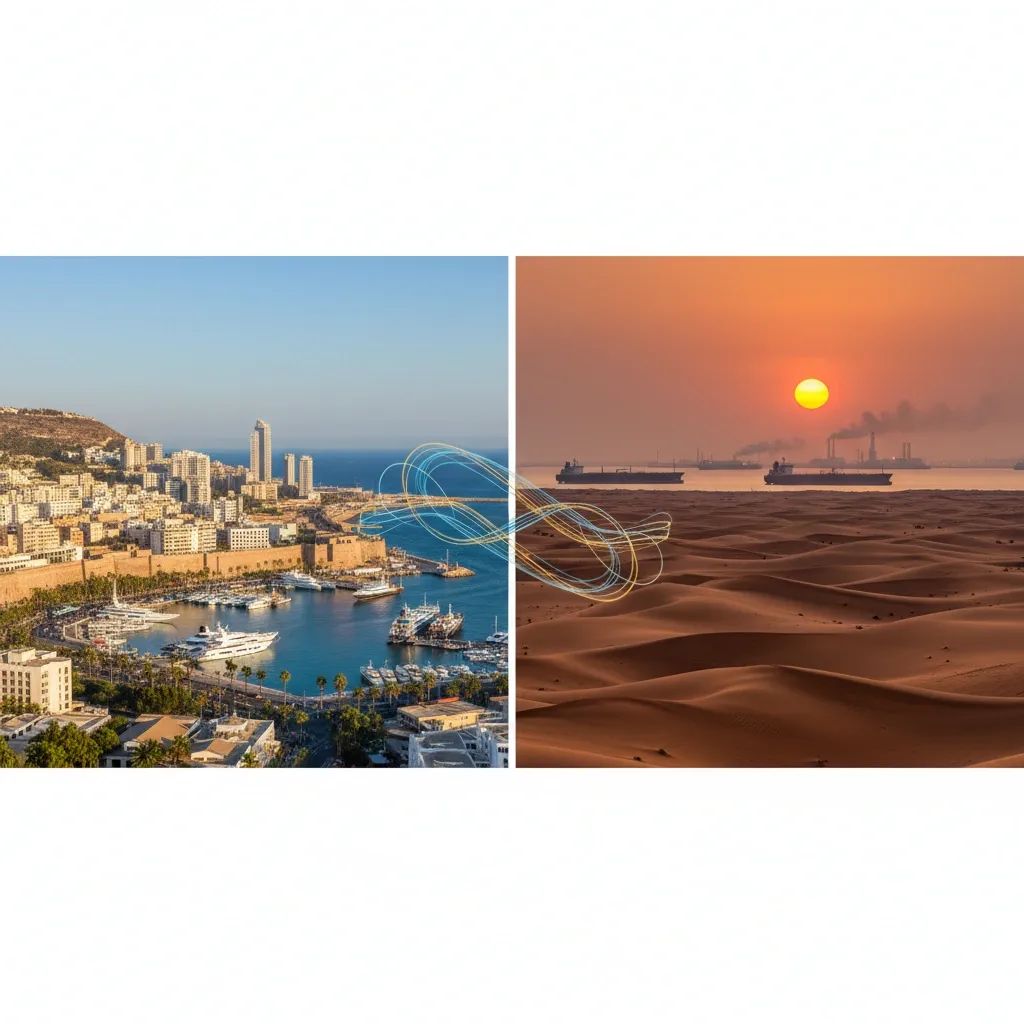
The U.S. administration is weighing a fresh military strike against Iran even as Pakistan-led mediation efforts intensify, a development that has sent ripples through European financial markets and injected fresh uncertainty into a standoff that has dragged on for months. As of late May 2026, the situation carries potential consequences for energy prices, regional stability, and the broader economic outlook across the Mediterranean—particularly for residents and investors watching from Italy.
Background: Understanding the Conflict
This escalation stems from a broader conflict initiated in February 2026, centered on Iran's nuclear program expansion and its control over strategic waterways in the Persian Gulf. The ongoing diplomatic standoff involves negotiations over uranium enrichment levels, inspection protocols, and navigation rights through the Strait of Hormuz—all critical issues for global energy security and, by extension, Italian households and businesses.
Why This Matters:
• Energy volatility: Any escalation in the Persian Gulf threatens the Strait of Hormuz, through which roughly 20% of global oil passes—directly impacting fuel costs at Italian pumps.
• Market jitters: European bourses, including Milan, rallied briefly on peace speculation, only to face renewed anxiety over the potential for conflict resumption.
• Diplomatic credibility: Italy's role within the European Union and NATO means Rome will be drawn into any broader Western response or sanction regime.
• Timeline pressure: According to reports from U.S. officials cited by CBS and Axios, U.S. President Donald Trump met with national security advisers this week and is reportedly considering military action absent an 11th-hour breakthrough.
The Diplomatic Chessboard
Pakistan has emerged as the primary intermediary between Washington and Tehran, with General Asim Munir shuttling between capitals and hosting talks in recent weeks. The mediators have floated a nine-point provisional framework calling for an immediate, unconditional cease-fire, a halt to attacks on military and economic infrastructure, and guarantees of navigation freedom in the Gulf. Yet Iran's Foreign Ministry spokesman Esmail Baghaei cautioned that "we cannot necessarily say we have reached a point where a deal is imminent," describing the intensified exchanges as merely a continuation of the same diplomatic process.
Alongside Pakistan, Oman and Qatar have also dispatched envoys to Tehran in recent days, coordinating with U.S. officials to narrow the gap. Still, Iranian Foreign Minister Abbas Araghchi told UN Secretary-General António Guterres that Washington's "persistent maximalist demands" are sabotaging the dialogue. Araghchi accused the United States of bad faith, contradictory positions, and repeated betrayals, asserting that Tehran entered the process "with a responsible approach and utmost seriousness" despite deep mistrust.
What Washington Wants—and Where Iran Draws the Line
The sticking points center on uranium enrichment and Strait of Hormuz control. The U.S. is pressing Iran to surrender its stockpile of highly enriched uranium and accept a 10- to 20-year moratorium on further enrichment, alongside snap inspections under the Additional Protocol. Tehran, however, insists on its sovereign right to maintain a civil nuclear program and has refused to relinquish material it views as a strategic deterrent.
Control of the Strait of Hormuz represents another flashpoint. The Trump administration demands the waterway remain a toll-free transit zone, while Iran seeks to preserve leverage over a chokepoint it considers within its sphere of influence. U.S. Secretary of State Marco Rubio has deemed any Iranian toll regime "unacceptable" and signaled that Washington retains "other options" if diplomacy stalls.
Iran, for its part, has countered with its own list of preconditions: compensation for conflict-related damages, international guarantees against future U.S. attacks, full sanctions relief, unfreezing of blocked assets, and an end to the naval blockade currently throttling its ports. Analysts describe the American posture as insisting on unconditional surrender, a framing Tehran publicly rejects as tantamount to national humiliation.
Military Planning and Market Reaction
According to sources cited by CBS and Axios, multiple U.S. officials reportedly canceled weekend plans as military and intelligence planners prepared contingency scenarios. Trump has not made a final decision but, according to these reports, appeared to favor considering military action during a Thursday evening briefing. The president is said to be "frustrated" by what he views as excruciating negotiations. However, Iranian officials continue to signal their commitment to the diplomatic process, with spokesman Baghaei's recent comments suggesting talks are actively ongoing rather than at an imminent breaking point.
European equity markets responded to the contradictory signals with cautious optimism. On Friday, Frankfurt closed up 1.15%, Paris gained 0.37%, and London added 0.22%, buoyed by early reports suggesting an Iran-U.S. accord might be near. Milan's FTSE MIB moved in tandem, though traders acknowledged that any spike in Gulf tensions could reverse gains swiftly, especially as summer driving season approaches and Italy's reliance on imported liquefied natural gas remains pronounced.
What This Means for Residents
For those living in Italy, the immediate risk lies in potential fuel price volatility. Should military escalation disrupt tanker traffic through Hormuz, tightened global supply could push Brent crude higher, translating within days to costlier gasoline and diesel at the pump. Households already contending with elevated energy bills from previous supply shocks would feel the pinch first.
Beyond the petrol station, a breakdown in diplomacy could trigger a fresh wave of EU sanctions coordination, potentially drawing Italian banks and exporters into compliance headaches. Rome has historically balanced Atlantic alliance commitments with substantial trade ties to the Middle East; a protracted U.S.–Iran conflict would force policymakers to choose sides more explicitly, with knock-on effects for investment flows and commercial relationships.
There is also a humanitarian dimension. Italy hosts one of Europe's larger Iranian diaspora communities, concentrated in the north. Any resumption of hostilities raises the prospect of refugee flows, visa restrictions, and heightened security scrutiny at borders—concerns that resonate particularly in a country still navigating migration policy debates.
Countdown to Decision
The next 48 to 72 hours are widely viewed as decisive. If Pakistan's mediation yields a signed memorandum of understanding, markets will likely rally further and the immediate threat of conflict recedes. If talks collapse, military contingency planning—as reported by U.S. media—could move toward implementation, and European allies—including Italy—will be pressed to signal support or dissent.
For now, the Italian Ministry of Foreign Affairs has maintained public silence, deferring to broader EU statements that call for de-escalation and renewed adherence to multilateral frameworks. Behind the scenes, however, Rome is closely monitoring shipping routes, energy futures, and the potential for a broader regional escalation that would inevitably draw in NATO assets stationed in the Mediterranean.
The paradox facing investors and policymakers alike is that both sides claim to want peace yet remain unwilling to make the concessions necessary to secure it. Until one or both blink, Italy—and the rest of Europe—must monitor the situation carefully for the possibility that diplomatic efforts give way to military action, with all the economic consequences that would entail.


