
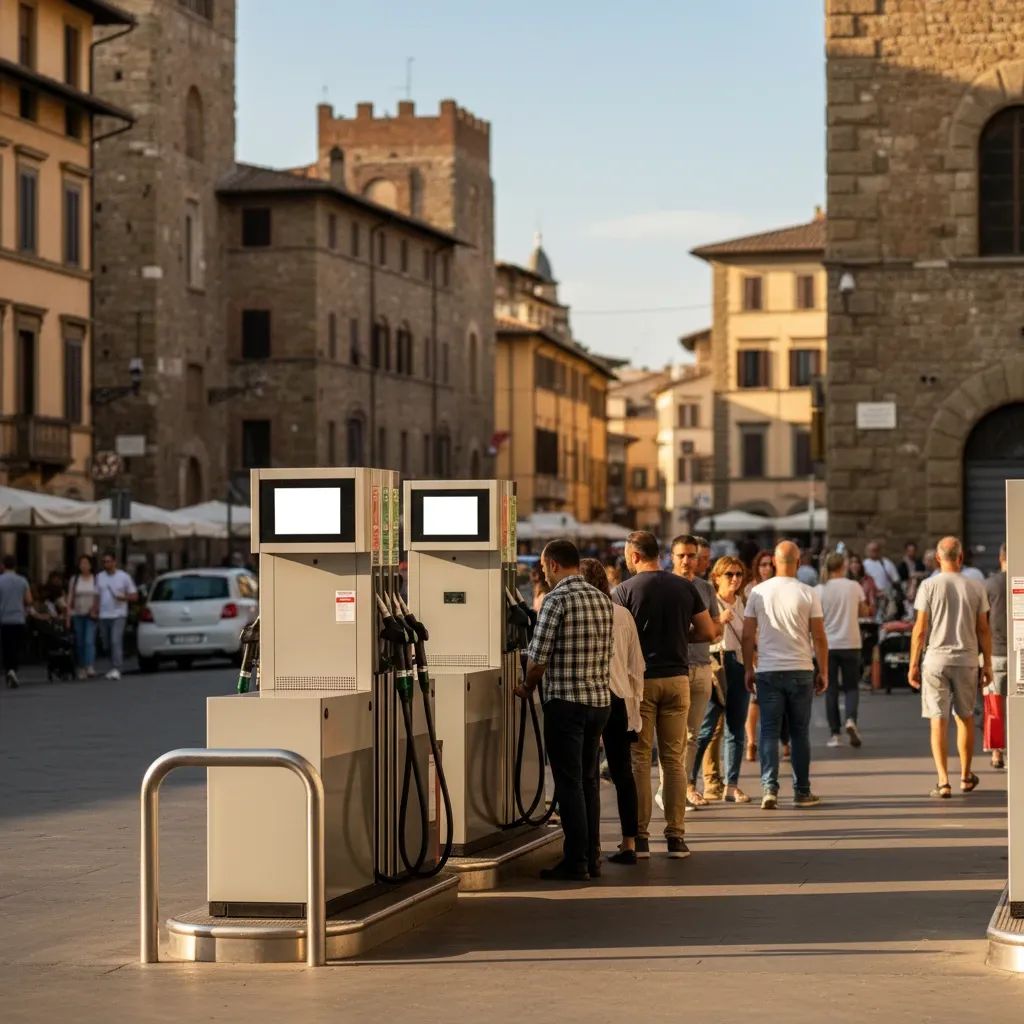
Global oil prices have dropped sharply following signals that Washington and Tehran may be moving toward negotiations on a framework that could potentially reopen the Strait of Hormuz and ease sanctions on Iranian crude exports. West Texas Intermediate (WTI) fell 5.87% to $90.93 per barrel, while Brent crude declined 5.56% to $97.78 per barrel—marking the first time either benchmark has traded below triple digits since escalating geopolitical tensions pushed prices well above $100 earlier this month.
Why This Matters:
• Fuel costs may ease if deal finalizes: A sustained drop in crude prices typically translates to lower gasoline and diesel costs within weeks, potentially offering relief to Italian households and transport firms currently facing elevated energy bills.
• Inflation pressure could recede: Energy accounts for a significant share of eurozone inflation; cheaper oil may slow price growth and influence European Central Bank policy.
• Natural gas also declining: European TTF gas futures opened sharply lower on optimism that diplomatic progress could help stabilize Middle Eastern energy flows.
Diplomatic Signals Power Market Repricing
The price decline stems from market expectations surrounding potential negotiations between the US and Iran. According to reports, a proposed framework under discussion could involve Iran clearing the Strait of Hormuz and entering negotiations on its nuclear program, with the prospect of future sanctions relief. U.S. Secretary of State Marco Rubio suggested progress could come soon, fueling trader optimism that discussions are advancing.
However, President Donald Trump has publicly stated that negotiators have been instructed not to rush and that the blockade on Iranian ports will remain until terms are finalized. This cautionary note underscores the considerable uncertainty surrounding any final agreement.
The mere prospect of potential Iranian barrels returning to global markets—which could theoretically add 3% to worldwide crude output, according to analyst estimates—has been enough to trigger repricing across energy commodities. Analysts note that Iran holds the world's second-largest natural gas reserves, representing roughly 18% of the global total, and ranks among the top five oil producers. Should sanctions be lifted in the future, Iranian exports could potentially expand significantly.
What This Could Mean for Italian Consumers and Businesses
For Italy—a net energy importer acutely sensitive to oil and gas shocks—lower energy prices could offer economic relief. Energy analysts have suggested that even modest declines in crude costs translate to savings in import bills. With WTI now trading notably below its recent peak, such savings could prove substantial if current price trends persist.
If crude prices stabilize in the $90-$95 range, analysts forecast that retail gasoline prices could potentially drop by €0.10 to €0.15 per liter within four to six weeks, though this remains contingent on sustained market conditions. Lower fuel costs could benefit logistics and transport operators—currently squeezed by elevated diesel prices—and energy-intensive manufacturers in chemicals and steel sectors.
The broader inflation picture could also improve. Earlier in May, the European Commission had revised its 2026 growth forecast downward to 0.9% for the eurozone and flagged Italy as particularly vulnerable to energy shocks, projecting just 0.5% expansion. If energy costs moderate, this could ease pressure on headline inflation and potentially influence the European Central Bank's interest rate decisions—relevant for Italian borrowers managing mortgage and business loan costs.
European Equity Markets React to Energy Repricing
European stock indices moved higher on the energy reprieve. The Stoxx Europe 600 climbed 1.5%, while Germany's DAX rose 1.4% and France's CAC 40 advanced 1.7% as traders reassessed inflation risk and market appetite improved. Italy's FTSE MIB followed suit, with gains noted in sectors sensitive to input costs.
Energy sector dynamics remain complex, with investors weighing lower crude prices against other factors affecting the sector. The market volatility underscores the interconnected nature of energy markets and broader economic performance.
Natural Gas Prices Follow Oil Lower
Natural gas markets echoed the crude sell-off. Futures on the Amsterdam TTF exchange—Europe's benchmark—opened lower as traders anticipated that potential diplomatic progress could help reduce disruption fears for liquefied natural gas (LNG) shipments transiting the Gulf region.
Italy's reliance on imported gas makes these price movements particularly significant. After pivoting away from Russian pipeline supplies, Italy has expanded LNG import capacity and diversified sources, but remains exposed to spot market volatility. Any stabilization of Middle Eastern shipping lanes could help support European prices and reduce the volatility premium that has affected contracts since geopolitical tensions escalated.
Significant Uncertainty Remains
Despite the market reaction, substantial uncertainty surrounds any potential agreement. U.S. and Iranian officials have offered conflicting statements regarding what would be included in negotiations. Trump's public statements emphasize that discussions continue without guarantees and that current measures will remain in place pending a final agreement—language that leaves significant room for talks to stall or be prolonged.
Logistical realities also temper expectations. Energy analysts note that even if the Strait of Hormuz reopens, it will take roughly one month for crude flows to normalize and up to six months for refined product markets to fully stabilize. Infrastructure considerations, insurance arrangements, and technical obstacles all pose practical challenges to swift change.
Traders will be monitoring developments closely for any official confirmation or signs of setback. For now, the combination of diplomatic signals and improved market sentiment has shifted the balance toward buyers, though significant risks remain.
Broader Economic Implications for Italy and Europe
The oil price decline arrives as the Italian government faces ongoing pressure to support households and businesses without worsening public finances. Lower energy import costs could reduce the need for emergency support measures, though benefits depend on sustained market conditions.
For the European Union as a whole, any moderation in energy prices provides some relief from the supply shocks that have affected the bloc since 2022. However, the episode underscores Europe's persistent structural vulnerability to external energy shocks. Even as renewable capacity expands, the continent remains dependent on imported energy, and geopolitical developments in the Middle East continue to influence economic performance. The current repricing serves as a reminder that energy security and diversification remain priorities for Italy and its European partners.


