
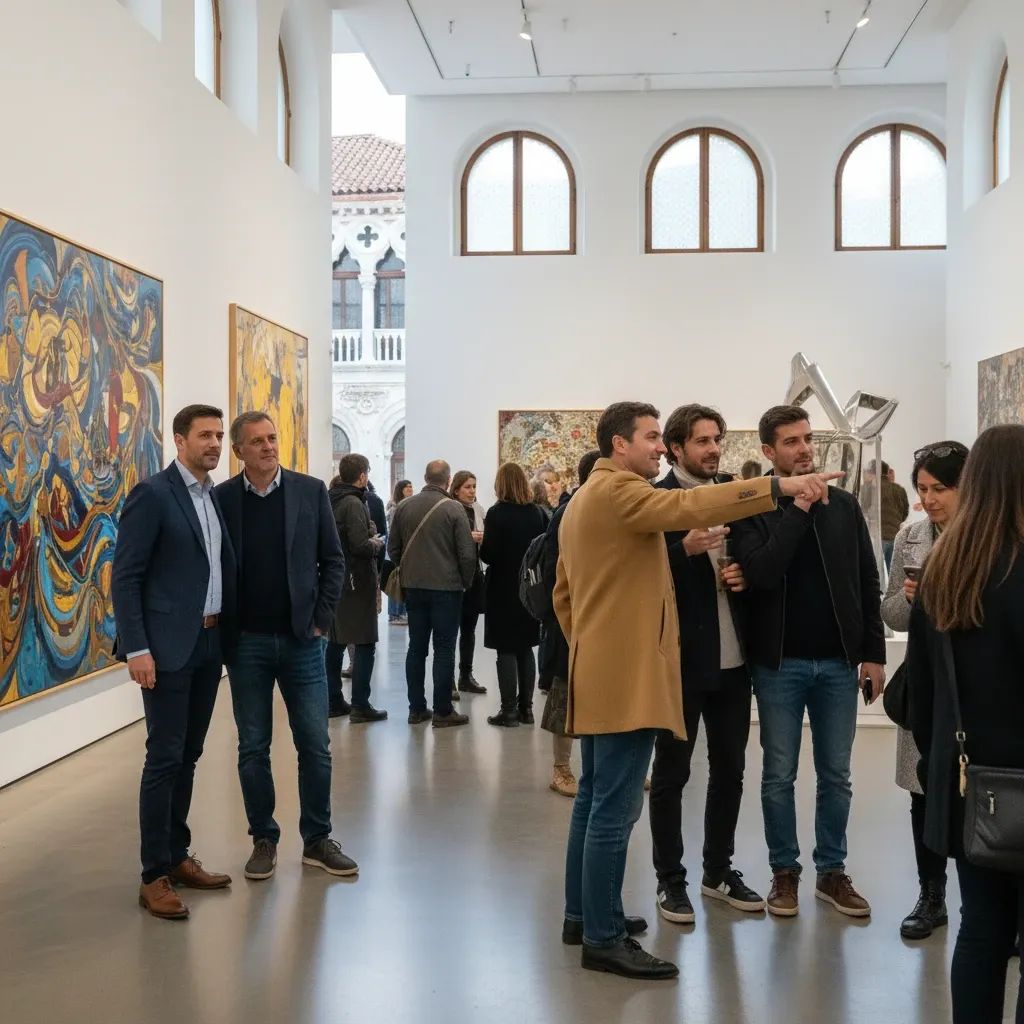
The Provincia Autonoma di Trento has announced that the 2026 Festival dell'Economia drew 45,000 attendees over five days, registering a 95% hotel occupancy rate across the regional capital and marking the event's highest participation figures since its inception 21 years ago.
Why This Matters
• Tourism windfall: Nearly every hotel room in Trento was booked from May 20–24, creating a substantial revenue surge for hospitality and service providers.
• Youth participation: The festival's theme, "From Markets to New Powers: The Hopes of the Young," positioned young people at the center of debates on AI, geopolitics, and employment—a shift from past editions.
• 2027 expansion: Next year's festival will run Tuesday, May 18 through Saturday, May 22, concluding with a city-wide public celebration on the final evening.
Five Days, 350 Events, and a New Format
For the first time, the Festival dell'Economia di Trento extended from the traditional four-day format to a full business week, wrapping up on a Sunday. The program featured 830 speakers—including 5 Nobel laureates, 18 government ministers, and representatives from Confindustria, Intesa Sanpaolo, and the European Commission—across 350 sessions held in theaters, university halls, and public squares.
Provincial President Maurizio Fugatti described the outcome as "exceptional in both content and turnout," crediting the collaborative effort of Il Sole 24 Ore, Trentino Marketing, local law enforcement, and technical crews. He noted that this year's event unfolded without the usual presence of the Province's long-serving press office director, Giampaolo Pedrotti, underscoring the team's resilience.
What This Means for Trento's Economy
The near-total saturation of Trento's accommodation sector—95% occupancy—signals a direct economic benefit for hotels, restaurants, taxi services, and retail outlets. Festival-goers who travel from elsewhere in Italy and abroad typically book multi-night stays, dine locally, and purchase goods, creating a multiplier effect that extends well beyond ticket sales or conference fees.
Trentino Marketing CEO Maurizio Rossini emphasized the festival's role in building the region's international profile. "This confirms the strength of a cultural appointment that grows year on year, with young people playing an increasingly central and concrete role—in organization, in the audience, in debates, and more and more on stage," he said.
For entrepreneurs and venue operators in Trentino, the festival functions as a reliable annual revenue spike. It also positions Trento as a viable alternative to larger convention cities such as Milan or Rome, potentially attracting other high-profile conferences and trade shows.
Political and Corporate Presence
Italy's political leadership made the event a campaign-season stop. Matteo Salvini, Deputy Prime Minister and Minister of Infrastructure and Transport, attended first-day sessions, while Raffaele Fitto, Executive Vice President of the European Commission, led a panel on territorial cohesion. European Parliament President Roberta Metsola joined the inauguration.
Corporate Italy was equally visible. Emanuele Orsini, head of Confindustria, discussed economic development as a social priority alongside Il Sole 24 Ore Director Fabio Tamburini. Intesa Sanpaolo fielded two senior executives—Federico Aguggini on AI transformation and humanoid robotics, and Stefano Barrese on branch banking in the age of machine learning.
Tamburini, who also serves as the festival's scientific director, described the edition as "fantastic, beyond expectations." Against a backdrop of Middle East uncertainty and fears of an Italian economic slowdown, he said, "The festival called everyone together, sending a strong message: the people of the Squirrel want peace."
Youth Take Center Stage
Unlike previous editions, which skewed toward academic and policy elites, the 2026 program deliberately targeted younger audiences. The theme—"From Markets to New Powers: The Hopes of the Young"—explored how Big Tech, artificial intelligence, and shifting geopolitical blocs are rewriting the rules for career entry, entrepreneurship, and civic participation.
A new initiative, "Voci del Domani" (Voices of Tomorrow), gave speakers aged 18 to 30 a platform to present original ideas. Sessions on generational succession in family businesses, youth mobility, and real-estate affordability drew standing-room crowds.
Tamburini urged young attendees to "have courage and row against the current," arguing that only by challenging inherited assumptions can new generations reshape society. Maria Carmela Colaiacovo, president of Gruppo Il Sole 24 Ore, echoed the sentiment: "Today more than ever, companies want Italian realities not just to observe change but to guide it and turn it into opportunities for economic and social growth, especially for the young people we've seen in such numbers these five days."
International Expansion and the "Road to Trento" Series
Ahead of the main event, the "Road to Trento 2026" pre-festival series held satellite sessions in São Paulo and Hanoi, spotlighting Italian companies' strategies in high-growth emerging markets. Those gatherings examined supply-chain resilience, sustainability standards, and technology transfer—topics that fed into the headline debates in Trento.
Federico Silvestri, CEO of Gruppo 24 Ore, said the Trento week "became the center of Italian politics; the country's agenda was set from here." He added that attracting new audiences, particularly students and early-career professionals, remains a priority for future editions.
Looking Ahead to 2027
Fugatti confirmed that the 22nd edition will open on Tuesday, May 18, 2027, and close with a Saturday-night citywide festival on May 22. The longer schedule aims to accommodate demand for workshops and networking sessions that were oversubscribed this year.
Planning teams are already reviewing feedback on session formats, venue accessibility, and digital streaming options. With the festival now drawing crowds comparable to major European policy summits, organizers face logistical questions about crowd control, security, and whether Trento's infrastructure can handle further growth without compromising the intimate atmosphere that distinguishes the event from larger trade fairs.
Impact on University and Research Networks
The University of Trento, a co-promoter of the festival, used the occasion to showcase research labs and host recruitment sessions for graduate programs in economics, data science, and public policy. Rector Flavio Deflorian joined Fugatti and other officials on stage at the closing ceremony at the Teatro Sociale, highlighting the institution's role in attracting international scholars who might otherwise bypass the Alpine region.
For the municipality, represented by Councillor Monica Baggia, the festival offers a chance to demonstrate civic capacity. Streets remained orderly despite the influx, public-transport schedules were extended, and volunteer coordinators managed crowd flow at marquee venues. Those successes bolster Trento's case when bidding for future European Union conferences or cultural festivals.
Broader Implications for Regional Development
The Trentino-Alto Adige/Südtirol region has long relied on winter tourism and agriculture. The Festival dell'Economia's expansion into a week-long, multi-venue spectacle diversifies that base, creating demand in the shoulder season and raising the province's profile among the business and policy communities.
A 95% occupancy rate in late May—historically a quieter period—suggests hoteliers can justify capital improvements and staff retention that would otherwise be uneconomical. Restaurants and cafés report extended hours and higher check averages when the festival crowd arrives, and local artisans see a spike in sales of wine, cheese, and handicrafts to visitors seeking authentic souvenirs.
Over time, sustained success could encourage conference-center investment and the expansion of direct flight routes to Bolzano Airport, further integrating Trentino into Italy's knowledge-economy circuit. Whether that growth proves sustainable depends on the festival's ability to refresh programming, maintain editorial independence, and avoid the commercialization that has diluted other marquee events.


