
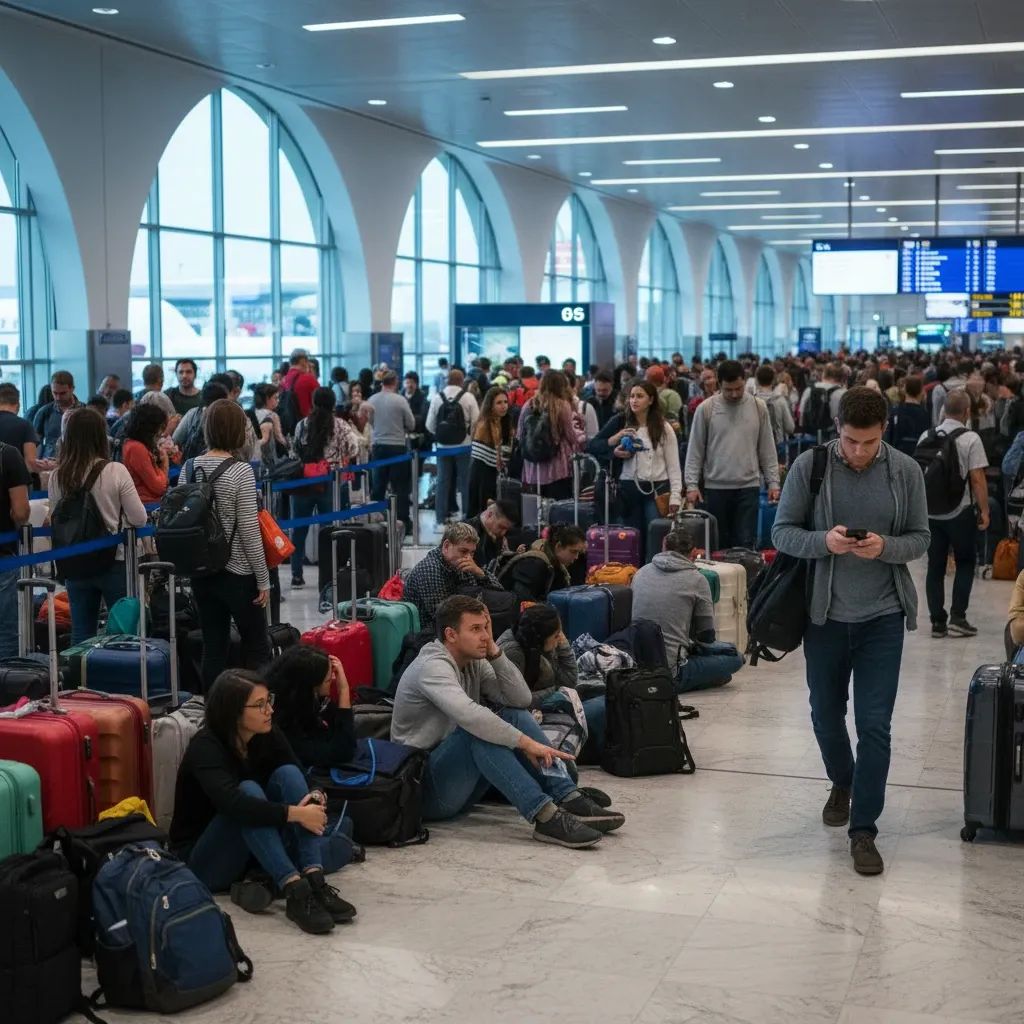
Italy's Foreign Ministry has secured emergency evacuation flights and negotiated airport access for hundreds of Italian nationals stranded in the United Arab Emirates following Iranian missile strikes on multiple Gulf capitals, a crisis that has paralyzed one of the world's busiest travel hubs and trapped professional tennis players, tourists, and students alike.
Why This Matters
• Immediate: Around 200 Italian minors on a school exchange will fly home March 3 aboard a special Abu Dhabi–Milan charter arranged by Foreign Minister Antonio Tajani.
• Ongoing situation: An estimated 30,000 Italians live in Dubai and Abu Dhabi, though most are sheltering in place; hundreds of tourists and students await evacuation as airports operate at limited capacity.
• Global disruption: The airspace closure has grounded major carriers including Emirates, Etihad, and Qatar Airways, affecting travelers worldwide and threatening the professional tennis calendar.
• Economic impact: The UAE's tourism sector faces significant projected losses in visitor numbers if the conflict persists, with cruise operators and hotel chains already reporting cancellations and revenue declines.
Evacuation Progress and Bottlenecks
A charter flight carrying 127 Italians departed Muscat, Oman, late March 2, according to a statement from Italy's Ministry of Foreign Affairs. Many of those passengers had been transferred overland from Dubai to Oman with assistance from Italian embassies in Abu Dhabi and Dubai and the consulate in Muscat. The Farnesina, as the Foreign Ministry is known, has established a Gulf Task Force and a 24-hour crisis unit to coordinate hotel accommodations, secure limited commercial seats, and arrange additional repatriation flights.
Felice Guarino, an Umbrian tourist vacationing with his sister and brother-in-law, told ANSA on March 2 that his travel agency had issued tickets for a commercial flight to Rome departing March 3. "The airport is supposed to reopen tonight," he said, referring to a partial resumption of operations at Dubai International Airport. Etihad Airways has also begun scheduling brief operational windows at Abu Dhabi Airport to clear backlogged passengers.
Yet the situation remains fluid. Dubai Airports and Abu Dhabi Airports have reopened only for "limited" departures, prioritizing humanitarian and repatriation flights. Hundreds of stranded passengers continue to sleep in airport terminals or official tournament hotels, awaiting clearance to board.
Tennis Tour in Limbo
Professional tennis finds itself entangled in the crisis. Daniil Medvedev, the world No. 11 who won the ATP 500 Dubai Duty Free Tennis Championships on February 28, confirmed to Russian media that he cannot reach the BNP Paribas Open at Indian Wells, California, scheduled to begin March 5. The Association of Tennis Professionals issued a statement March 2 acknowledging that "a small number of players and team members remain in Dubai" and are being housed in official tournament hotels.
The ATP did not name players publicly, but sources indicate Andrey Rublev and several lower-ranked competitors are also stuck. "We are in direct contact with the individuals involved, as well as with tournament organizers and security advisors," the statement read. "Travel arrangements remain subject to ongoing assessment based on airline operations and official guidance."
Two ITF World Tennis Tour events slated for March 16–28 in Fujairah have already been postponed. The Indian Wells tournament, one of nine Masters 1000 events on the ATP calendar and a mandatory draw for top players, faces the prospect of major withdrawals. Players who fail to appear without obtaining a medical or personal exemption risk fines and ranking penalties under tour regulations.
What This Means for Residents and Travelers
For the 70,000 Italians estimated to reside across the broader Gulf region, the conflict underscores the vulnerability of expatriate hubs once considered stable and insulated from regional turmoil. Dubai and Abu Dhabi have marketed themselves as cosmopolitan safe havens, attracting foreign professionals, entrepreneurs, and retirees with tax incentives and luxury infrastructure. The March 1 Iranian strikes—which sent missiles and drones toward multiple Gulf capitals in retaliation for joint U.S.–Israeli military operations on February 28—shattered that perception.
UAE air defenses intercepted most incoming projectiles, but witnesses reported smoke plumes rising from Jebel Ali Port and near the iconic Burj Al Arab hotel. The Emirati Foreign Ministry summoned Iran's ambassador and condemned the attacks as violations of sovereignty.
Italy's diplomatic network now faces the challenge of advising residents whether to evacuate or shelter in place. The Farnesina has urged non-essential travelers to postpone trips to the UAE, Kuwait, Qatar, Bahrein, and Oman until further notice. Emergency hotlines have been overwhelmed, with some callers reporting difficulty reaching crisis staff.
Italian residents in the UAE should take the following steps: Register with your nearest consulate, ensure emergency documents (passports, visas) are accessible, monitor the Farnesina's 24-hour hotline (available through the Italian Consulate in Dubai or the Embassy in Abu Dhabi) for official updates, and follow guidance from local authorities regarding airport operations and travel corridors.
For tourists and business travelers, comprehensive travel insurance that covers acts of war or terrorism has become critical. Standard policies often exclude conflict zones, leaving travelers liable for rebooking costs, extended hotel stays, and emergency medical transport. Many Italian holidaymakers discovered their coverage void the moment airspace closed.
Economic and Diplomatic Consequences
The immediate shock to the Gulf's aviation and hospitality sectors is severe. Emirates, the world's largest long-haul carrier, operates from Dubai International, the second-busiest airport globally by international passenger traffic. Its grounding ripples through European, Asian, and African routes that depend on Dubai as a connecting hub. Qatar Airways and Etihad face similar constraints, with limited flights operating only under military clearance.
Tourism revenues, which had recovered to pre-pandemic levels, now face significant projected losses in visitor numbers if the conflict persists. Hotel occupancy in Dubai plummeted below 30% over the weekend, and luxury properties that cater to European and Asian travelers are offering steep discounts to retain bookings. The Italian Chamber of Commerce in the UAE has warned that Italian-owned restaurants, fashion boutiques, and design firms clustered in Dubai's expatriate districts could see revenue declines of 50% or more if the crisis drags into April.
Italy's government has avoided public criticism of either Iran or the U.S.–Israeli coalition, instead emphasizing consular services and humanitarian assistance. Foreign Minister Tajani held a videoconference with ambassadors from Gulf posts on March 2, coordinating logistics for additional charter flights and assessing whether Italian nationals in Kuwait, Bahrein, or Qatar require similar evacuation support.
Airspace Reopening and Safety Protocols
UAE authorities announced late March 2 that "limited commercial operations" would resume at both Dubai and Abu Dhabi airports starting the evening of March 2, with priority given to flights carrying stranded passengers. Airlines must file special requests and receive air-traffic control clearance for each departure. Military aircraft retain priority access, and civilian flights may be diverted or grounded on short notice.
Passengers departing Dubai have been advised to arrive at least four hours before scheduled departure, carry printed boarding passes and embassy contact information, and prepare for potential delays or cancellations. Italian citizens without confirmed tickets are instructed to register with the Italian Consulate in Dubai and provide passport details, accommodation addresses, and emergency contacts.
The Gulf Task Force is also coordinating with tour operators and cruise lines. Several Mediterranean cruise itineraries that include Dubai or Abu Dhabi as port calls have been rerouted to Muscat or canceled outright. Italian passengers on those voyages are being offered refunds or alternative departures from Oman.
Political Fallout and Regional Stability
The attacks on the UAE—a nation that has cultivated an image as a bridge between East and West—mark a significant moment in the region's security landscape. The March 1 strikes hit civilian infrastructure, including Jebel Ali Port, a critical node for global container shipping, and areas near major hotels.
Italy's defense establishment is monitoring the regional situation carefully. The Italian Navy maintains a presence in the Gulf as part of multinational maritime security operations, and the current tensions underscore the importance of coordinated international responses to escalating regional conflicts.
For now, the focus remains on logistics: getting students home, clearing airport backlogs, and ensuring that the thousands of Italians who call Dubai home have access to emergency services and accurate information. The Farnesina has pledged to keep residents and travelers informed as the situation evolves, but the uncertainty underscores a hard truth: even the most polished global cities remain vulnerable when geopolitics turns violent.


