
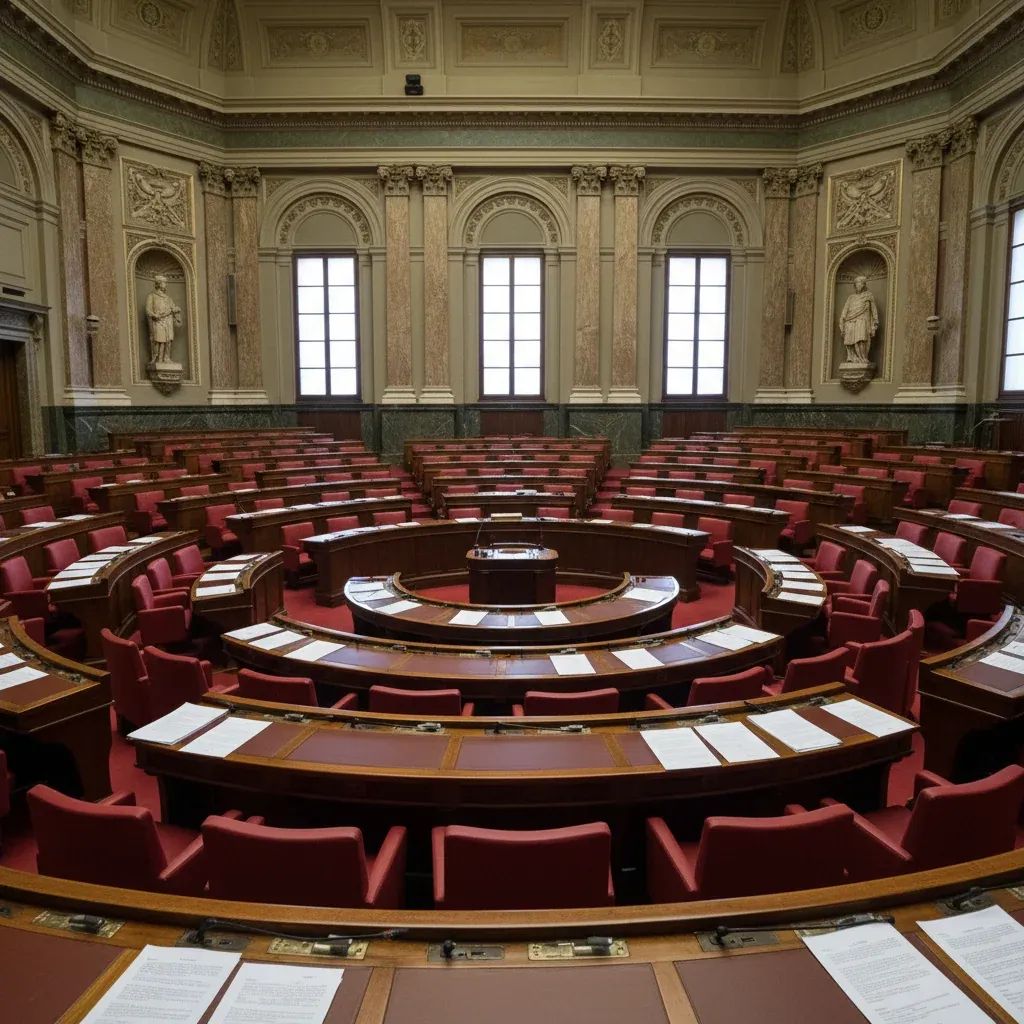
The Italy Foreign Minister Antonio Tajani will brief both chambers of Parliament on Tuesday about Rome’s decision to sit at the upcoming “Board of Peace” talks only as an observer, a choice that shields taxpayers from billion-dollar pledges yet keeps Italy inside the room where Gaza’s post-war reconstruction money will be discussed.
Why This Matters
• No extra taxes – Observer status means Italy avoids the USD 1 B membership fee many states must wire to join the Board.
• Contracts up for grabs – Italian engineering and logistics firms could bid on Gaza rebuilding projects funded by the Board’s planned USD 5 B kitty.
• Shipping lanes protected – A stable Mediterranean corridor lowers insurance costs on exports moving through the Suez/Red Sea route.
• Parliament gets the last word – Any deeper military or financial role would still need a formal ratification vote under Article 11 of the Constitution.
How We Got Here
When former US president Donald Trump launched the Board of Peace last month at Davos, invitations went to 62 capitals. Only 25, mostly Middle-Eastern partners, signed on as full members. Germany, France and the UK passed, citing constitutional qualms. Rome faced the same dilemma. Article 11 allows entry into international bodies only when there is parity of governance—something the Board plainly lacks because Trump retains a life-time veto.
After days of internal review, Palazzo Chigi opted for the half-step: observer status. Tajani now has to convince lawmakers that watching from the sidelines is better than boycotting entirely. Tuesday’s communications will be followed by rival resolutions and an immediate vote, giving the Chamber and Senate a chance to set red lines before the inaugural Board meeting in Washington on 19 February.
What Exactly Is the Board of Peace?
The organisation, green-lighted by UN Security Council Resolution 2803, has three stated goals: monitor the ceasefire, oversee a technocratic interim government in Gaza and keep Hamas from re-arming. Full members pay at least USD 1 B for a renewable three-year seat; observers pay nothing, may speak but cannot vote.
The structure resembles an investment fund more than a classic UN agency. Besides Trump’s chairmanship, an Executive Committee of high-profile deal-makers—think Tony Blair, Jared Kushner—will steer reconstruction contracts. Critics label it a “pay-to-play club” that could undercut the UN. Supporters counter that speed matters more than universal consensus when bricks, mortar and police academies are needed on the ground.
Domestic Pushback
Opposition parties from the Democratic Party to Movimento 5 Stelle accuse the government of bending the Constitution and Italian diplomacy to Washington’s will. They argue that lending even symbolic legitimacy to a body so heavily scripted by one nation sets a precedent that might sideline multilateral rules Italy traditionally champions.
Yet the same Article 11 critics cite also commits the Republic to actions “that favour peace and justice among Nations.” Tajani will likely hammer that line on Tuesday, stressing that Israel’s security and the safety of maritime trade lanes overlap with Italian interests. The minister is also expected to remind the House that Carabinieri trainers already work with Palestinian police forces—proof, he will say, that Rome’s presence is constructive, not subservient.
What This Means for Residents
• Energy bills: A calmer Eastern Mediterranean usually translates into lower LNG shipping premiums, a cost reflected in Italian utility rates within months.
• Job opportunities: Large contractors such as Webuild or Leonardo could chase security, rail and desalination tenders in Gaza, opening specialised roles for engineers and technicians back home.
• Student exchanges: The Foreign Ministry foresees scholarships for Italian universities to host Palestinian civil-service trainees—a soft-power win that also keeps local campuses international.
• No military draft risk: Tajani has ruled out any Italian combat deployment; logistics or police training missions would stay under 500 personnel, similar to existing Lebanon and Iraq contingents.
Next Steps
Tuesday 15:00 CET – Tajani delivers his 20-minute statement in the Chamber; identical remarks follow in the Senate.
Parties file their resolutions; only one can survive per chamber.
If the majority text passes, the Italian Embassy in Washington will attend the 19 February Board meeting with speaking rights but no fiscal commitments.
A six-month review clause obliges the government to return to Parliament by September 2026 for an update and potential upgrade or exit.
The Bigger Picture
Rome has long balanced Atlantic ties with European autonomy. By parking itself as an observer, Italy signals loyalty to US security priorities—especially the defense of Israel—without writing a billion-dollar cheque. Whether that nuanced stance satisfies domestic critics will become clear on the House floor this week. Either way, the decision shows a pragmatic reading of the Constitution: stay engaged where it counts, pay only when the payoff for citizens is tangible.


