
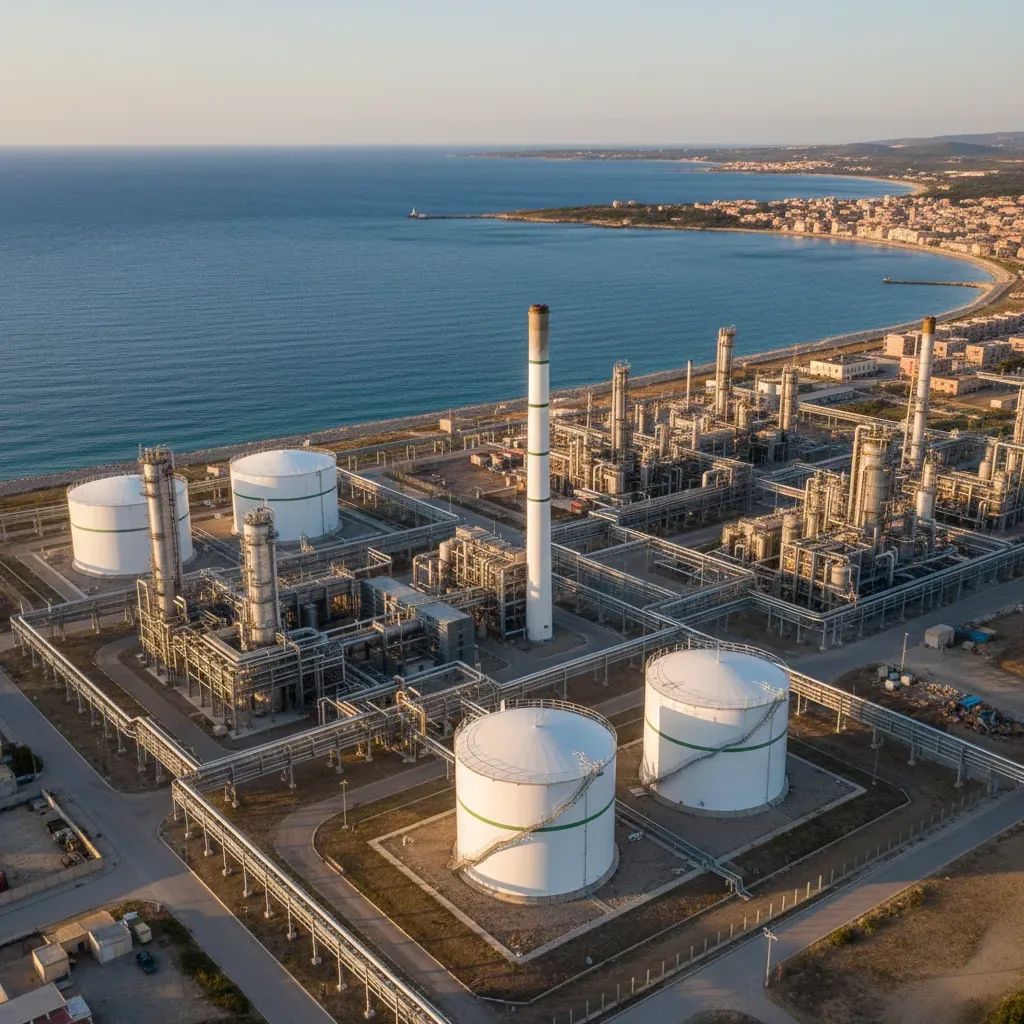
The Italy-based ISAB refinery in Priolo has formally completed its court-supervised negotiated rescue, a step that keeps 4,000 direct and indirect jobs in place and preserves one of the country’s few large fuel plants at a moment of tight energy margins.
Why This Matters
• No layoffs on the horizon: All permanent contracts remain untouched, easing fears of another industrial exodus from Sicily.
• Fuel flow stays steady: ISAB processes roughly 15% of Italy’s diesel and jet fuel; shutdown risk has now disappeared.
• €200M green-hydrogen project proceeds as planned, offering new work for engineers, builders and SMEs.
• Creditors paid, taxes secured: The agreement clears a €1.2 B debt cloud, ensuring the Treasury continues to collect around €700M in excise duties each year.
From Sanctions Headache to Sicilian Stability
The Priolo hub was jerked into crisis in 2022 when EU sanctions on Russia squeezed its then-owner, Lukoil. A fast sale to Cyprus-registered G.O.I. Energy in 2023 prevented an immediate shutdown, yet lenders kept the refinery on a short leash. The negotiated-crisis tool—introduced in Italy’s 2022 insolvency reforms—allowed ISAB to freeze enforcement actions while it hammered out new repayment terms. Independent auditors have now signed off on a five-year viability test, convincing major banks, suppliers and the national energy watchdog to back the turnaround.
The New Industrial Plan: Green Hydrogen Takes Center Stage
ISAB’s updated business blueprint runs to 2028 and pivots on decarbonisation rather than crude throughput. Flagship item: the HYNEGO electrolyser, a 100 MW first tranche valued at over €200 M, developed with Swiss trader Axpo and Milan-based Enego. The plant will feed renewable hydrogen straight into desulphurisation units, cutting Priolo’s CO₂ footprint by an estimated 900,000 t a year once fully scaled to 300 MW. Parallel tracks include pilot lines for sustainable aviation fuel (SAF), co-processing of used cooking oil and refinery-wide efficiency retrofits. Management says 30% of total capex through 2028 now qualifies as “green” under EU taxonomy rules.
What This Means for Residents
Jobs and Skills: Maintenance contractors around Siracusa can plan multi-year budgets instead of living tender-to-tender. ISAB has pledged 200 new technical hires as the hydrogen unit comes on stream.
Energy Bills: While refinery margins do not translate 1:1 into pump prices, the extra Sicilian output softens import reliance—especially crucial when shipping lanes are tense.
Environmental Oversight: The regional ARPA agency says the new hydrogen scheme could slice refinery sulphur emissions by 20%, though full benefits hinge on prompt permitting. Locals should watch the upcoming Via/Aia hearings scheduled for Q3.
Investor Signals: The success story may coax fresh capital into other distressed sites—Gela, Brindisi, Porto Marghera—changing the map of southern industry.
A Rare Win for Italy’s Petrochemical Belt
Since the negotiated-crisis procedure debuted, only a handful of large firms have emerged intact; ISAB is the first major petro-player to do so. Comparable clusters in Gela or at Eni’s Versalis division are still juggling partial shutdowns or court cases. Rome’s Industry Ministry is already citing Priolo as proof the mechanism works for “strategic assets,” hinting at tweaks that could speed up future filings.
Next Steps and Watchpoints
• Ludoil Energy is running due diligence for a potential takeover; any offer must secure antitrust and Golden-Power clearance.
• A contested commercial-supply lawsuit with Lukoil’s trading arm remains before the London Court of International Arbitration—settlement could unlock frozen working capital.
• The hydrogen project’s procurement packages go to bid in April; local mechanical shops aiming to participate must pre-qualify via ISAB’s web portal by 15 March.
Bottom line: ISAB’s clean exit from crisis mode removes a systemic risk for Sicily’s economy and opens a test bed for Italy’s broader refinery-to-renewables transition. The next two quarters—financing closure and environmental permits—will determine whether the momentum sticks or stalls.


