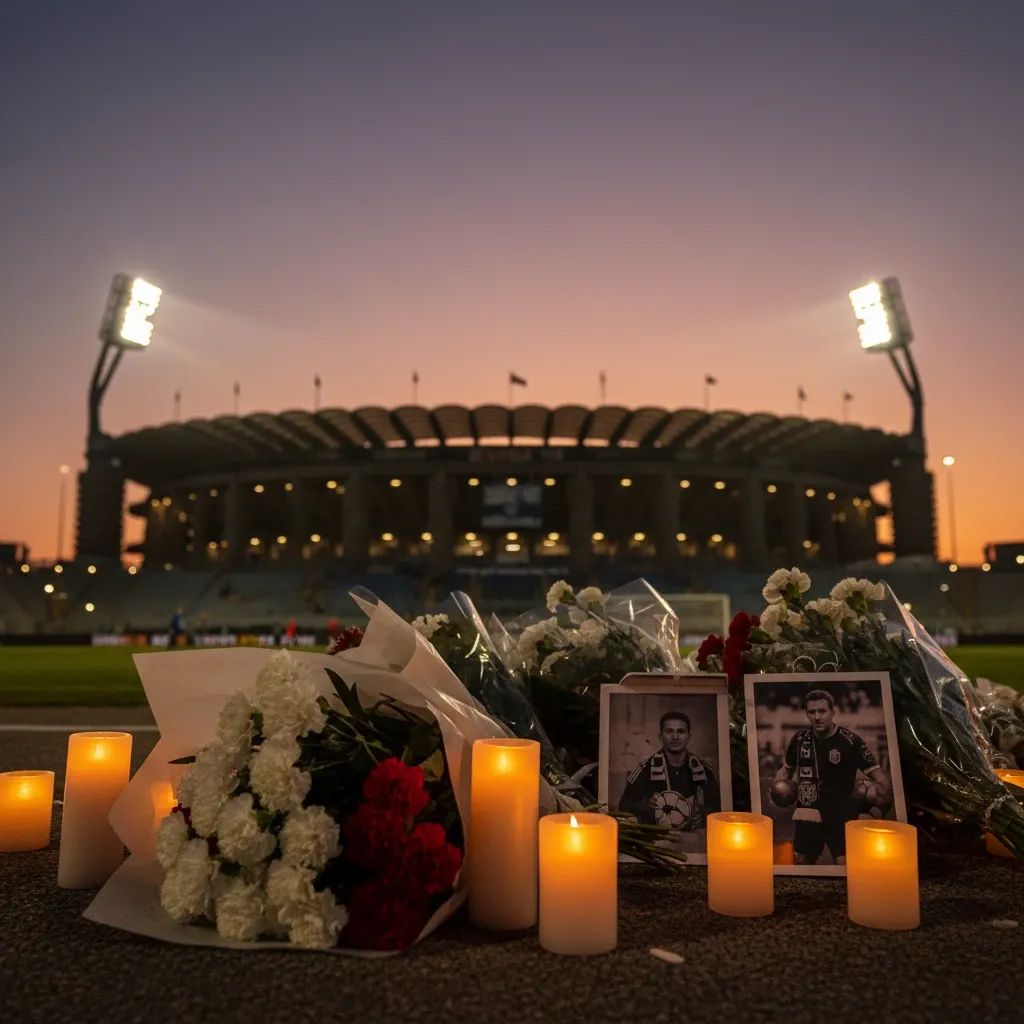
Italian football mourns the loss of Osvaldo Bagnoli, the architect of one of the sport's most improbable triumphs, who died at Verona's Borgo Roma hospital at age 91. Bagnoli's passing marks the end of an era that redefined what smaller clubs could achieve through organization, tactical discipline, and sheer belief.
Why This Matters
• Legacy preserved: Bagnoli remains the only coach to deliver a Serie A title to Hellas Verona (1984-1985), defeating clubs with vastly superior resources.
• Historic validation: Inducted into the Hall of Fame of Italian Football in 2017, his methods influenced generations of tacticians prioritizing collective strength over individual stardom.
• Local mourning: Funeral services will be held in Verona, where the club and city recognize him as an irreplaceable icon.
• Tactical blueprint: His pragmatic, counter-attacking philosophy became a case study for underfunded teams competing against financial giants.
The Miracle of 1985: When Verona Toppled the Giants
Bagnoli's name is eternally etched into Italian football lore for guiding Hellas Verona to the scudetto in the 1984-1985 season, a feat that remains the club's sole championship. Operating with a modest budget in a league dominated by Juventus, AC Milan, and AS Roma—all stacked with the world's elite talent—Bagnoli's squad achieved an extraordinary campaign that began with a striking victory over Napoli and included notable wins against top-tier opponents.
The triumph was secured in May 1985, capping a remarkable season where Verona finished with 43 points, establishing themselves as an unprecedented force in Serie A. The defensive unit proved exceptional, conceding remarkably few goals throughout the campaign. The club remained among the strongest performers from the season's opening matches, maintaining a dominant position throughout the competition.
The Philosophy: Tactical Excellence and Role Clarity
Born in Milan's working-class Bovisa district, Bagnoli brought a blue-collar ethos to the sidelines. Legendary journalist Gianni Brera nicknamed him "Schopenhauer della Bovisa," a sobriquet he wore with quiet pride, reflecting his intellectual approach to a game he treated as chess on grass.
Bagnoli's tactical signature centered on disciplined positioning, suffocating defense, and rapid counter-attacks. According to historical accounts, he was known for emphasizing that each player must excel in their clearly defined role rather than chasing tactical fashions. His formations prioritized collective effort and trust among teammates.
Reviving "Discarded" Talent
Bagnoli's genius lay in transforming overlooked players into champions. He possessed an extraordinary ability to foster confidence in players from bigger clubs who had fallen out of favor, making them believe they could win at the highest level.
He joined Verona in 1981 after promoting Cesena to Serie A, and over four seasons turned the gialloblu from newly promoted strugglers into champions. His meticulous opponent analysis and ability to build team cohesion proved instrumental in this transformation.
Beyond Verona: Genoa and Inter Stints
After leaving Verona in 1990 following relegation to Serie B, Bagnoli spent two years with Genoa (1990-1992), where he managed the Rossoblù during a significant period. His final managerial role came with Inter Milan (1992-1994), where he led the club before being dismissed in 1994. Yet his career record—spanning stints at Como, Rimini, Fano, and Cesena before Verona—cemented his reputation as a coach who maximized modest resources through intelligence and empathy.
Italy's Sporting Community Responds
Hellas Verona issued an emotional tribute via social media: "Goodbye, Osvaldo. You brought the scudetto to a city that had never dared dream so boldly. You did it with humility, as only legends can. You are, now and forever, an inimitable legend—not just of our club, but of all Italian football."
Giovanni Malagò, president of the Italian Football Federation (FIGC), praised Bagnoli's legacy: "His great humanity and profound understanding of the game earned him the esteem of his players and delivered one of the most surprising titles ever. That achievement remains one of the most beautiful and sentimental chapters in our football. As a great coach, he always prioritized the group over individual egos."
Final Years and Ongoing Struggle
Bagnoli had turned 91 on July 3, just two weeks before his death. He had battled a neurodegenerative disease for several years, a condition that necessitated his transfer to the Pia Opera Ciccarelli Foundation in San Giovanni Lupatoto approximately 20 days before his passing, following a hospital admission for complex clinical complications.
In 2018, Verona named him honorary president, a title befitting his singular contribution to the club's history.
What This Means for Italian Football Culture
Bagnoli's death closes a chapter in Italian football's most romantic era, when tactical acumen and collective spirit could overcome financial disparity. His 1985 triumph occurred during Serie A's golden age, when the league hosted the world's best players—yet a provincial coach from Milan's industrial quarter achieved the extraordinary.
For younger coaches and clubs operating outside Italy's traditional power structure, Bagnoli's career offers a durable lesson: preparation, role clarity, and trust can bridge resource gaps that talent alone cannot overcome. His Verona remains a case study in sports management and a rallying cry for underdogs across European football.
The funeral will take place in Verona in the coming days, where supporters will gather to honor the man who gave them the impossible—and who proved that in football, as in life, intelligence and heart can triumph over conventional expectations.