
United States Central Command has launched large-scale military strikes against Iranian defense infrastructure near the Strait of Hormuz on June 10, 2026, triggering a dangerous cycle of escalation in a region critical to global energy supply. The operations mark a sharp deterioration of a fragile ceasefire that had held since April and raise urgent questions about oil prices, maritime security, and the risk of broader regional war.
Why This Matters
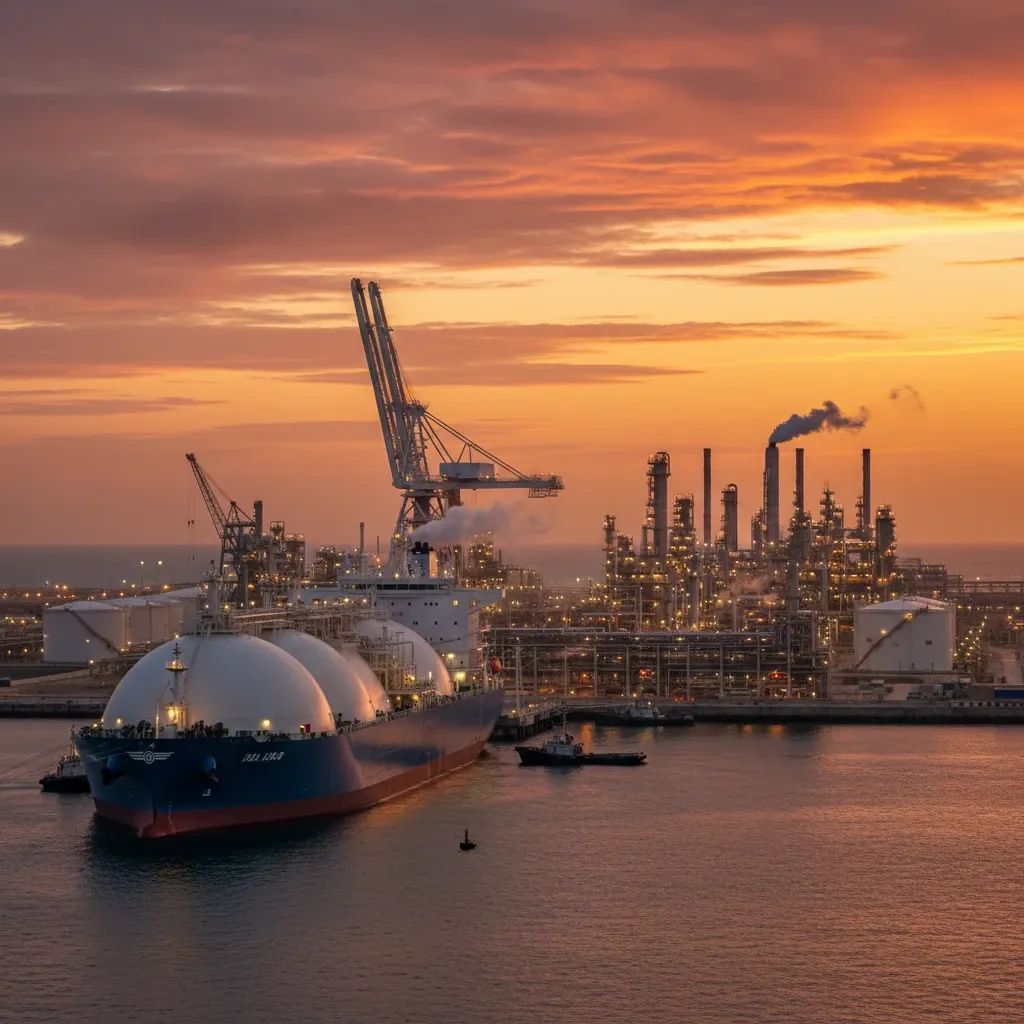
• Energy security: The Strait of Hormuz handles approximately 21% of the world's oil transit and a significant portion of global LNG traffic. Any sustained conflict here will hit fuel costs in Italy and across Europe.
• Military escalation: Nearly 50 Tomahawk missiles struck Iranian radar stations and air defense systems, with Iran responding by launching drones and missiles at U.S. bases in Kuwait, Bahrain, and Jordan.
• Diplomatic standoff: President Donald Trump is demanding immediate negotiations, but Tehran shows no sign of yielding on its nuclear enrichment rights or regional influence.
The Strategic Target Zone
The U.S. Department of Defense confirmed that strikes focused on military installations clustered around the Strait of Hormuz, hitting sites in Bandar Abbas, Qeshm, Sirik, and Minab. According to Pentagon sources cited by the Wall Street Journal, the operation destroyed radar facilities, air defense batteries, ground control stations, and military surveillance systems. Explosions were also reported on Kish Island in the Persian Gulf and in areas near Tehran, suggesting a broader geographic reach than initial reports indicated.
Defense Secretary Pete Hegseth framed the campaign as "coercive diplomacy" designed to force Iran to the negotiating table. Speaking from the Pentagon, he declared that strikes would continue with sustained intensity until Tehran agrees to terms. "President Trump is ready to conclude a deal. Iran would do well to accept it; otherwise, it will have to reckon with the kind of plans I've seen at Centcom," Hegseth said.
The operation commenced at 23:15 Central European Time on June 10, 2026, with U.S. Central Command (CENTCOM) describing the raids as "self-defense actions" in response to what Washington claims was the downing of an American Apache helicopter near the Strait on June 8. Trump himself confirmed the incident in remarks from the Oval Office, vowing to "continue military operations against Iran."
Iran's Counterstrike
Iran's retaliation was swift and coordinated. The Islamic Revolutionary Guard Corps launched waves of drones and missiles targeting American military installations across the Gulf. Kuwait temporarily shut its airspace, while authorities in Bahrain and Jordan activated air defense systems and reported intercepting "hostile objects." The U.S. military has insisted that nearly all Iranian projectiles were shot down and that no American personnel were killed or seriously injured.
Tehran has also escalated its rhetoric around the Strait of Hormuz itself, threatening to restrict passage to commercial vessels. The Iranian Navy has effectively limited transit through the waterway, a move that has already contributed to global energy price volatility. CENTCOM, however, disputes claims of a full closure, asserting that commercial shipping continues under escort.
What This Means for Italy and Europe
The renewed conflict directly threatens Italy's energy supply chains and economic stability. Approximately 30-35% of Italy's crude oil imports and a substantial portion of liquefied natural gas arrive through the Strait of Hormuz or depend on Middle Eastern sourcing. Italy, which has worked since 2022 to diversify its energy sources away from Russian gas, still relies on stable flows from the Gulf region. Prolonged disruption could send prices soaring at the pump and strain household budgets already stretched by inflation.
Beyond fuel costs, the escalation raises the risk of a broader regional war that could pull in Israel, Saudi Arabia, the United Arab Emirates, and other actors. Such a scenario would destabilize not only energy markets but also global trade routes, supply chains, and investment climates. The Italian government, led by Prime Minister Giorgia Meloni, has signaled that the European Union must adopt a "common, serious, and credible position," including the possibility of further sanctions, though Rome has stopped short of directly criticizing Washington's military action.
European Union High Representative for Foreign Affairs and Security Policy Kaja Kallas has called for the "immediate cessation of hostilities" and demanded that the Strait of Hormuz be reopened. Brussels has imposed targeted sanctions on Iranian officials accused of obstructing maritime traffic, but the bloc's influence over the crisis remains limited.
Current Impact on Italy: Energy suppliers in Italy have begun monitoring price increases, with some preliminary estimates suggesting potential fuel cost increases of 8-12% if the disruption persists beyond two weeks. The Italian government is reviewing emergency energy reserves and has advised citizens to prepare for possible price volatility at fuel stations and in household heating costs.
The Diplomatic Impasse
Trump's approach hinges on securing a sweeping agreement that would go far beyond the 2015 nuclear deal Washington abandoned during his first term. His administration's demands include permanent limits on uranium enrichment, dismantling of Iran's ballistic missile program, an end to support for regional militias such as Hezbollah and the Houthis, and the full reopening of the Strait of Hormuz.
Tehran, however, has consistently rejected these conditions as non-negotiable infringements on its sovereignty. Iranian officials insist that the country's right to enrich uranium is fundamental and not subject to compromise. They also describe their missile capabilities as essential to national defense, particularly given hostile neighbors and a history of foreign intervention. While Iran has signaled a willingness to engage in "fair and just negotiations," there is deep mistrust of American guarantees following the unilateral withdrawal from the nuclear accord.
Efforts at mediation through intermediaries such as Qatar have so far yielded little progress. Iranian state media have repeatedly denied claims by Trump that a deal is near. The focus in Tehran, according to government spokespeople, is on defending the country, not negotiating under the threat of military strikes.
International Reactions
China condemned the U.S. airstrikes as a "serious violation of Iranian sovereignty" and urged both sides to exercise restraint and pursue a diplomatic resolution. Beijing warned that renewed warfare serves no one's interests and risks destabilizing the entire region.
Russia expressed "extreme concern" and accused Washington of undermining global security and the nuclear non-proliferation regime. Maria Zakharova, spokesperson for the Russian Foreign Ministry, called the strikes a "blatant violation of international law" and the UN Charter, urging an immediate halt to armed attacks.
Meanwhile, regional powers have scrambled to protect their own territory. Kuwait, Bahrain, Jordan, Qatar, Saudi Arabia, and the United Arab Emirates have all activated air defenses. Israel is preparing for the possibility of Iranian missile strikes on its soil, a scenario that could draw the conflict into a multi-front war.
The Economic Fallout
Markets have already reacted to the heightened tensions, with energy futures climbing and investors seeking safe-haven assets. Analysts warn that a sustained conflict could push crude oil prices sharply higher, triggering inflationary pressure worldwide and potentially tipping fragile economies into recession. For Italy, which imports the bulk of its energy, this translates into higher costs for transportation, manufacturing, and households.
The closure or restriction of the Strait of Hormuz would force tankers to take longer, costlier routes, further driving up prices. Insurance premiums for ships transiting the Gulf have already increased, reflecting the elevated risk environment. Any serious disruption to LNG shipments would particularly affect European nations still rebuilding their energy security architecture after the upheaval of recent years.
The Road Ahead
The immediate future depends on whether Trump's strategy of "coercive diplomacy" succeeds in forcing Iran to the table or instead provokes further entrenchment. The U.S. president has made clear that military operations will continue until Tehran capitulates, but such rhetoric may only harden Iranian resolve.
Military analysts caution that each round of attacks and counterattacks increases the likelihood of miscalculation, accidental escalation, or unintended consequences that could spiral into full-scale war. The region's complex web of alliances, rivalries, and proxy relationships makes containment difficult once hostilities begin.
For residents of Italy and the broader European Union, the crisis underscores the vulnerability of energy supplies and the limits of diplomatic influence in a conflict driven by Washington and Tehran. Rome and Brussels can call for restraint, impose sanctions, and seek to mediate, but the ultimate trajectory of this confrontation rests with actors thousands of kilometers away—actors whose decisions will shape fuel prices, economic stability, and security across the Mediterranean.


