
The Iran-United States conflict has erupted once more after a fleeting truce, with fresh American airstrikes near Iran's Bushehr nuclear facility and a near-complete halt to shipping in the Strait of Hormuz, a lifeline for global energy markets. The crisis now threatens to pull in European allies, disrupt fuel supplies, and push oil past $130 per barrel—directly affecting pump prices, inflation, and household budgets across Italy.
Why This Matters
• Energy shock incoming: Roughly 20% of global oil and a significant share of liquefied natural gas (LNG) transit through Hormuz; disruption could lift crude to $100–130 per barrel, raising heating, transport, and grocery costs.
• Jordan reports missile intercepts: The Jordanian Armed Forces intercepted Iranian projectiles that violated the kingdom's airspace on 9 July, signaling spillover beyond the immediate combat zone.
• European nations under pressure: Italy and other EU members must decide whether to back U.S. operations, negotiate passage with Tehran, or forge a separate maritime security plan—choices that will shape energy access and inflation in the coming months.
Collapse of the June Truce
Less than a month after Washington and Tehran inked a provisional ceasefire memorandum in June, the agreement has shattered. On 8–9 July, U.S. Central Command (Centcom) launched "heavy raids" against at least 90 Iranian military targets along the southern coast, striking missile sites, air-defense installations, drone depots, and logistical hubs. President Donald Trump declared the ceasefire "over" and warned of "new, powerful strikes" if Tehran continues to threaten commercial vessels.
Iran's response was swift. The Islamic Revolutionary Guard Corps (IRGC) claimed responsibility for missile and kamikaze-drone strikes on American bases in Kuwait, Bahrain, and Qatar, hitting fuel storage, missile-defense batteries, and command installations. Iranian air-defense systems activated over the coastal cities of Bandar Abbas, Sirik, and Bushehr, the latter home to Iran's sole operational nuclear power plant. According to the deputy governor of Bushehr province, U.S. forces also struck an area adjacent to the nuclear facility and a military outpost near Choghadak, as well as a fishing wharf on the southern coast.
The Iranian Health Ministry reported at least 14 dead and 78 injured across multiple provinces, with three IRGC members killed in Khuzestan. Mohammad Bagher Ghalibaf, speaker of the Iranian parliament, vowed "severe retaliation" and insisted that Hormuz would reopen "only through Iranian agreement, not American threats."
Hormuz at a Standstill
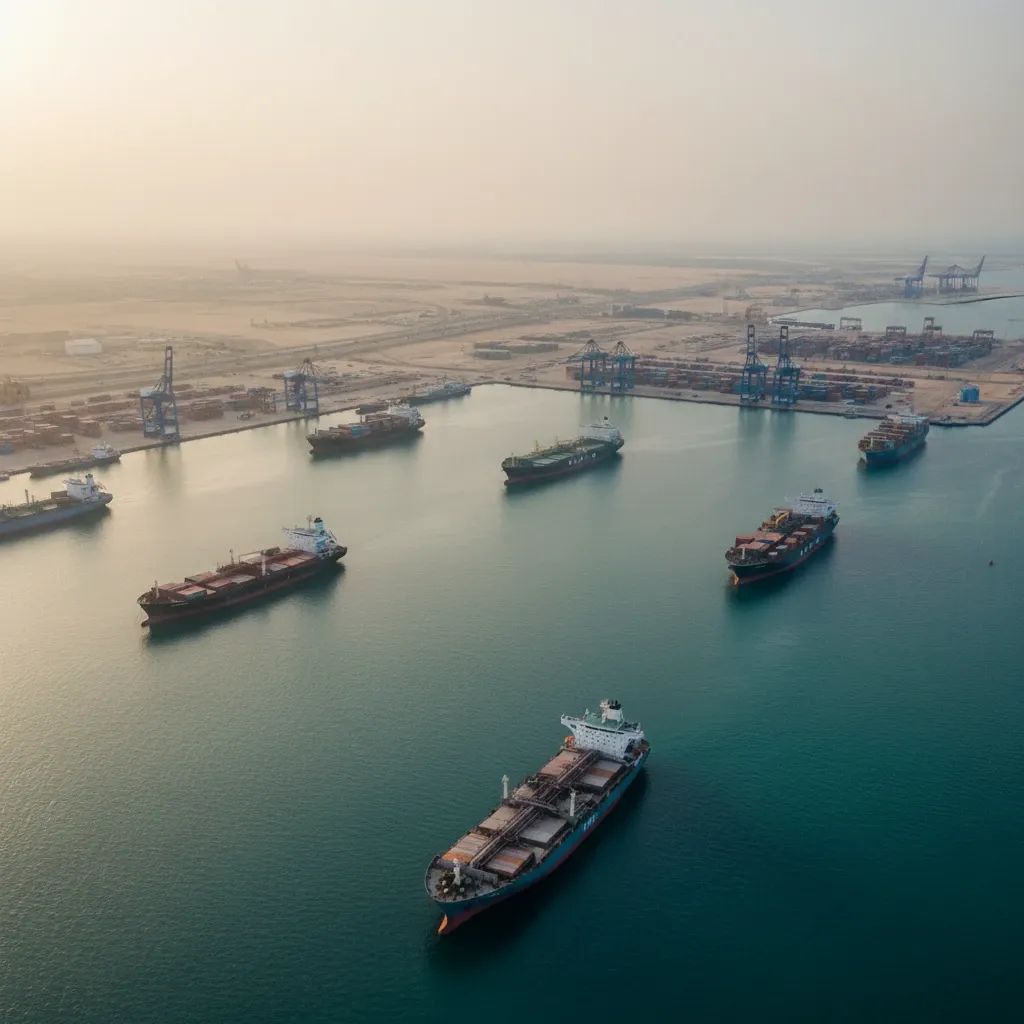
Bloomberg data confirms that maritime traffic through the strait has slowed to a trickle. Over the three weeks following the June accord, an average of 34 merchant vessels passed through daily, peaking at 59 on 24 June. By 9 July, only a single U.S.-sanctioned supertanker heading outbound and one Iranian-flagged container ship were observed traversing the waterway. Most traffic now clings to a northern route tacitly approved by Tehran, while a southern corridor—historically protected by Oman and the United States—saw almost no activity.
This pinch point matters: Hormuz funnels roughly one-fifth of the world's crude oil and a substantial portion of global LNG exports. Economists warn that a prolonged blockade could add two percentage points to global inflation if Brent crude surges past $100. The effect cascades quickly—higher jet fuel, diesel, and heavy-fuel costs drive up freight rates, which in turn lift prices for everything from wheat to plastics.
For Italy, which imports between 12% and 14% of its LNG via the Gulf—much of it from Qatar—the stakes are tangible. Natural-gas prices on European spot markets have already ticked upward, and analysts project a further squeeze if shipments remain bottled up for weeks. Italian households, still adjusting to elevated energy bills after the 2022 Ukraine crisis, face the prospect of another inflationary jolt just as the European Central Bank was preparing to ease interest rates.
European Dilemma: Diplomacy or Deterrence?
The crisis has reopened an old debate within the European Union: whether to align with Washington's hard line or pursue independent channels with Tehran. In March, EU and Gulf Cooperation Council foreign ministers condemned Iranian attacks on Gulf states as "unjustifiable" and pledged solidarity. Yet by April, several European governments—led by France—began negotiating bilateral transit arrangements with Iran, allowing container ships to pass under Iranian supervision in exchange for fees or other concessions. Spain publicly supported such deals, while the United Kingdom and Italy initially hesitated.
Italian Foreign Minister Antonio Tajani reiterated on 9 July that Rome's position "is that of the European Union," calling for diplomacy as the "only path" to defuse the standoff. The Italian Defense Ministry has made clear that any naval mission to Hormuz would require a verified ceasefire. France and the UK have floated the idea of a European-led maritime task force that would not involve U.S. warships, aiming to reassure Tehran while safeguarding commercial lanes. Germany, meanwhile, has deflected President Trump's request for naval contributions, saying publicly "this is not our war."
The European Commission issued a statement on 9 July urging "maximum restraint" and full respect for international law, stressing that civilian protection must remain paramount. Brussels has layered additional sanctions on Iran over its ballistic-missile program, nuclear enrichment, support for armed groups, and human-rights violations—yet it continues to hold open a diplomatic window.
What This Means for Italy's Economy
Italy's exposure to a protracted Hormuz crisis is multi-layered. LNG imports from Qatar underpin a significant share of electricity generation and winter heating; any supply shock translates quickly into higher utility bills. Petrochemical feedstocks—including polymers and purified helium—also transit the Gulf, feeding into manufacturing supply chains from automotive to pharmaceuticals. Japanese carmakers, for instance, have already cut production and downgraded profit forecasts because of aluminum and plastic shortages stemming from the Middle East.
Inflation, which the Bank of Italy had expected to moderate below 2% by year-end, risks re-accelerating if oil remains above $100 per barrel for an extended period. That would force the ECB to pause or reverse rate cuts, raising borrowing costs for Italian households and small businesses. Freight and aviation fuel are especially sensitive: industry analysts warn that jet-kerosene prices could double, pushing up ticket prices for summer travel and autumn cargo shipments.
Farmers also face headwinds. The Gulf region supplies up to 30% of internationally traded fertilizers; a sustained blockade would tighten nitrogen and phosphate markets, lifting input costs just ahead of the autumn planting season. Supermarket shelves may see knock-on price increases in bread, pasta, and other staples if grain production costs climb.
Jordan's Alarm and Regional Spillover
The Jordanian Ministry of Communications confirmed late on 9 July that air-raid sirens sounded after Iranian missiles penetrated the kingdom's airspace. Government spokesman Mohammad Momani told state broadcaster Al Mamlaka that the projectiles were intercepted by Jordanian air defenses, though he did not specify whether they were aimed at targets inside Jordan or were merely transiting toward Israel or U.S. installations farther west.
Jordan's involvement underscores how quickly a bilateral clash can morph into a wider regional conflagration. The kingdom hosts American personnel and serves as a logistics hub for coalition operations; any sustained barrage risks drawing Amman more deeply into the conflict and complicating overfly permissions for European carriers. Royal Jordanian Airlines and several European carriers have already rerouted flights away from Iranian and Iraqi airspace, adding flight time and fuel costs.
What Comes Next
All eyes are now on Trump's next move and Tehran's response calculus. The U.S. president has oscillated between bellicose rhetoric—threatening "powerful strikes"—and hints that Iran has reached out for a fresh deal, though Iranian officials have publicly denied any contact. Ghalibaf's insistence that Hormuz will open "only with Iranian agreement" sets the stage for either protracted brinkmanship or a face-saving compromise brokered by Qatar, which served as mediator for the now-collapsed June accord.
For Italy and its European neighbors, the immediate priority is diversifying energy sources and securing alternative shipping routes. Overland pipelines that bypass Hormuz can handle only a fraction of the necessary volumes, and strategic petroleum reserves offer a temporary buffer—typically 90 days—not a structural solution. The longer the standoff drags on, the greater the likelihood that Italian refineries will bid up spot cargoes from West Africa or the North Sea, passing those premiums directly to consumers at the pump.
Diplomatic efforts continue behind the scenes. The Italian government is coordinating with Paris, Berlin, and Brussels on a unified stance that balances transatlantic solidarity with pragmatic engagement. If a credible ceasefire emerges, European naval assets—possibly including Italian frigates—could join a multilateral mine-clearance and escort mission to restore confidence in the strait. Until then, Italy's energy importers, freight forwarders, and households should brace for volatility in fuel and food prices, with the full economic impact hinging on how many more weeks—or months—this crisis persists.


