
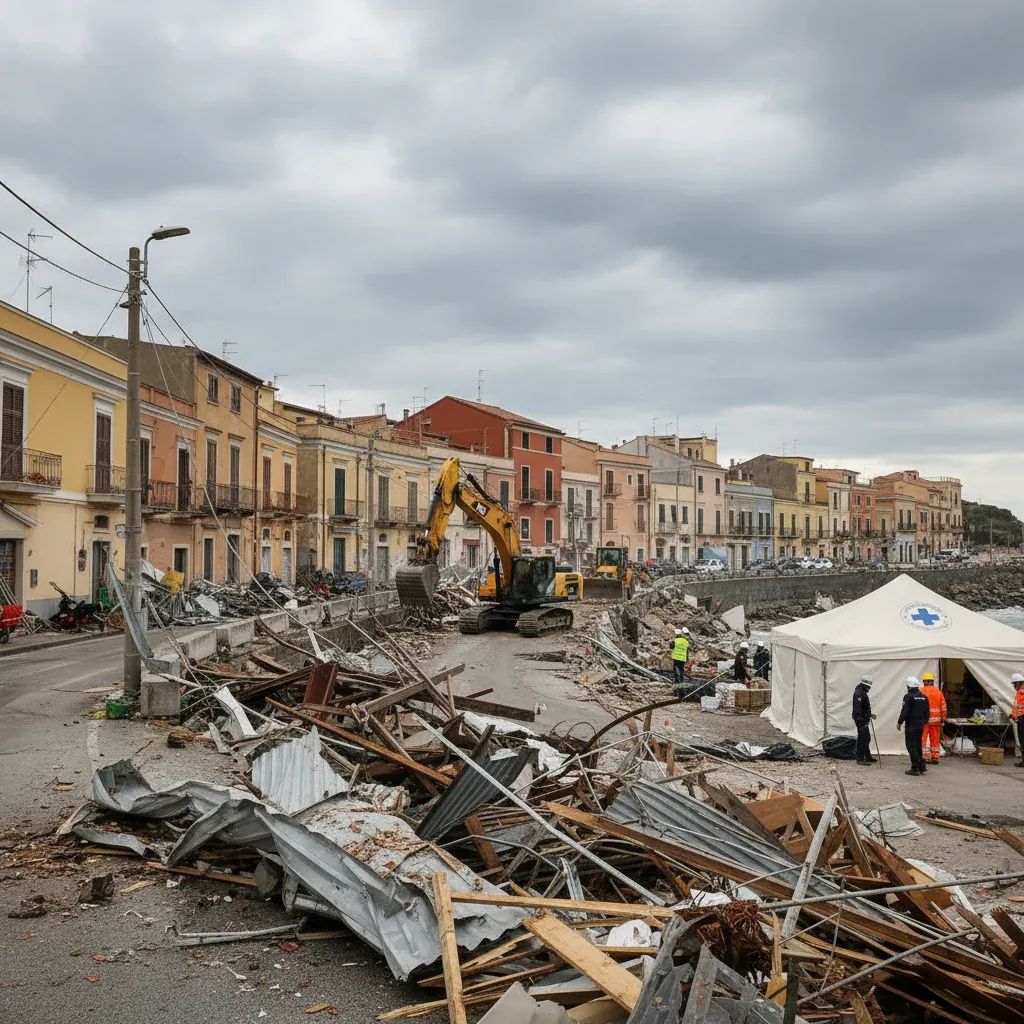
The Italian Council of Ministers has approved a 12-month state of emergency for four southern regions hit by severe weather starting March 30, unlocking €50M in immediate relief funds to restore critical infrastructure and support affected residents.
Why This Matters:
• €50M emergency package distributed across regions: Molise receives €20M, Abruzzo €15M, Puglia €10M, and Basilicata €5M.
• State of emergency lasts 12 months, during which the Civil Protection Department can bypass standard procurement rules to accelerate repairs.
• The allocation targets restoration of transport corridors, utilities, and public services in the affected areas.
• Additional funding is expected as comprehensive damage assessments are completed.
Key Infrastructure Impact
The severe weather system beginning March 30 caused significant damage across Abruzzo, Molise, Basilicata, and Puglia. A bridge over the Trigno River collapsed near Vasto, on the border between Abruzzo and Molise, affecting a key section of transport infrastructure in the region. The incident highlighted the need for rapid intervention to restore critical connectivity between northern and southern Italy.
The Adriatic railway line experienced service disruptions, and segments of the A14 motorway required closure for safety assessment and repairs. Road and utility services in multiple municipalities sustained damage requiring immediate restoration efforts.
Funding Allocation and Regional Priorities
The Italian Ministry of Civil Protection, led by Minister Nello Musumeci, proposed the emergency declaration, which was ratified by the Meloni Cabinet following an extraordinary session. The €50M appropriation draws on the National Emergency Fund and will be administered through orders issued by the Head of the Civil Protection Department in coordination with regional governments.
Molise's €20M allocation reflects the strategic importance of restoring the A14 motorway and Adriatic rail corridor, which connect northern and southern Italy. Rapid intervention is critical to prevent freight bottlenecks and passenger service disruptions.
Abruzzo's €15M will prioritize bridge reconstruction, road repairs, and utility restoration in affected areas. Damage assessments are ongoing to determine total reconstruction needs.
Puglia's €10M targets infrastructure resilience and emergency logistics support for the region's transport networks and essential services.
Basilicata's €5M addresses localized damage to municipal services and rural roads across the affected areas.
What This Means for Residents
If you live in or travel through Abruzzo, Molise, Basilicata, or Puglia, expect potential disruptions to road, rail, and utility services as repairs proceed. Check Anas and Trenitalia service alerts before traveling for current information on closures and detours.
For homeowners and businesses affected by damage, the emergency declaration unlocks assistance programs. Regional civil protection offices will coordinate claims for temporary support and rebuilding assistance. Document all damage with photos and receipts, and register with your municipal civil protection office as soon as safe to do so.
Insurance implications: Most Italian homeowners lack comprehensive flood or landslide coverage. If your property sustained damage and you do not hold a multi-risk policy, you will rely on public assistance programs, which typically cover only a portion of replacement costs. Contact your local civil protection office for guidance on available support.
Utility customers in affected areas should monitor service announcements from local providers, as crews work to stabilize damaged infrastructure.
Next Steps and Recovery Timeline
The Civil Protection Department will issue implementing ordinances in the coming days, specifying eligible projects and procedures. Regional authorities will submit priority intervention lists focusing on critical transport corridors and essential services.
The 12-month state of emergency provides a framework for expedited repairs and recovery efforts. Full recovery will require time and coordination across multiple sectors.
Residents should monitor announcements from regional civil protection offices and municipal authorities for updates on service restoration timelines and financial assistance applications. The Ministry of Civil Protection will evaluate support measures as the full scope of damage is assessed.


