
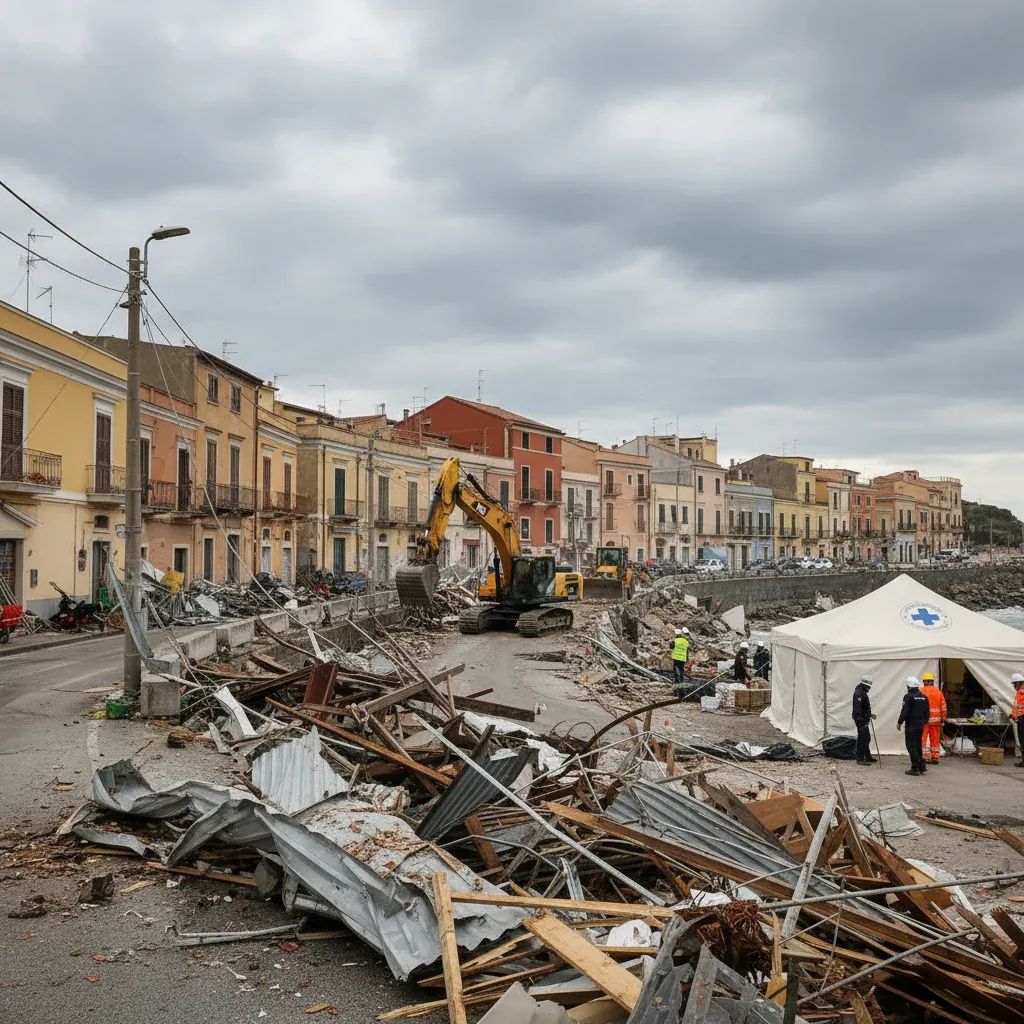
The Italian Council of Ministers has approved a €73 million emergency funding package for three northern and central regions still recovering from severe weather damage that struck in autumn 2024, according to a decision announced today by Civil Protection Minister Nello Musumeci. The allocation will enable regional emergency commissioners to finalize critical infrastructure repairs, restore public services, and implement long-term risk-reduction measures across Piedmont, Liguria, and Emilia-Romagna.
Separately, the Italian Cabinet also declared a 12-month state of emergency for Calabria, targeting the provinces of Catanzaro and Cosenza after significant flooding events between February 11–20, 2026. A first tranche of €15 million from the National Emergency Fund will cover immediate rescue operations, population assistance, and infrastructure restoration in the southern region.
Why This Matters
• €45.4 million heads to Piedmont (covering Turin metro area and six provinces) for structural flood defenses and service restoration.
• €15.64 million allocated to Liguria (Genoa metro and Savona province) to complete ongoing civil protection works.
• €11.985 million dedicated to Emilia-Romagna's Palagano municipality for recovery interventions.
• Calabria receives €15 million immediately, with additional funding contingent on detailed damage assessments from regional authorities.
Piedmont Takes Largest Share for Multi-Province Damage
Piedmont will receive the bulk of the new allocation—€45.4 million—spread across the Turin metropolitan area and the provinces of Alessandria, Asti, Biella, Cuneo, Vercelli, and Verbano-Cusio-Ossola. The funds address lingering damage from the autumn 2024 storm system that affected northwestern Italy with heavy rainfall, triggering landslides, river overflows, and widespread infrastructure failures.
Minister Musumeci emphasized that the interventions span a continuum: "From immediate rescue and population assistance to the restoration of public service functionality, support for the economic and social fabric, and structural works aimed at reducing residual risk." The Piedmont allocation reflects the geographic breadth of impact, with mountain valleys and lowland industrial zones both requiring tailored solutions.
Regional authorities in Piedmont have been working under tight deadlines to deploy €800 million in PNRR funds earmarked for hydrogeological instability prevention, all of which must be completed by June 2026 or risk losing European recovery grants. The new national emergency funds are intended to complement—not replace—those structural investments, focusing instead on urgent repairs that fall outside PNRR eligibility criteria.
Liguria and Emilia-Romagna Finalize Storm Recovery
Liguria will receive €15.64 million divided between the Genoa metropolitan area and Savona province, both of which suffered storm impacts in late summer and autumn 2025. On January 20, 2026, the government had already declared a 12-month emergency for seven municipalities in Genoa metro—Cicagna, Favale di Malvaro, Lavagna, Lorsica, Mele, Rezzoaglio, and San Colombano Certenoli—as well as Luni (La Spezia province) and three Savona towns: Cairo Montenotte, Carcare, and Dego. That earlier declaration came with a €4.3 million initial package; today's decision tops up resources for the same emergency commissioners.
Emilia-Romagna receives €11.985 million, all directed to the mountain municipality of Palagano in the Modena Apennines. The town was isolated by landslides that severed roads and damaged bridges during heavy rains in autumn 2025. The regional government is also advancing an ambitious self-financing strategy: Emilia-Romagna plans to pre-fund €919 million in structural flood-defense works originally scheduled to begin in 2027, using its own budget to accelerate construction timelines and meet June 2026 PNRR deadlines. The region secured an additional €1 billion from the national government for hydrogeological risk reduction, bringing total regional exposure to nearly €2 billion in concurrent flood-defense projects.
Calabria Faces New Emergency After February Flooding
The southern region of Calabria entered a new 12-month state of emergency following severe weather that struck February 11–20, 2026, overwhelming drainage systems and triggering river overflows in the provinces of Catanzaro and Cosenza. The Crati, Busento, and Campagnano rivers overflowed, flooding the Sibari plain and the municipality of Cassano all'Ionio, where authorities ordered partial evacuations. Roads were submerged, communication lines severed, and agricultural fields inundated.
The €15 million emergency allocation will be managed through ordinances issued by the Head of the Civil Protection Department, in coordination with the Calabria regional government. Funds will cover immediate rescue operations, temporary housing assistance, and the urgent restoration of roads, schools, hospitals, and utility networks. Minister Musumeci noted that technical teams from the Civil Protection Department conducted rapid damage assessments to arrive at the €15 million figure, but a second funding round is expected once regional authorities submit comprehensive loss estimates.
Calabria had already been granted emergency status on January 18, 2026, alongside Sicily and Sardinia, following an earlier storm system. That declaration came with a €100 million multi-region package. The successive February floods represent a distinct event, triggering a separate 12-month clock and dedicated funding line.
What This Means for Residents
For people living in the affected areas, these allocations translate into tangible improvements:
• Access restoration: Severed roads and bridges will be repaired, reconnecting isolated mountain towns and industrial zones.
• Utility reliability: Damaged water mains, electrical substations, and telecommunication infrastructure will be prioritized for reconstruction.
• Economic continuity: Funds explicitly support the "economic and social fabric," including grants or low-interest loans for businesses forced to close during storms.
• Long-term safety: Structural works—riverbank reinforcements, landslide stabilization, drainage upgrades—aim to reduce future disaster risk, not just patch existing damage.
The June 2026 PNRR deadline looms large: regions that fail to complete projects on schedule forfeit European funds, creating fiscal pressure to coordinate national emergency spending with EU-financed infrastructure timelines. For Emilia-Romagna and Piedmont, the strategy involves parallel tracks—using national emergency funds for immediate repairs while racing to execute PNRR-funded flood defenses before the cutoff.
Implementation Timeline and Accountability
Emergency commissioners in each region will issue detailed project plans within 60 days, subject to review by the National Civil Protection Department. Works must prioritize life-safety infrastructure—hospitals, schools, evacuation routes—before moving to economic-recovery measures. The 12-month emergency window for Calabria begins from the date of the cabinet resolution, setting a March 2027 expiration unless extended.
For Piedmont, Liguria, and Emilia-Romagna, the new funds supplement existing emergency declarations, some of which date back to September 2025. Regional auditors will track expenditure against declared damage inventories, with final accountability reports due to the Court of Auditors by December 2027. Any unspent funds revert to the National Emergency Fund, creating an incentive for swift execution while maintaining project quality standards.
Minister Musumeci emphasized that the allocations reflect a dual mandate: "Immediate relief and long-term resilience." The implementation of these measures across multiple regions will demonstrate the effectiveness of coordinated emergency response planning.


