
Why This Matters
• Criminal negligence charges target sitting and former regional executives: Four consecutive governors—including Italy's current Minister for Civil Protection—face potential prosecution for culpable disaster under a legal theory that transforms administrative inertia into criminal liability.
• €12M contract abandoned for 27 years: A prevention effort funded immediately after a 1997 landslide was never executed, then formally cancelled in 2010, exposing systematic governance failure.
• Unequal risk-spending across Sicily: Despite €1.5B allocated for 597 hydrogeological projects region-wide, Niscemi received "practically nothing" according to former budget officials, raising questions about resource allocation patterns.
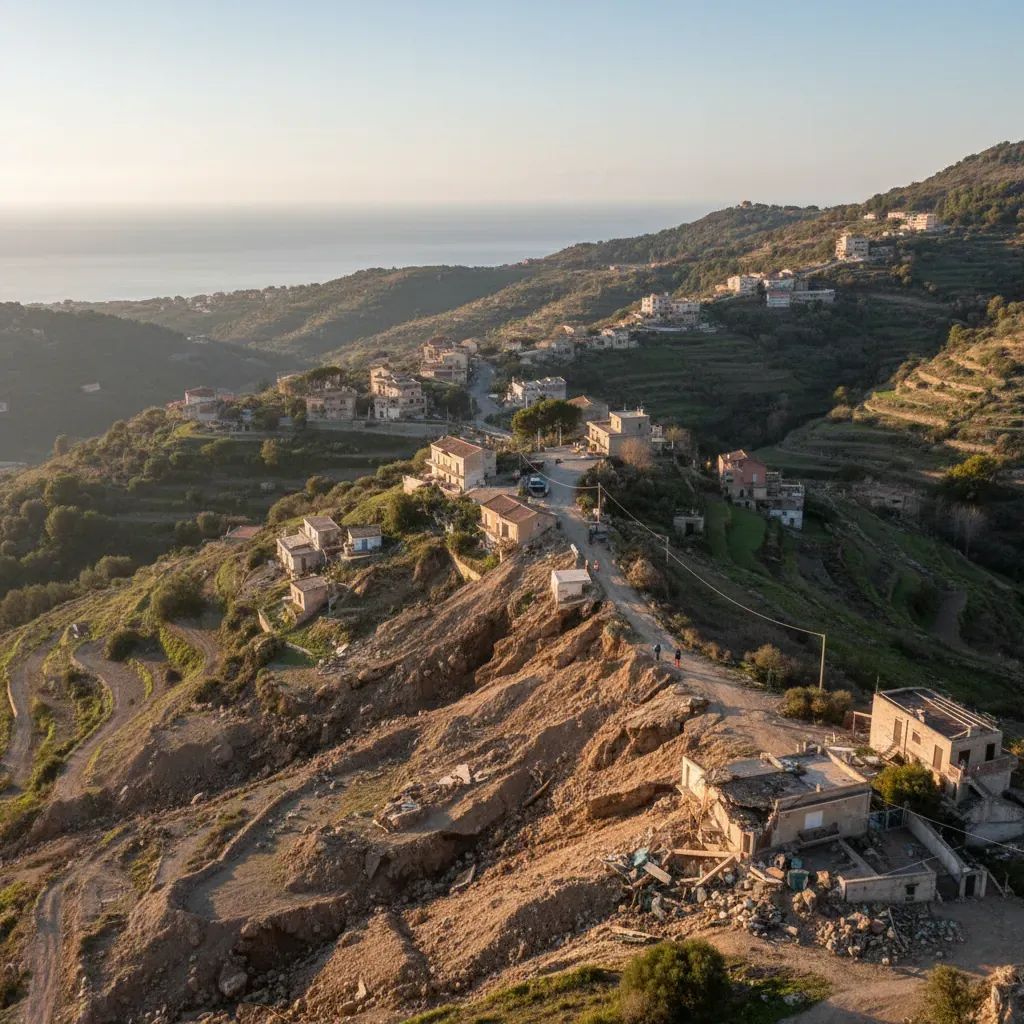
Disaster investigators in southern Sicily are building a criminal case around one of the most avoidable calamities in recent Italian history. On January 25, 2026, an earthslide near Caltanissetta swallowed homes and vehicles, leaving 1,500 residents displaced and prosecutors asking a singular question: why did a catastrophe everyone saw coming never get prevented? The answer, according to the Italy Prosecutor's Office in Gela, lies in decades of bureaucratic paralysis at the highest levels of regional administration—a paralysis that has now triggered investigations into four men who, collectively, governed Sicily for nearly two decades.
Targets of the Inquiry
The probe, formally opened by Prosecutor Salvatore Vella, centers on 13 individuals: the four former and current Sicilian governors, plus officials responsible for civil protection and contract oversight. Raffaele Lombardo presided from 2008 to 2012. Rosario Crocetta followed until 2017. Nello Musumeci held the office through 2022 and now serves as Italy's national Minister for Civil Protection—a position that, per prosecutors, makes his alleged inaction during 2017–2022 even more troubling. Renato Schifani currently holds the governor's seat, defending his tenure while facing scrutiny over the previous nine years of his administration.
All four face charges of culpable disaster and aggravated damage following a landslide. The legal leverage hinges on a specific interpretation: by virtue of their regional office, each governor held statutory authority to authorize emergency consolidation work, override bureaucratic friction, and deploy civil protection resources. They had money, maps showing danger, and clear legal standing. They acted on none of it.
The Forgotten Contract
The documentary trail begins in 1997. A significant hillside collapse that year triggered ordinances from Italy's National Civil Protection Department, requiring slope reinforcement and hydraulic stabilization of the Bonifazio stream to prevent recurrence. By May 1999, a contract worth approximately 23 billion lire—then roughly €12M—had been awarded to execute these works. The contract was formal. The funding was real. The machinery was in place.
It never happened.
For 11 years, the contract remained unsigned or partially signed, subject to disputes that procurement records describe as routine but, prosecutors argue, required executive intervention to resolve. In 2010, the regional administration formally cancelled the agreement. A subsequent €14M project, intended to consolidate the stream bed and reinforce slopes, was approved but then languished in legal wrangling and contractor delays, ultimately collapsing in 2025 without physical completion of any significant work. Two failed prevention efforts across 26 years, and the mountain kept waiting.
Complicating the timeline further, sewage treatment infrastructure in Niscemi malfunctioned for years, meaning untreated effluent infiltrated subsurface clay layers—material known to weaken when saturated. Investigators are examining whether this environmental negligence served as an accelerant to the inevitable collapse.
The Classification Nobody Acted Upon
In 2019, regional hydrogeological planners formally classified the Niscemi zone with the highest hazard rating, R4, within Sicily's master plan for landslide risk management. By 2022, an updated assessment—bearing Nello Musumeci's signature in his capacity as governor—explicitly acknowledged this maximum-peril classification and stated the "urgent need for intervention." The document sat in archives. No shovels moved.
Franco Piro, a former budget assessor for the Sicily regional government, told prosecutors and media that despite €1.5 billion in available funding for nearly 600 hydrogeological defense projects across the island, Niscemi "received practically nothing from emergency commissioners." Governor Renato Schifani has countered that his administration received no formal intervention request from the Niscemi municipal council during the past nine years. The town's mayor, Massimiliano Conti, disputes this, asserting he repeatedly contacted the regional government seeking status updates and action plans—a claim difficult to reconcile with the administrative silence that followed.
Impact on Residents and Regional Policy
For the 1,500 families now in temporary housing, the immediate concern is both financial and emotional. Regional authorities promised accelerated reconstruction schemes and housing subsidies, but no firm timelines have been announced. Property owners whose homes sit in the "red zone"—territory classified as uninhabitable—face a grimmer prospect: permanent relocation and dependence on government buyout programs, which historically move slowly and with contentious valuations.
More broadly, the Niscemi case exposes a structural vulnerability across Sicily and, indeed, across Italy. Nearly 95% of Italian municipalities face some degree of landslide or flood hazard. In Sicily specifically, the area classified as high-risk for landslides expanded by 20.2% between recent assessment cycles, yet preventive spending remains historically dwarfed by post-disaster relief. Italy has historically allocated roughly ten times more funding for emergency response than for prevention—a ratio prosecutors argue has made Niscemi inevitable.
The criminal investigation into four governors signals, for the first time in Italian jurisprudence, a potential willingness to prosecute sitting or former executives for failing to act on known environmental risks. If convictions materialize, the precedent could reshape how regional governments approach mandated risk-mitigation works: administrative delay becomes not just inefficient but criminally liable.
What Other European Systems Do Differently
Several European models offer contrasts worth noting. Austria's ELDEWAS early-warning system, developed by the Fraunhofer Institute, fuses real-time meteorological forecasts with precise geological data—slope angle, soil composition, vegetation cover, subsurface hydrology—to issue alerts days in advance. When slope saturation reaches critical thresholds, the system triggers automated evacuation warnings and targeted stabilization orders. Such infrastructure, deployed in hazard zones across the Alpine region, has prevented countless casualties.
The Netherlands' "Room for the River" initiative operates from a different premise: instead of constraining water through rigid infrastructure, planners create controlled floodplain zones where water can spread safely, relieving pressure on embankments and hillside systems. This concept has been adapted in Switzerland and parts of Germany to manage hillside water dynamics, allowing infiltration and reducing the pore-pressure buildup that destabilizes slopes.
Switzerland invests heavily in bioengineering—cultivating mixed-age forests with diverse, interlocking root systems. These natural structures anchor slopes far more robustly than bare hillsides or monoculture plantations. Long-term Swiss studies show that properly managed forestry reduces landslide frequency by 60–80% compared to areas of forest neglect or recent clear-cutting.
Italy maintains its own technical infrastructure through ISPRA (Institute for Environmental Protection and Research), which manages the Inventory of Italian Landslide Phenomena (IFFI) and the IdroGEO digital platform. The latter allows citizens to check their property's hydrogeological hazard rating down to the parcel level. Sicily participates in this system, yet the data has rarely translated into preemptive action. The National Recovery and Resilience Plan (PNRR) allocates €2.49 billion nationwide for hydrogeological defense, with regional governments as implementing bodies. Observers and prosecutors alike note that funding availability has proven far less constraining than the political will to execute works.
The Legal and Political Roadmap
Prosecutor Vella's investigation rests on two formal charges: culpable disaster—causing catastrophic harm through negligence—and aggravated damage following a landslide—failing to prevent foreseeable collapse when equipped with authority, resources, and knowledge. The legal threshold for criminal negligence in administrative inaction is notably high: prosecutors must demonstrate that the accused possessed statutory authority, had adequate funding, and held clear foreknowledge of imminent danger. The documentary evidence in the Niscemi file appears to satisfy all three criteria.
Defense counsel for the governors are expected to argue that contractor failures, funding disputes at the national level, and poor communication from municipal authorities diffused individual criminal responsibility. Such defenses face the complications of a paper trail showing governors signing risk assessments, approving regional budgets, and holding dual titles as both regional executives and national delegates for hydrogeological mitigation.
Nello Musumeci, now serving as a national minister under the current government, already faces calls from opposition parties to resign pending the investigation's outcome. Renato Schifani, whose governorship runs until 2027, has framed the landslide as a legacy problem inherited from predecessors—a position prosecutors say the evidence contradicts given Schifani's own administrative inaction during 2022–2026.
Trial preparation is expected to extend into 2027, meaning political consequences will precede any courtroom verdict. The case arrives amid broader European regulatory discussions about harmonizing landslide risk data and establishing continent-wide thresholds for preventive intervention—discussions that may eventually culminate in an EU Landslides Directive modeled on the bloc's flood-risk framework.
For residents of hazard-prone zones across Sicily and southern Italy, the Niscemi investigation represents both a reckoning and a warning: bureaucratic delay has a measurable human cost, and the bill—in lives uprooted and euros wasted—eventually arrives.


