
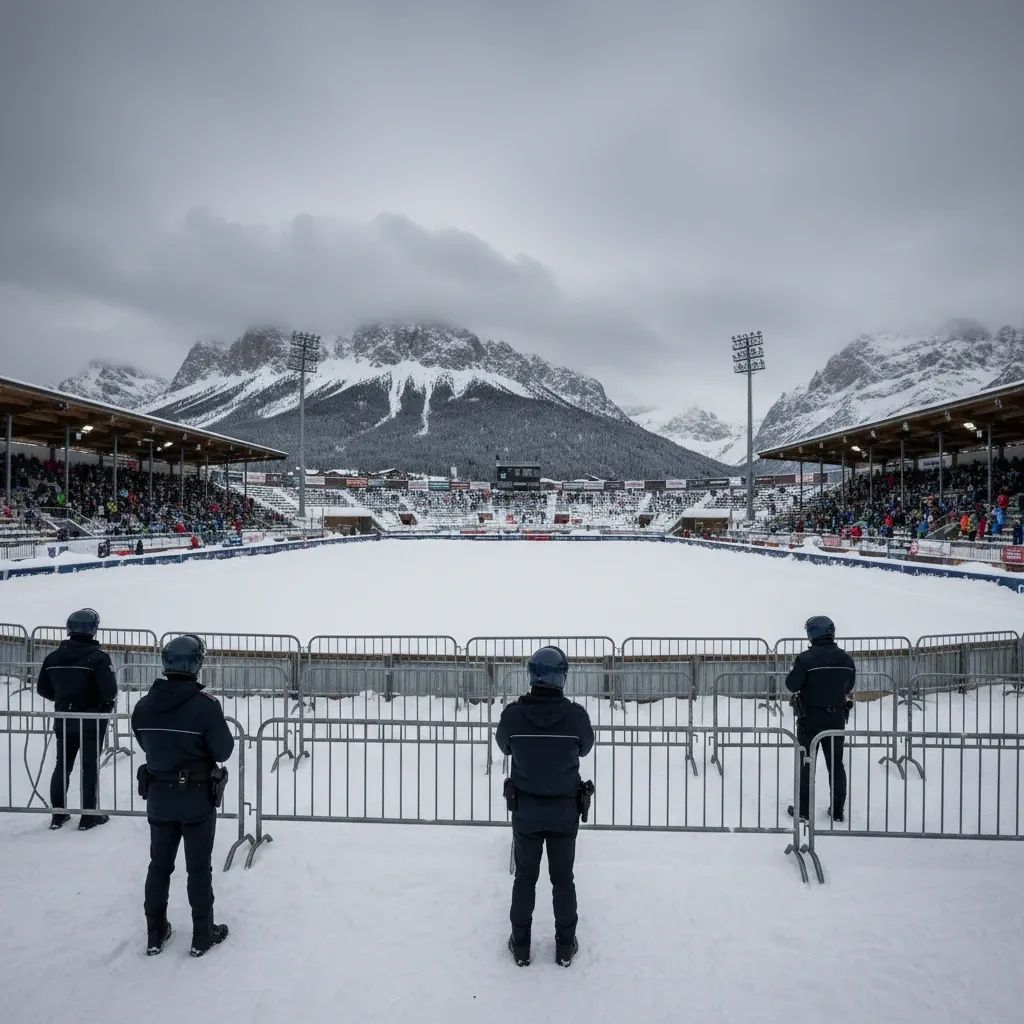
The International Paralympic Committee (IPC) has cleared 10 athletes from Russia and Belarus to march in full national colours at the 2026 Milano-Cortina Winter Paralympics, a decision that inserts a live geopolitical wire into Italy’s showpiece event.
Why This Matters
• Security & traffic plans will be rewritten: demonstrations are already being announced for the opening ceremony split between Milan, Cortina, Tesero and Verona.
• Ticket-holders may face added screening as Italian police tighten accreditation checks for delegations from the two countries.
• Local budgets could swell by €3-5 M in extra policing, according to preliminary estimates from the Veneto regional council.
• Italy’s own Paralympic Committee opposed the move, signalling political friction that could spill into parliamentary debate on Games funding.
An Unexpected Reversal by the IPC
Until last autumn the IPC required Russian and Belarusian competitors to race as neutral individuals. In September 2025, however, its General Assembly voted to restore both National Paralympic Committees to full membership. That shift was cemented in December when the Court of Arbitration for Sport sided with Moscow and Minsk in a case against the International Ski & Snowboard Federation, effectively opening a legal path for national flags, anthems and uniforms.
Who Exactly Is Coming?
The quota is capped at 6 Russians and 4 Belarusians:
• Russia – 2 alpine skiers, 2 cross-country skiers, 2 snowboarders. Confirmed names include Alexey Bugaev, multiple-gold medallist, and rising snowboarder Philipp Shebbo.
• Belarus – 4 cross-country skiers, led by veteran Valentina Birilo.
No further wild cards are expected; the list is final unless an athlete is injured.
Ukrainian Anger Spills Into the Spotlight
Ukraine’s most outspoken winter athlete, skeleton racer Vladyslav Heraskevych, called the green light “flat-out absurd”. He likened it to “handing ex-soldiers a podium to wave propaganda”. Heraskevych is no stranger to controversy in Italy. During a 2024 World Cup heat in Cortina he was disqualified for wearing a helmet bearing the faces of Ukrainian athletes killed in the invasion. Kyiv’s sports minister Matvii Bidnyi labelled the IPC’s ruling “scandalous” and confirmed that high-level Ukrainian officials will boycott the opening ceremony.
Italy’s Tightrope: Sport, Diplomacy, and Public Order
The Italian Paralympic Committee (CIP) originally lobbied for a compromise—allowing the athletes but stripping state symbols. Its president, Luca Pancalli, said he was “surprised” by the IPC’s full reinstatement. Inside Palazzo Chigi, advisers fear that diplomatic walk-outs could overshadow the Games much as the Torino 2006 torch relay was marred by Tibet protests.
For organisers Milano-Cortina 2026 S.p.A., the bigger headache is practical. Security chiefs in Lombardy and Veneto have reopened procurement for crowd-control barriers, drones and cyber-monitoring tools. Hoteliers in Cortina told Il Sole 24 Ore they are bracing for “politically sensitive” bookings from corporate sponsors who may be targeted by activists.
What This Means for Residents
Commuter routes through Valtellina and the Brenner corridor may face rolling closures if demonstrations escalate. Plan alternative work-from-home options during 6-15 March 2026.
Expect stricter bag checks at Milano Centrale, Verona Porta Nuova and all Olympic shuttle hubs. Allow an extra 30-40 minutes for rail journeys.
Municipalities are budgeting for temporary security taxes on short-stay rentals—roughly €2 per night in Cortina and €1.50 in Milan—mirroring the model used for the 2015 Expo.
Volunteers and staff will receive updated guidelines on flag protocol; local schools offering language support programs can pitch for last-minute training contracts.
The Broader Sports Landscape
A paradox now emerges: at the Olympic events two weeks earlier, Russian and Belarusian athletes will still compete as so-called Individual Neutral Athletes (AIN). The split status means medal tables, TV graphics and even victory ceremonies will differ between the Olympic fortnight and the Paralympic week—an administrative jigsaw for broadcasters RAI and Eurosport.
Timeline to Watch
• April 2026 – Final transport simulation including protest scenarios.
• July 2026 – Deadline for venue security certification by the Interior Ministry.
• February 2026 – Last chance for the IPC to revisit eligibility if host-nation authorities provide “evidence of material risk,” a clause rarely activated but not impossible.
Bottom Line for Investors and Employers
While the political storm grabs headlines, local chambers of commerce remind firms that 120,000 additional visitors are still expected, Paralympics included. Hospitality, translation services, adaptive-equipment rentals and last-mile logistics could see a 5-7 % bump in turnover. The risk premium is real but so is the upside.
The stage is set: athletes will race, protesters will march and Italy must orchestrate both without missing a beat. Residents should prepare for a busier, tenser but potentially lucrative fortnight as global attention turns to the Alps and the plains in between.


