
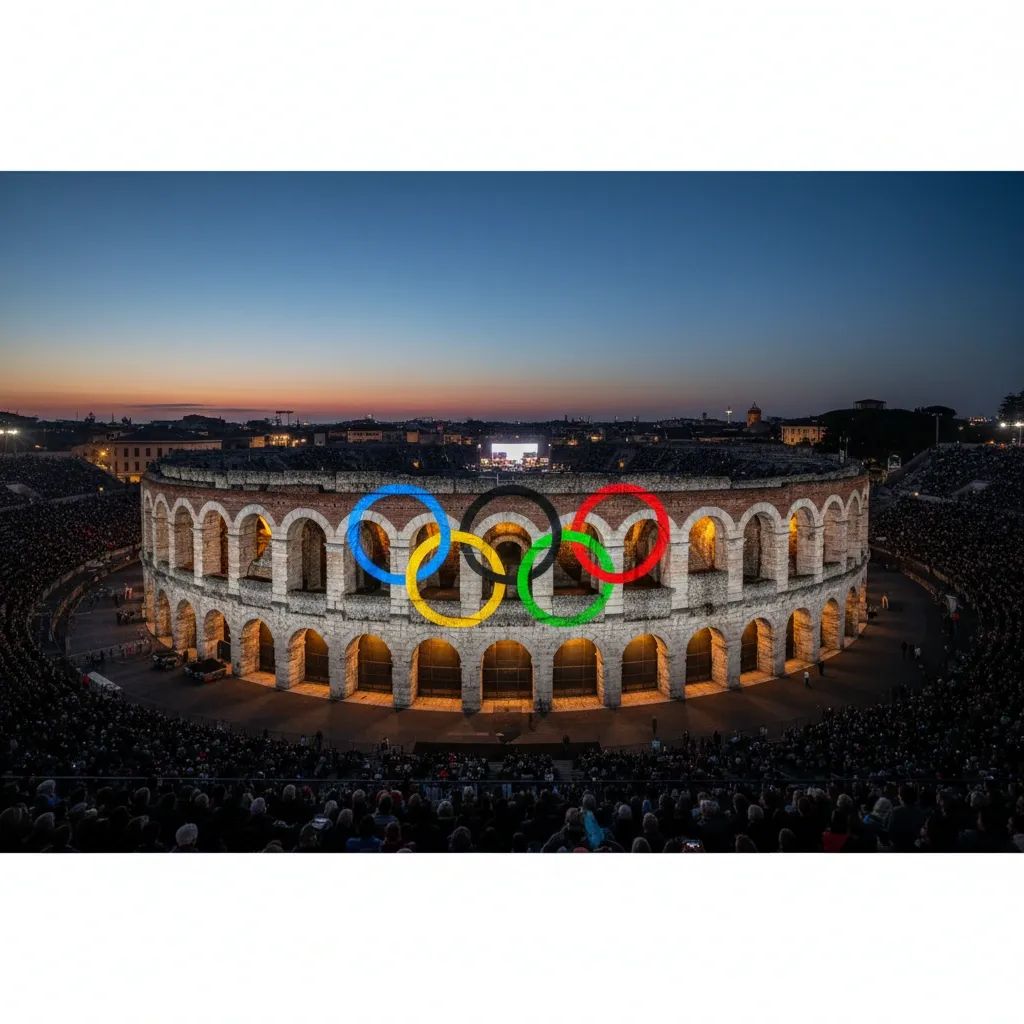
The Italy Milano Cortina 2026 Organising Committee has tapped DJ Gabry Ponte to headline the Winter Games’ closing gala in Verona, a decision that will briefly transform the ancient amphitheatre into the country’s biggest open-air dancefloor and mark the first Olympic ceremony ever staged inside a UNESCO monument.
Why This Matters
• Traffic & security restrictions: central Verona will be cordoned off from mid-morning on 22 February; residents need a special pass to enter the zone.
• Ticket prices: seats start at €90—roughly the cost of a return Milan–Verona high-speed train—and go on general sale next week.
• Economic bump: local hotels report 85 % occupancy already; the Chamber of Commerce expects an extra €25 M in tourist spending.
• Cultural milestone: the ceremony doubles as a test run for the Paralympic opening on 6 March, showcasing how Italy intends to fuse heritage sites with hi-tech staging.
Verona Becomes an Olympic Stage
The 2,000-year-old Arena will be temporarily renamed “Verona Olympic Arena.” Architects commissioned by the Italy Ministry of Culture have engineered reversible seating and an ultra-light roof to protect the ancient stone while accommodating nearly 15,000 spectators. A giant LED “water-drop” floor—visible on broadcasts worldwide—will echo the ceremony’s concept, Beauty in Action, celebrating movement from Alpine peaks to Venetian lagoons.
The Artistic Line-Up
Alongside Gabry Ponte, whose catalogue tops 6 B streams, the night features:
• Achille Lauro with a symphonic-trap arrangement written for the event.
• Ballet icon Roberto Bolle heading a 100-dancer tableau choreographed by Diego Tortelli.
• Actor Benedetta Porcaroli narrating the athletes’ parade.
More than 800 performers—from the Aterballetto company to the Verona Philharmonic—will rotate through three stages spanning the Arena floor, Piazza Bra and the Teatro Filarmonico.
What This Means for Residents
Veronesi should prepare for road closures on Via Roma, Corso Porta Nuova and Piazza Brà beginning 05:00 CET. The Italy Railway Police will run extra patrols at Porta Nuova station, while Trenitalia adds late-night Frecciarossa trains to Milan, Bologna and Venice. Local shopkeepers are eligible for extended opening permits until 02:00; applications close on 12 February.
Ticketing & Broadcast
Organisers have reserved 30 % of seats for residents of Veneto and Lombardy. Online sales open 25 January through the official Milano Cortina portal, with a €10 green surcharge funding reforestation of storm-damaged Alpine slopes. The ceremony airs live on RAI 1 and streams on the Olympic platform for Italian viewers abroad, complete with English captions for tourists.
The Tech Behind the Spectacle
Filmmaster’s production avoids heavy AI in favour of human-driven design: 1,200 sq m of modular LED tiles, drones authorised by ENAC for a light show above Castel San Pietro, and a fibre-optic backbone that links the three venues in real time. All equipment must be removed within 48 hours under the Arena’s conservation rules—a logistical sprint involving 250 riggers.
Economic & Tourism Ripple
The Italy Tourism Board projects 60 % more non-EU visitors during the Games than in the same period pre-pandemic. Verona’s hospitality sector has created 1,400 temporary jobs for the fortnight. Analysts at Banca Intesa say the city could see a €120 M GDP lift between February and March, largely from hospitality and retail.
Looking Ahead
The closing ceremony will hand the Olympic flag to the as-yet-undecided 2030 host city. For Italy, it serves as both a farewell to record medal hauls—highlighted by Federica Brignone’s golden double—and a rehearsal for exporting Italian creativity to future Games. Expect the Arena to swap snowflakes for confetti, but the underlying message remains: sport, art and heritage can coexist without compromise.


