
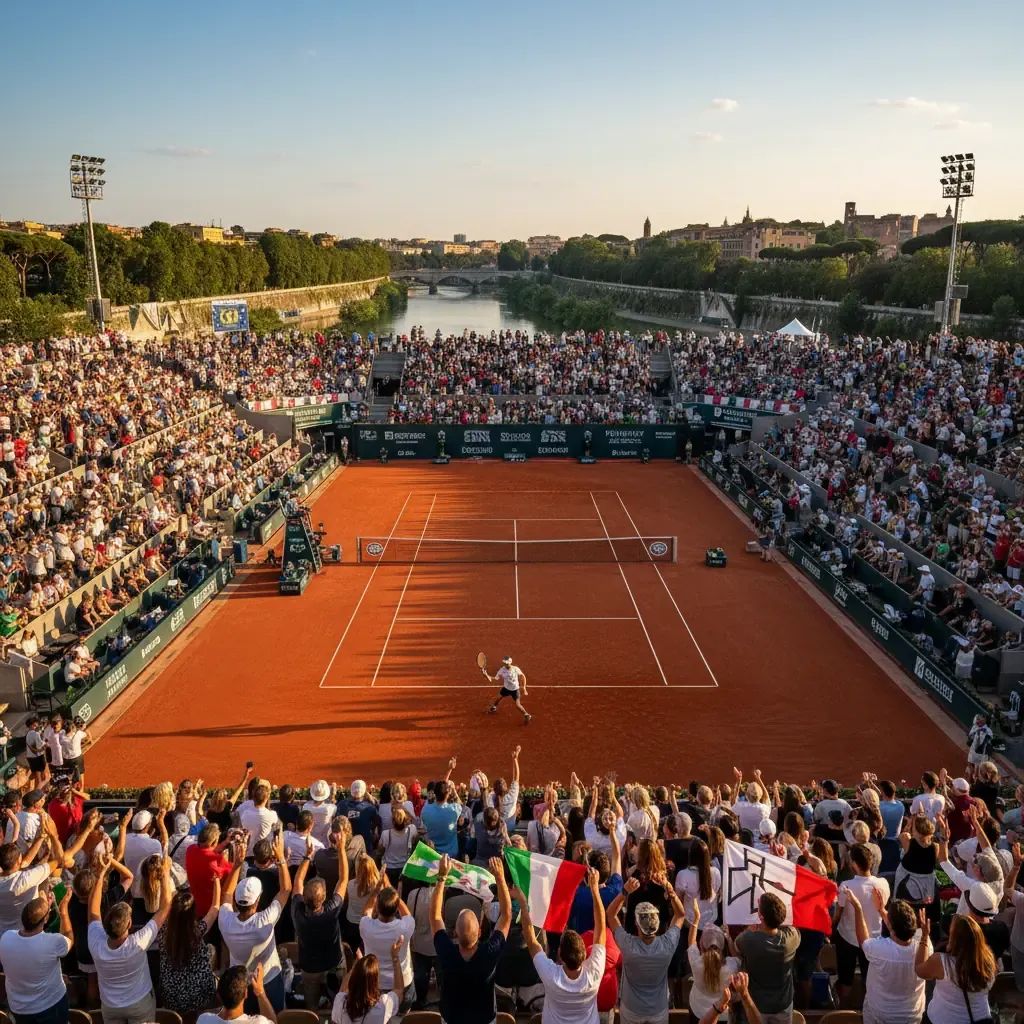
The World Taekwondo Grand Prix kicks off tomorrow at Rome's Foro Italico, marking the opening salvo of the qualification race for the Los Angeles 2028 Olympics. Over 360 athletes from 57 nations will compete for the first ranking points in a new two-year cycle that runs until May 2028, with Italian medal hopefuls Simone Alessio and Vito dell'Aquila facing an uphill battle against every recent Olympic champion.
Why This Matters
• First Olympic qualification points for LA 2028 will be awarded starting June 5, with a direct ranking system replacing older qualification methods.
• Italian athletes including bronze medalist Simone Alessio (Paris 2024) face global champions in a field stacked with 2024 Olympic titleholders.
• Seven young Syrian refugee girls from Jordan's Azraq camp will compete in the parallel Kim e Liù youth tournament, highlighting sport's humanitarian role.
• The Foro Italico becomes a multi-sport hub this week, hosting taekwondo, padel, and athletics simultaneously.
High-Stakes Competition with No Easy Path
Angelo Cito, president of the Italian Taekwondo Federation (FITA), warned that the competition will be unforgiving. "I always respect our opponents, and all the latest Olympic champions will be present," he said during the event's presentation at Rome's Ara Pacis Museum. "Our athletes will not have an easy life. Every match is a final—that's how we must approach this."
The event draws 367 competitors total: 256 in the Olympic categories (128 men, 128 women) and 111 in the inaugural World Para Taekwondo Grand Prix (61 men, 50 women), integrated into the Rome program for the first time, with para and Olympic athletes competing on the same days and venue—an unusual format that underscores the commitment to equal representation. Italy holds an A1 rating from World Taekwondo as of April 2026, placing it among the elite tier alongside the United States, France, Great Britain, and South Korea—but ratings mean little once athletes step onto the mat.
Among the men's favorites are CJ Nickolas (USA), Caden Cunningham (Great Britain), Seo Eun-su (South Korea, MVP of the 2025 World Championships in Wuxi), and Henrique Marques Rodrigues Fernandes (Brazil, 2025 Male Athlete of the Year). The women's field features Sarah Chaâri (Belgium, reigning world champion and 2025 Female Athlete of the Year), Luana Márton and her sister Viviana Márton (Hungary, the latter an Olympic gold medalist), and Maria Clara Pacheco (Brazil).
How the LA 2028 Qualification System Works
This Grand Prix marks the first tournament in the Olympic qualification period that opened June 1, 2026, making Rome the first venue where athletes can earn ranking points toward Los Angeles 2028. Athletes earn points at G-rated events—Grand Prix tournaments, Continental Championships, and Grand Slam competitions—with these rankings directly determining Olympic berths.
According to World Taekwondo qualification rules, key pathways include:
• Top 5 in Olympic rankings (published January 2028) secure automatic spots.
• Top Grand Slam Merit Standing athlete qualifies if not already in the top 5.
• Two athletes per continent qualify through Continental tournaments.
• Host nation and universality places round out the field.
Athletes must declare their Olympic weight category annually between May 1 and May 25, locking in for a full year. Ranking points decay by 50% annually, and a complete reset occurs at the end of each two-year cycle—meaning consistent performance across multiple tournaments is mandatory.
Simone Alessio, who won bronze at Paris 2024 in the -80kg category, has moved up to compete in the +80kg division. He enters Rome off a gold medal at the Spanish Open and silver at the Bulgaria Open, both in the -87kg weight class, demonstrating solid form but also highlighting the challenge of transitioning between weight classes at the elite level.
What This Means for Italian Fans and Residents
For those living in Italy—particularly in Rome—the Foro Italico this week becomes a showcase of the country's ability to host world-class multi-sport events. The venue simultaneously stages the BNL Italy Major Premier Padel and the Golden Gala athletics meet, creating what Andrea Abodi, Italy's Minister for Sport and Youth, called "a continuous program of sport, art, culture, and entertainment."
Residents should know that the public can attend the taekwondo competitions, with tickets available at the venue. The event begins tomorrow afternoon following a ceremonial event at Piazza di Spagna, designed to broadcast Rome's iconic architecture worldwide. For those traveling to the Foro Italico, expect increased foot traffic in the area; however, the venue's established infrastructure as a major sports hub means traffic management systems are in place. TV coverage will be available through World Taekwondo's broadcast partners, and highlights will be shared widely on sports media.
"Rome is preparing for increasingly demanding challenges," Abodi said, emphasizing the institutional coordination required to pull off overlapping elite events. The city's capacity to manage such a dense sports calendar positions it as a candidate for future Olympic or world championship bids.
Diego Nepi, CEO of Sport e Salute (the Italian government agency managing sports infrastructure), highlighted the Foro Italico's versatility: "It confirms itself as an extraordinary international sports citadel, capable of hosting high-level events simultaneously. This is proof of a winning vision based on multifunctional facilities adaptable to different disciplines, which generate significant benefits for tourism and the local economy."
Humanitarian Dimension: The Kim e Liù Youth Tournament
Running parallel to the Grand Prix is the Kim e Liù tournament, Europe's largest youth taekwondo event, bringing over 1,800 children to the Foro Italico. This year's edition carries particular symbolic weight: seven young female athletes from Syria's Azraq refugee camp in Jordan will compete, representing the Taekwondo Humanitarian Foundation's work in conflict zones.
The Azraq program, operational since 2016, supports roughly 140 Syrian refugee youth aged 8 to 18. Several participants have earned black belts and competed nationally; one, Yahya Bassam Al Ghotany, represented the refugee team at the Paris 2024 Olympics. The program uses taekwondo to build physical skills, mental resilience, and social values among displaced youth who have known little but displacement.
"The stories of refugee athletes welcomed in Italy and the participation of young girls from the Azraq camp represent a message of hope, inclusion, and peace that gives taekwondo a value beyond sports competition," Nepi said. The initiative, developed in partnership with the Italian government and the Taekwondo Humanitarian Foundation, positions sport as a bridge between cultures—an especially resonant theme in Italy, which has grappled with migration and integration debates for over a decade.
Giunio De Sanctis, president of the Italian Paralympic Committee (CIP), praised taekwondo for granting "equal dignity to Paralympic and Olympic activity," a principle underscored by integrating the para competition into the main Grand Prix schedule rather than staging it separately.
Institutional Support and Italy's Sports Strategy
Luciano Buonfiglio, president of the Italian National Olympic Committee (CONI), framed the event within Italy's broader sports ambitions. "Italy is capable of being a protagonist in victories and also in organizing major events," he said, linking hosting prowess to athletic success. The coordination required to stage simultaneous world-class competitions reflects a national sports infrastructure strategy focused on multi-use facilities and year-round programming.
The timing is symbolic: the Grand Prix begins the day after Italy's Republic Day (June 2) and during the 60th anniversary year of the Italian Taekwondo Federation. Abodi noted that sport featured prominently in this year's Republic Day celebrations, marking its growing centrality in Italian public life.
For residents, the practical impact extends beyond national pride. The influx of 367 elite athletes, 1,800 youth competitors, and international delegations generates hotel bookings, restaurant revenue, and media exposure worth millions. Rome's ability to manage this logistical complexity without disrupting daily life—critical given the Foro Italico's location in a residential zone—tests the city's Olympic-bid credentials.
The Road Ahead
Italy's medal hopes rest largely on Alessio and Dell'Aquila, but as Cito warned, "bringing home gold is not easy." The Grand Prix concludes June 7, with results determining early leaders in the two-year Olympic qualification race. For Alessio, competing in a heavier weight class than his Paris bronze, the challenge is compounded by elite opponents and his own physical adaptation.
The tournament's images, according to Alessandro Onorato, Rome's assessor for sport and major events, "will circle the globe"—a reminder that for Italy, hosting is as much about international branding as athletic glory. Whether that translates to podium finishes remains to be seen starting tomorrow, when the qualification battle for Los Angeles 2028 begins in earnest at the Foro Italico.


