
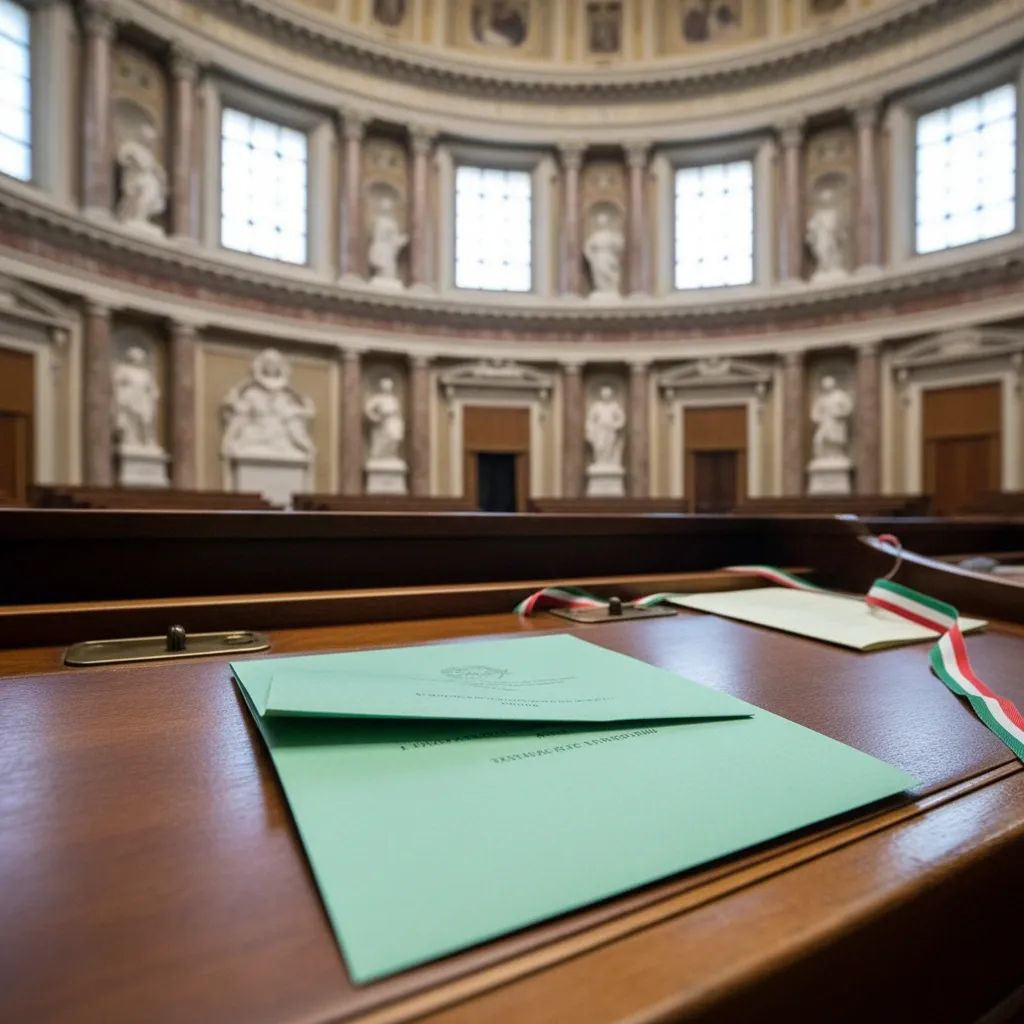
The Italian Chamber of Deputies has passed the first reading of a constitutional reform that would grant Rome Capitale legislative powers comparable to those of a regional government, fundamentally altering the institutional architecture of the Italian Republic. The vote concluded 159-33, with 55 abstentions, setting the stage for Senate review and a multi-year approval process that could reshape how the nation's capital functions by 2027.
This constitutional overhaul inserts Rome as a standalone entity in Article 114 of the Italian Constitution, placing it on equal footing with municipalities, provinces, metropolitan cities, regions, and the national state itself. The practical effect: Rome would gain the authority to pass its own laws on urban planning, public transport, local policing, commerce, tourism, social services, public housing, and cultural heritage management—domains currently split between municipal and regional jurisdictions.
Why This Matters
• Legislative autonomy: Rome Capitale will draft and enact local laws in 11 policy areas, bypassing the Lazio regional government for key decisions affecting daily life in the capital.
• Financial flux: The city exits the municipal solidarity fund mechanism starting in 2026, with fixed contributions stepping down from €79.6 M to €57.6 M by 2028, while retaining €217 M in property tax (IMU) revenue previously channeled to the national pool.
• Funding gap remains unresolved: Mayor Roberto Gualtieri and labor unions warn that the constitutional text means little without an accompanying ordinary law that allocates at least €500 M annually in additional current expenditure and a structural investment plan.
• Senate approval required next: A constitutional amendment must pass both chambers twice, with at least four months between readings, meaning final ratification is unlikely before mid-2027.
What Rome Gains—and What It Means for Residents
The reform divides competencies into two baskets. Under concurrent legislation, Rome Capitale would share authority with the national government on broad principles, but set detailed rules for territorial governance, protection and promotion of cultural and environmental heritage, and organization of cultural activities. This means the city could, for instance, regulate access to archaeological sites or impose stricter building codes around historic zones without waiting for regional approval.
The residual powers—those not reserved to the state—cover local public transport, local administrative policing, commerce, tourism, social services and policies, public residential construction, artisan trades, and Rome Capitale's own administrative organization. Practically, this could allow the city to restructure its transit authority, set retail opening hours independently, or redesign social housing allocation without Lazio's consent.
Critics note the text excludes healthcare, leaving the regional health service intact, and maintains all limits prescribed by Article 117 of the Constitution, which reserves certain strategic domains—foreign policy, defense, currency, immigration—to the national government.
The Partisan Fracture
The vote exposed sharp divisions within the opposition. The center-right coalition—Fratelli d'Italia, Lega, and Forza Italia—voted unanimously in favor. On the left, Azione backed the measure, Italia Viva and the Democratic Party (PD) abstained, while Movimento 5 Stelle (M5S) and Alleanza Verdi e Sinistra (AVS) rejected it outright.
Prime Minister Giorgia Meloni publicly expressed "bitterness and astonishment" at the PD's abstention, given that the text incorporated proposals from Rome Mayor Roberto Gualtieri, a PD member. Meloni accused the PD and Gualtieri of sabotaging a "constituent process" and insisted they would have to answer to Roman voters for their choice.
Gualtieri defended the abstention as "constructive," arguing that the constitutional framework is meaningless without a parallel ordinary law that specifies competencies and secures the necessary funding. He called for cross-party consensus to complete the reform by the end of the legislative term and urged an end to "constant tension and confrontation" that had marred the parliamentary debate.
M5S and AVS characterized the reform as poorly drafted, contradictory, and constitutionally destabilizing. AVS deputies warned of a "profound tear in the constitutional fabric," while M5S representatives argued that an ordinary law would suffice and that constitutional surgery was unnecessary.
Financial Architecture and the Funding Shortfall
Rome Capitale's 2026–2028 budget, approved in December 2025, projects €5.7 B in current expenditure for 2026, with €1.5 B earmarked for social services and schools. The three-year investment plan totals €6.97 B, of which €1.3 B is restricted funding for 2026—including €302 M from the National Recovery and Resilience Plan (PNRR) and €117 M in Jubilee funds tied to the 2025 Holy Year preparations.
Yet the CGIL trade union confederation for Rome and Lazio calculates that the city requires at least €500 M per year in additional current expenditure to deliver on the new competencies, plus a structural capital investment program that converts temporary Jubilee allocations into permanent transfers.
The reform legislation does not address this funding gap. A subsequent ordinary law—yet to be drafted—will determine how municipal districts (Municipi) fit into the new governance structure and how the central government will finance Rome's expanded mandate.
Northern Cities Push Back
The Patto per il Nord coalition, representing deputies from Milan, Turin, Venice, and other northern metropolitan areas, submitted amendments demanding that the same legislative powers granted to Rome be extended to all Italian metropolitan cities. They argued that privileging Rome violates constitutional principles of equality, adequacy, and subsidiarity, and risks creating a two-tier system in which the capital enjoys special status while cities such as Milan, Naples, Palermo, and Turin remain subordinate to regional governments.
Those amendments were rejected, but the debate underscores tensions over regional equity and the perception that the reform awards Rome "unjustified privileges" at the expense of other urban centers.
European Precedents: Two Models
European capitals with legislative autonomy follow two templates. City-state models—such as Berlin, Vienna, Prague, and Zagreb—unify municipal and regional or state functions within a single institution. Berlin, for example, is one of Germany's 16 federal states; Vienna is both a city and one of Austria's nine federal provinces. Prague holds constitutional status as a region (hlavní město), and Zagreb enjoys county-level powers under Croatian law.
The separate-tier model—exemplified by Madrid and Bruxelles—maintains distinct municipal and regional governments. Madrid's autonomous community elects a legislative assembly every four years, which passes regional laws, appoints the regional president, and approves budgets, while the city council handles local administration. The proposed Italian reform more closely resembles this structure, as Rome would gain regional-style legislative powers but remain nested within Lazio for other purposes, such as healthcare.
Next Steps and Timeline
The bill now moves to the Italian Senate, where it must pass a first reading. Constitutional amendments require approval by both chambers in two successive votes, separated by at least three months. If the second round in each house garners a two-thirds supermajority, the reform takes immediate effect. A simple absolute majority in the second round, however, triggers the possibility of a confirmatory referendum if requested by one-fifth of either chamber, 500,000 voters, or five regional councils.
Gualtieri and government officials aim to complete the entire process by the end of the current legislative term, which runs through 2027. If successful, Rome Capitale would assume its new powers during 2027, contingent on passage of the enabling ordinary law that defines funding, competencies, and the role of the city's 15 municipal districts.
For residents and investors, the reform represents both opportunity and uncertainty. Greater local control over transport, housing, and cultural policy could accelerate decision-making and tailor services to the capital's unique needs. Yet without guaranteed resources and a clear delineation of responsibilities, the constitutional upgrade risks becoming an unfunded mandate that shifts blame without delivering results.


