
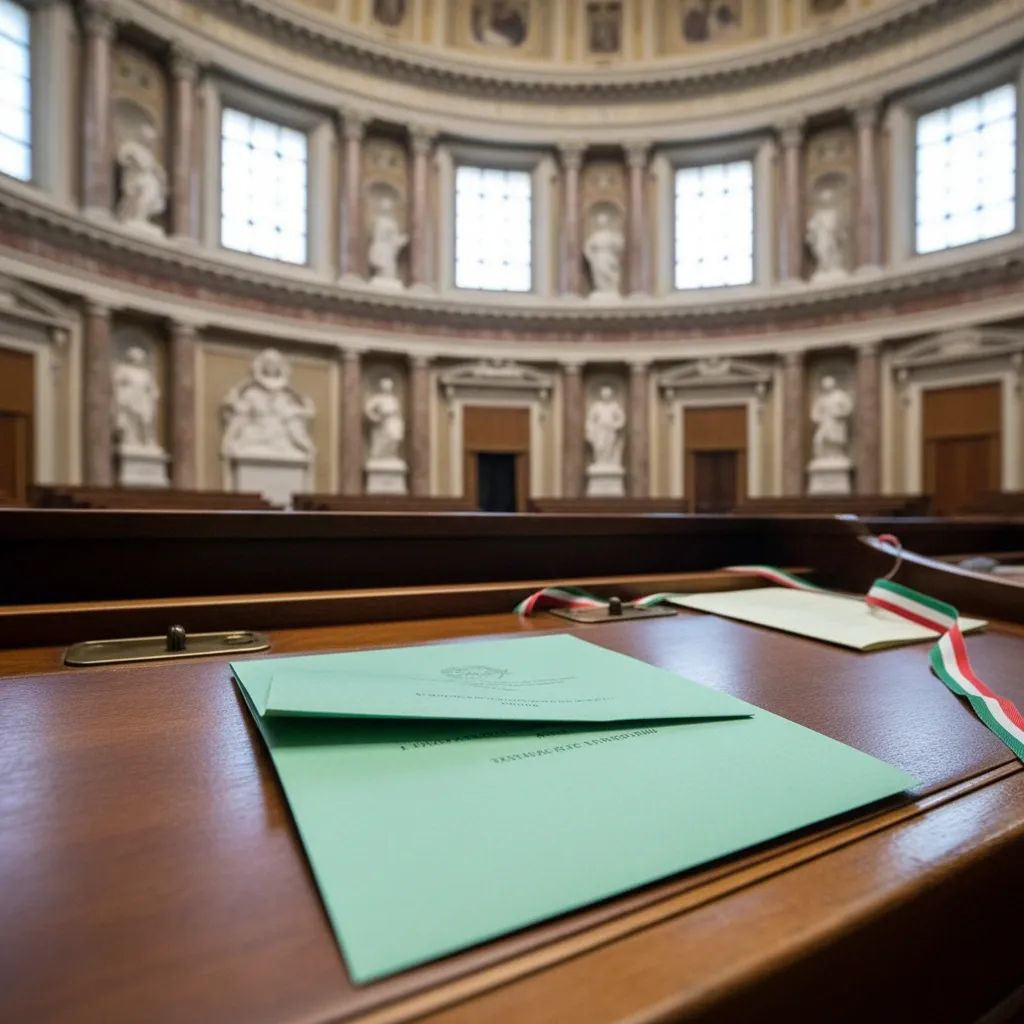
Italy's national news agency ANSA has launched a comprehensive online hub for the constitutional referendum on justice reform, less than three weeks before voters head to the polls on March 22–23. The digital platform centralizes information, campaign coverage, and real-time scrutiny tools as the country prepares for one of its most contentious constitutional consultations in recent memory.
Why This Matters
• No turnout threshold: Unlike standard referendums, this constitutional vote requires only a simple majority of valid votes cast—meaning the outcome hinges entirely on persuasion, not participation.
• Permanent changes: The reform, known colloquially as the "Nordio Reform," would permanently alter seven articles of the Italian Constitution governing the judiciary, including separation of magistrate careers and restructuring of the Consiglio Superiore della Magistratura (CSM).
• Uncertain outcome: Polling by Ipsos in mid-February revealed a statistically tied race, with significant undecided voters who could swing the result either way.
• Voting window: Polls open Sunday, March 22, from 7:00 to 23:00, and Monday, March 23, from 7:00 to 15:00.
The ANSA Platform: One-Stop Referendum Resource
The ANSA.it special section offers voters a breakdown of the constitutional text approved by Parliament and published in the Gazzetta Ufficiale on October 30, 2025. The site includes explainers on Article 138 procedures—the constitutional mechanism that permits citizen veto of parliamentary revisions passed without a two-thirds supermajority—and historical context drawn from Italy's five prior constitutional referendums since 1946.
Visitors can access position papers from both the "Sì" (Yes) and "No" committees, eligibility guidelines for overseas voters, and a timeline of campaign milestones. The agency's political, economic, and multimedia desks are collaborating across regional bureaus to produce daily news dispatches, photo galleries, video packages, podcasts, infographics, and live event coverage from rallies and forums nationwide.
Starting in the final days before voting, the homepage will feature a live scrutiny dashboard tracking results as they emerge from Italy's 7,904 municipalities. All content will be distributed simultaneously via ANSA's social channels—X, Facebook, Instagram, and WhatsApp—to maximize reach among younger and mobile-first audiences.
What's Actually on the Ballot
The referendum text, formally titled "Norms on Judicial Organization and Establishment of the Disciplinary Court," modifies Articles 87, 102, 104, 105, 106, 107, and 110 of the Constitution. Four pillars define the proposed overhaul:
1. Career Separation: Magistrates would be divided from the outset into two distinct professional tracks—giudicanti (judges who adjudicate) and requirenti (prosecutors who investigate and charge). While functional separation already exists under the 2022 Cartabia Reform, this change embeds the division constitutionally, eliminating any possibility of crossover.
2. CSM Split: The unified Consiglio Superiore della Magistratura, the self-governing body that manages appointments, transfers, and discipline, would split into parallel councils—one for judges, one for prosecutors—both chaired by the President of the Republic but operating independently.
3. Sortition for CSM Members: Instead of elections dominated by internal magistrate factions (known as correnti), members of both councils would be selected by lottery from eligible pools of judges, prosecutors, and lay members (lawyers and legal scholars). Proponents argue this eliminates careerism and factional influence; opponents warn it removes democratic accountability.
4. Constitutional Disciplinary Court: A new Alta Corte Disciplinare with constitutional rank would assume jurisdiction over all disciplinary proceedings against magistrates, replacing the current system where the CSM judges its own members.
The Battle Lines
The "Sì" Camp: Transparency and Balance
Supporters—including Forza Italia, segments of the center-left Democratic Party (PD), and the Partito Radicale—frame the reform as long-overdue structural housekeeping. The Comitato Sì Separa, led by attorney Gian Domenico Caiazza, and the Comitato Pannella Sciascia Tortora emphasize that separating careers enhances judicial impartiality by preventing perceived conflicts between investigative and adjudicative roles.
They contend the sortition mechanism will dismantle correnti power blocs that have historically controlled CSM elections, reducing cronyism and restoring public confidence. The disciplinary court, they argue, introduces external oversight without compromising judicial independence, since it remains constitutionally anchored and majority-magistrate in composition.
The "No" Coalition: Defending Judicial Autonomy
The opposition is broader and more vocal. The Comitato Società Civile per il NO, chaired by Giovanni Bachelet and endorsed by figures including Rosy Bindi, Maurizio Landini (CGIL union leader), physicist and Nobel laureate Giorgio Parisi, and journalist Benedetta Tobagi, warns that the reform represents a Trojan horse for political control over the judiciary.
Their central argument: Italy's magistrates already operate under functional separation; making it constitutional is unnecessary and risks fragmenting the judiciary into competing silos vulnerable to executive pressure. The CGIL labor federation has mobilized members to reject what it calls an attack on the balance of powers enshrined in the 1948 Constitution. The Movimento 5 Stelle (Five Star Movement) echoes these concerns, framing the vote as a defense of democratic checks against authoritarian drift.
Critics also point out the reform does nothing to address chronic justice system failures—understaffing, trial backlogs, outdated infrastructure—but instead refocuses energy on internal governance disputes.
Historical Precedent: Italy's Referendum Track Record
Italy has held five constitutional referendums since adopting its Constitution in 1948 (excluding the 1946 monarchy-or-republic vote). The results reveal a citizenry skeptical of sweeping institutional change:
• 2001 (Titolo V reform): Approved, 64% Yes, but only 34% turnout.
• 2006 (Berlusconi-era overhaul): Rejected, 61% No, 52% turnout.
• 2016 (Renzi-Boschi reform): Rejected, 59% No, 65% turnout—leading to Prime Minister Matteo Renzi's resignation.
• 2020 (Parliamentary seat reduction): Approved, 70% Yes, 49% turnout.
The pattern suggests Italians approve narrow, technical fixes but distrust ambitious constitutional rewrites, especially when packaged by incumbent governments.
What This Means for Residents
For ordinary Italians, the immediate impact of a "Yes" victory would be invisible—implementation requires enabling legislation and multi-year transitions. Over the long term, however, the reform could reshape how prosecutors pursue politically sensitive corruption cases and how judges are insulated from political interference.
If the reform passes: Magistrates entering the profession after enactment would choose their track immediately, foreclosing career flexibility. New CSM members would be selected by lottery starting with the next electoral cycle, likely in 2027. The disciplinary court would begin hearing cases once staffed, potentially by 2028.
If the reform fails: The status quo remains intact, but pressure for judicial governance reform will likely resurface under a different government, possibly tied to other institutional overhauls such as the stalled premierato (prime ministerial strengthening) proposal.
Voting Logistics
Citizens residing in Italy vote in person at their assigned polling station. Those registered abroad had until January 24, 2026, to request in-person voting in Italy; all others receive postal ballots. The scheda (ballot paper) will be green and feature a single yes-or-no question. Municipalities like Naples finalized poster allocation for campaign materials on March 2, underscoring the sprint to polling day.
ANSA's multimedia rollout reflects the stakes: with polls deadlocked and turnout unpredictable, both camps recognize that information asymmetry—who understands the complex legal stakes—could determine the winner. Whether voters see this as a necessary modernization or a dangerous power grab will be settled in less than three weeks.


