
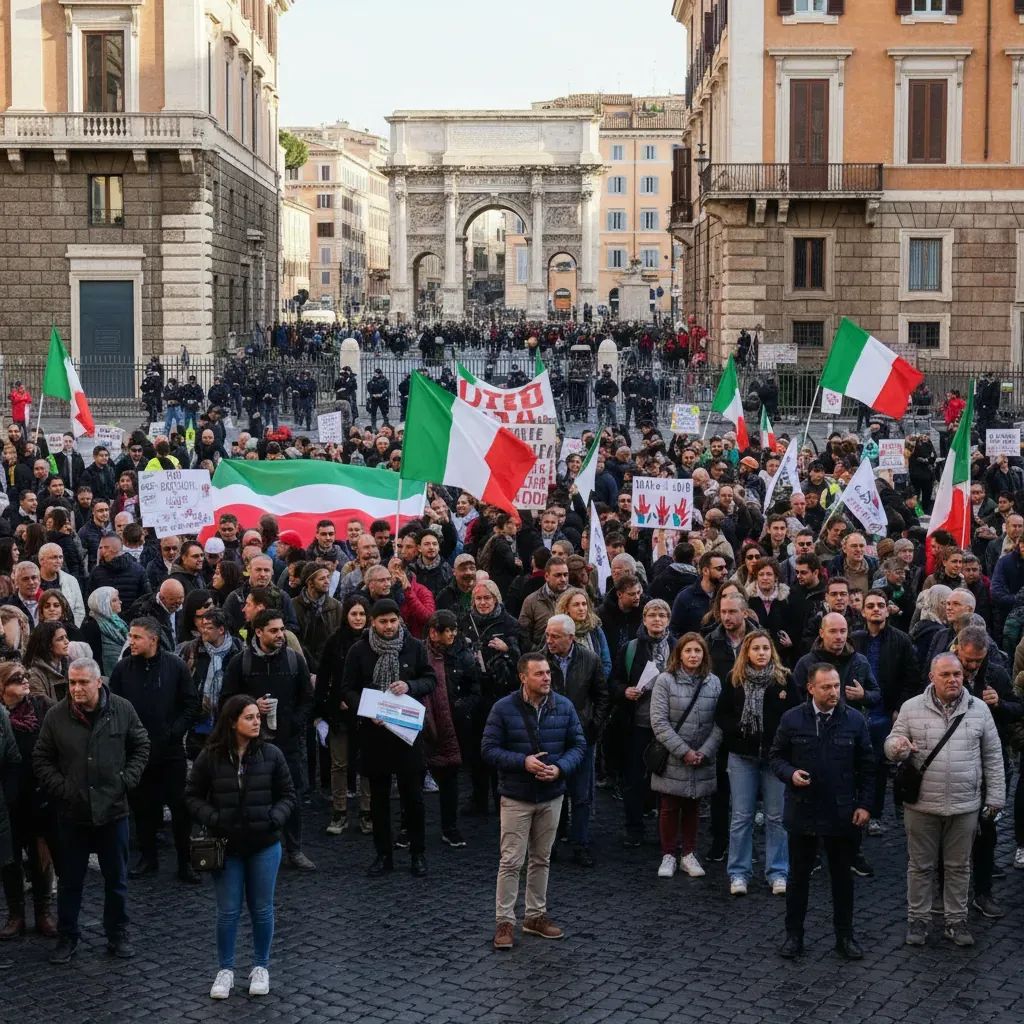
The Kremlin has signaled to the United States its willingness to observe a brief cessation of hostilities in Ukraine during Russia's May 9 Victory Day celebrations, a symbolic gesture that comes after more than a year of stalled peace negotiations and repeated battlefield escalations. The proposal, conveyed during a 90-minute phone call between Russian President Vladimir Putin and US President Donald Trump, represents the latest in a series of limited truces offered by Moscow—while broader conditions for a lasting settlement remain elusive.
Why This Matters for Italy and Europe:
• Symbolic timing: Russia seeks a ceasefire specifically for May 9, a highly charged historical date commemorating the Soviet defeat of Nazi Germany in 1945.
• Pattern of partial truces: The Kremlin has proposed several short ceasefires in 2026, including one for Orthodox Easter (April 11-12), all of which collapsed amid mutual accusations of violations.
• Trump's mediation role: The US president, who has positioned his administration as a mediator, reportedly backed the truce and suggested a broader peace deal is achievable.
• No comprehensive terms: Despite the call's length, no detailed conditions for ending the conflict—territorial concessions, NATO membership, or security guarantees—have been disclosed.
What This Means for Italy and Residents
For Italians watching this conflict unfold, the stakes are tangible and direct. As a NATO member and EU state, Italy faces multiple consequences from prolonged hostilities in Ukraine:
Energy Security: Italy imports a significant portion of its natural gas through pipelines crossing Eastern Europe. Continued fighting disrupts energy supplies and keeps prices elevated, directly affecting heating and electricity costs for Italian households and industries. Any ceasefire, even temporary, could ease pressure on European energy markets where Italy competes for available resources.
Economic Impact: Italian manufacturing and export sectors, particularly those dependent on supply chains running through Central and Eastern Europe, face ongoing disruptions. The continuation of sanctions and trade restrictions costs Italian businesses billions annually. A durable resolution would help restore normal commercial corridors vital to northern Italian industrial production.
Migration and Humanitarian Concerns: Italy, as a Mediterranean gateway, has absorbed Ukrainian refugees and continues managing migration pressures. Prolonged conflict intensifies humanitarian crises that ultimately reach Italian shores. Italian civil society organizations have emphasized the need for genuine peace solutions rather than frozen conflicts that perpetuate displacement.
Italy's Diplomatic Position: The Italian government has consistently advocated within NATO and the EU for solutions that preserve Ukrainian sovereignty while avoiding direct escalation with Russia. Prime Minister Giorgia Meloni has emphasized Italy's role as a bridge-builder in Europe, but faces pressure to balance NATO solidarity with energy security concerns. Any US-led settlement negotiated without sufficient EU consultation risks fracturing European unity—a particular concern for Italy, which prioritizes transatlantic cohesion.
NATO Credibility: As a NATO member, Italy's security framework depends on the alliance's credibility. Settlements that appear to reward Russian aggression or undermine Ukrainian territorial integrity weaken NATO's deterrent value and could embolden other threats to European security—concerns that resonate deeply in Rome's strategic calculations.
The broader implications for Europe hinge on whether Trump's mediation can produce a framework acceptable to all parties. Italian policymakers have consistently emphasized the importance of Kyiv's sovereignty and territorial integrity in peace talks, making any unilateral deal between Washington and Moscow a potential source of transatlantic friction.
Putin's Latest Ceasefire Proposal
Presidential adviser Yuri Ushakov told Russian state media that Putin informed Trump during their April 29 conversation that Moscow is prepared to halt military operations on and around May 9, 2026, the day Russia marks its Victory Day. The holiday holds profound significance in Russian political culture, serving as a cornerstone of national identity and a reminder of the Soviet Union's role in World War II.
The Kremlin described the 90-minute exchange as "frank and professional," noting that Trump actively supported the temporary ceasefire initiative. According to Ushakov, Trump acknowledged that the holiday commemorates a shared victory over fascism—a nod to the Allied cooperation of 1945—and expressed optimism that a broader agreement to resolve the Ukraine conflict is achievable.
This is not the first time in recent months that Russia has proposed a limited pause in hostilities. In mid-April, the Kremlin ordered a suspension of combat across all fronts for the Orthodox Easter weekend. Both Moscow and Kyiv pledged to observe the truce, yet the ceasefire was widely violated, with each side accusing the other of breaching the terms within hours of its commencement.
Trump's Role as Mediator
Trump's administration has made normalization of relations with Russia a foreign policy priority since early 2025. Key diplomatic figures, including those within the administration, have reaffirmed Washington's commitment to "constructive collaboration" with Moscow in pursuit of a settlement.
The phone call on April 29 also touched on the escalating situation in the Persian Gulf and Iran. Putin reportedly praised Trump's recent decision to extend a ceasefire in Iran, describing it as a wise move that could "stabilize the region and give negotiations a chance." The Kremlin's supportive tone on Iran suggests Moscow is keen to demonstrate goodwill across multiple theatres, potentially strengthening its negotiating position on Ukraine.
Trump's public statements have been consistently optimistic on the prospects for peace. He has said repeatedly that an accord is achievable, though neither Washington nor Moscow has released specifics. The lack of detail has fueled skepticism among European allies and Ukrainian officials, who worry that any deal brokered without Kyiv's full consent could effectively freeze the conflict along current lines—leaving Russian forces in control of significant swaths of Ukrainian territory.
Diplomatic Efforts and the Path Forward
The Trump administration's push to engage in Ukraine peace discussions has included various diplomatic channels and proposals throughout 2025 and into 2026. According to reports and statements from Russian officials, Moscow has engaged with multiple US proposals, though significant disagreements remain on core issues including territorial disputes, security guarantees, and military rebuilding capabilities.
Russian officials have objected to provisions that would allow Ukraine to rebuild its military capabilities, while Ukrainian leadership continues to insist on verifiable withdrawals and preservation of territorial integrity as preconditions for serious negotiations. That fundamental gap between Russian demands and Ukrainian red lines has persisted despite months of diplomatic engagement.
In early 2026, discussions reportedly shifted to different venues as the Trump administration pursued its goal of achieving a settlement. President Volodymyr Zelenskyy has indicated Ukraine's openness to talks, though Ukrainian officials emphasize that any agreement must respect Ukraine's sovereignty. As of late April, no binding agreement has emerged, and fighting continues along active front lines.
The Skeptics' View
Western analysts caution that Russia's repeated offers of limited ceasefires serve multiple purposes beyond diplomacy. They provide Moscow with breathing room to regroup forces, reposition military assets, and resupply front-line units. They also allow the Kremlin to project an image of reasonableness on the international stage, even as its territorial demands remain substantial.
Some observers argue that Putin's regime has structural incentives to prolong the conflict indefinitely. A genuine peace settlement, even one favorable to Russian interests, could remove the rally-around-the-flag dynamic that has helped consolidate domestic political control since 2022. By contrast, a frozen conflict punctuated by periodic truces allows Moscow to maintain mobilization, justify security spending, and sustain a wartime narrative.
Ukraine, for its part, has called for a comprehensive, unconditional ceasefire as a precondition for serious talks—something the Kremlin has consistently rejected. Kyiv's position is that any pause in fighting must be accompanied by verifiable withdrawals, humanitarian corridors, and a clear timeline for addressing territorial disputes through negotiation. The absence of these elements in Putin's latest proposal underscores the gap between symbolic gestures and substantive peace.
Next Steps
The immediate question is whether the May 9 ceasefire will hold if implemented, and whether it can serve as a foundation for extended talks. The Trump administration has indicated that broader diplomatic initiatives could follow if the truce proves durable. The Kremlin, meanwhile, has said Putin is open to meeting Zelenskyy, but only to "finalize" agreements—implying that Moscow believes fundamental terms have already been negotiated.
For Italy and its European partners, the coming weeks will be a critical test of whether American-led diplomacy can bridge the chasm between Russian demands and Ukrainian red lines. If the Victory Day truce collapses as the Easter one did, pressure will mount on Washington to recalibrate its approach—and on Brussels to coordinate a more assertive EU strategy. If it holds, even briefly, it may offer a narrow window for the kind of serious preparatory work that Russian officials have insisted is necessary before any meaningful summit can take place. Italian policymakers will be watching closely to ensure that any resolution protects European security interests and respects the democratic values that bind the Western alliance together.


