
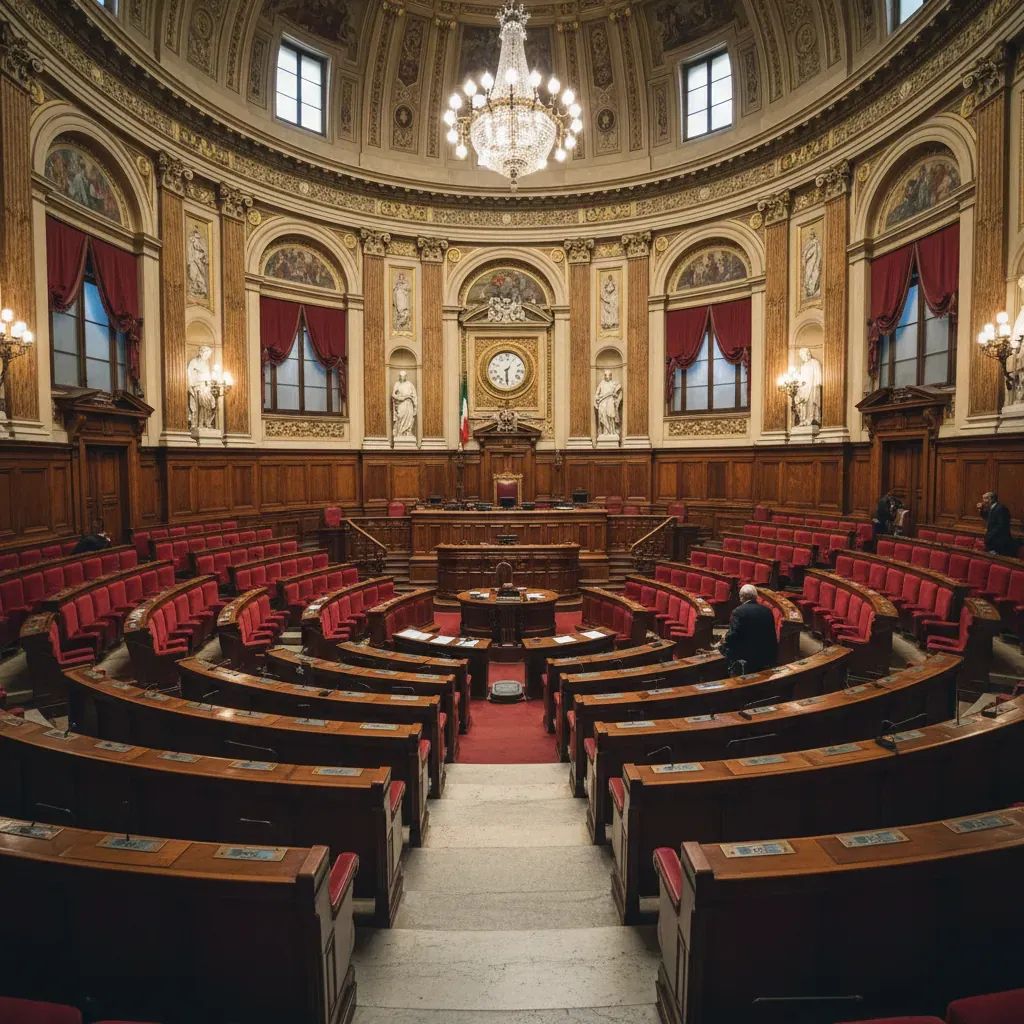
Italy has reaffirmed its unwavering commitment to Ukraine as President Sergio Mattarella delivered a sharp warning that international law is under assault from acts of aggression that threaten European and Mediterranean stability. The declaration came as Ukrainian President Volodymyr Zelenskyy visited Rome, securing renewed pledges of military, financial, and diplomatic support from both Mattarella and Prime Minister Giorgia Meloni.
Why This Matters
• Military aid extended: Italy has authorized weapons shipments to Ukraine through the end of 2026, marking the 13th aid package since the conflict began.
• Constitutional values invoked: Mattarella framed Italy's support as a defense of principles enshrined in the Italian Constitution, linking domestic values to international security.
• Strategic pressure on Russia: Rome views economic sanctions—not just military hardware—as the most effective tool to force Moscow toward negotiations.
• Joint defense production: Italy is exploring co-production of drone technology with Ukraine, recognizing Kyiv's battlefield innovation as a strategic asset.
Mattarella's Stark Assessment of Global Order
Speaking at the Quirinale Palace during ceremonies marking the 103rd anniversary of the Italian Air Force, Mattarella painted a grim picture of the current geopolitical landscape. He noted that the "foundations of peaceful coexistence" have been shaken not just by regional crises but by flagrant violations of sovereignty and humanitarian law.
The Italian President did not name Russia explicitly, but his remarks arrived hours before his meeting with Zelenskyy, leaving little doubt about the target of his criticism. Mattarella emphasized that Europe and the Mediterranean basin are being wounded by conflicts that have upended security assumptions held firm just a few years ago.
His invocation of Italy's Constitution—a document born from the ashes of fascism and war—served as a subtle reminder that the country's post-World War II identity is built on rejecting aggression and upholding multilateral rules. For Italians, the message was clear: supporting Ukraine is not just foreign policy; it's a defense of the values that rebuilt the nation.
Zelenskyy Secures Rome's Continued Backing
When Zelenskyy arrived at the Quirinale on April 15, Mattarella greeted him with what he called "true pleasure," underscoring the deep friendship between the two nations. The Ukrainian leader had already met with Meloni earlier in the day, and both Italian leaders presented a united front.
Mattarella praised Ukraine's resilience and heroism, telling Zelenskyy that Italy would "always stand by Ukraine." He reiterated that Meloni had confirmed the government's position during their separate talks, and he fully endorsed that stance. The convergence between Italy's head of state and head of government signals rare political unity on a foreign policy issue that has occasionally split the ruling coalition.
Key topics on the agenda included the unblocking of European Union aid packages for Ukraine, which Zelenskyy identified as particularly urgent. Mattarella also condemned Russian bombardments of Ukrainian civilian infrastructure, especially during the winter months, calling them violations of the most basic provisions of humanitarian law.
What This Means for Residents
For anyone living in Italy, the government's commitment to Ukraine carries tangible implications. The extension of military aid authorization through 2026 ensures that Italian taxpayer funds will continue flowing to Kyiv in the form of defense systems, armored vehicles, and artillery. While exact figures remain classified, previous packages have included advanced air defense platforms and logistical support valued in the tens of millions of euros.
The economic dimension is equally significant. Italy, aligned with its Western partners, maintains strict sanctions on Russia, including those targeting energy imports. A total EU ban on Russian liquefied natural gas (LNG) is set to take effect in 2027, though first-quarter 2026 data shows a temporary uptick in Russian LNG arrivals due to disruptions linked to the U.S.-Iran conflict. Italians should expect continued volatility in energy markets as the country reduces dependency on Russian supplies.
On the diplomatic front, Meloni has proposed that the EU appoint a special envoy to engage Russia in high-level dialogue aimed at ending the war. She has also floated the idea of NATO Article 5-style security guarantees for Ukraine, a concept now being incorporated into peace plan discussions among allies. If adopted, such measures would further entangle Italy in long-term commitments to Ukrainian security, potentially involving future military or financial obligations.
Italy's Dual Strategy: Sanctions and Arms
The Meloni government has consistently framed its Ukraine policy as a blend of economic pressure and military aid. Meloni herself has stated that sanctions are the "most effective weapon" to build peace, a view that reflects Italy's strategic calculus: sustained economic isolation will force Russia to negotiate more than battlefield dynamics alone.
Yet the domestic political landscape remains complex. While Forza Italia and Meloni's Fratelli d'Italia strongly back continued arms shipments, the Lega party—a coalition partner—has expressed reservations, citing concerns about corruption in Kyiv and advocating for a shift toward civilian aid. Despite these internal tensions, the government resolved months of disagreement in late 2025 by approving the latest aid package and extending authorization through 2026.
Broader Threats to European Stability
Mattarella's warnings extend beyond Ukraine. According to security analyses from institutions like the European Union Institute for Security Studies (EUISS), the continent faces a web of interconnected threats in 2026:
• Hybrid warfare: Russia continues sabotaging critical infrastructure across Europe, interfering in elections, and violating airspace, employing tactics designed to stay below NATO's Article 5 threshold.
• Mediterranean instability: Renewed fighting is anticipated in the Red Sea and Libya, while the Israeli-Palestinian conflict and post-Assad Syria add further volatility. The Eastern Mediterranean remains a chokepoint for energy and commercial traffic to Europe.
• Western Balkans tensions: A potential flare-up between Kosovo and Serbia, or secessionist moves by Republika Srpska in Bosnia, could destabilize the region.
• Cyber and disinformation campaigns: Artificial intelligence is enabling more sophisticated influence operations that erode public trust in democratic institutions.
For Italy, positioned at the heart of the Mediterranean, these crises are not abstract. They translate into migration pressures, energy security challenges, and the risk that conflicts on Europe's periphery could spill into the Italian sphere of influence.
Joint Drone Production on the Horizon
One concrete outcome of Zelenskyy's Rome visit is Italy's interest in co-producing drones with Ukraine. The war has transformed Ukraine into a leader in unmanned aerial systems, and Italian defense firms see an opportunity to leverage that expertise. Such a partnership would bolster Italy's defense industrial base while providing Ukraine with economic benefits and technological collaboration that outlasts the current conflict.
Details remain under negotiation, but the initiative reflects a broader trend: Western nations recognizing that Ukraine's battlefield innovations—particularly in drone warfare, electronic warfare, and rapid prototyping—offer lessons and technologies worth integrating into their own arsenals.
Constitutional Values Meet Strategic Necessity
Mattarella's framing of Ukraine support as a constitutional imperative resonates deeply in a country that enshrined pacifism and multilateralism in its founding document. Yet Meloni has also argued that backing Kyiv is a strategic necessity, not just a moral duty. This dual narrative—values and interests—has helped maintain broad public support despite the costs.
Italy has contributed to Ukraine across multiple dimensions: political (supporting EU accession negotiations), financial (budget support and reconstruction funds), humanitarian (hosting refugees), and military (12 aid packages delivered, with a 13th approved). The government's position is that a Russian victory would set a precedent that undermines the rules-based order, emboldening other aggressors and threatening Italy's own security environment.
The Path Ahead
As Mattarella emphasized, the world Italy knew just a few years ago—one of assumed stability and consolidated peace—has fractured. The President's call for "renewed firmness" in defending constitutional values signals that Italy's leadership sees no quick resolution to the Ukraine conflict or the broader challenges facing Europe.
For residents, this means continued engagement in a long-term confrontation with Russia, sustained economic costs from sanctions, and the likelihood of further military commitments. It also means that Italy's foreign policy, often characterized by pragmatism and balancing acts, has hardened into a clear stance: sovereignty matters, international law matters, and Italy will stand with those defending both—even when the price is steep.


