
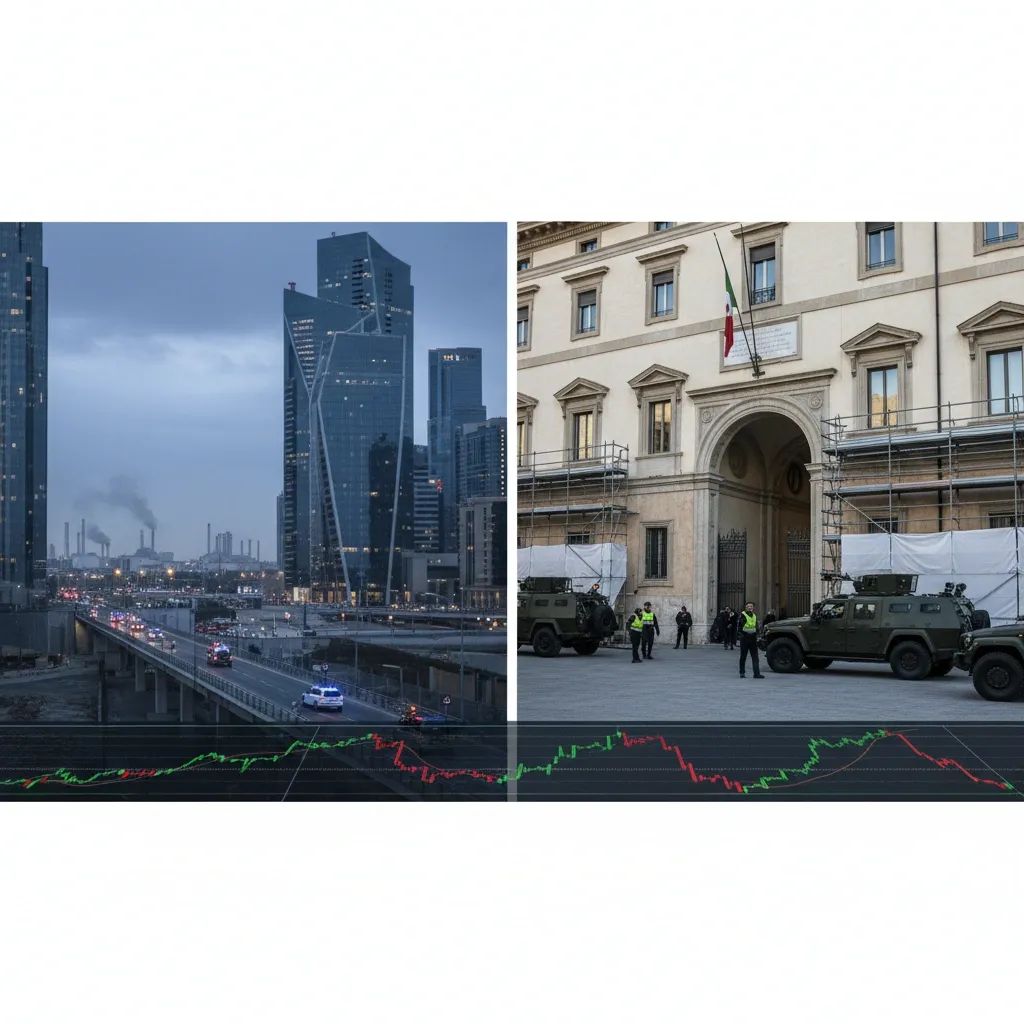
In early June 2026, Iran and the United States engaged in a severe escalation of military confrontations in the Persian Gulf, directly impacting two nations hosting American bases—Kuwait and Bahrain—and raising immediate concerns about energy security, regional stability, and the safety of civilians and shipping routes critical to global commerce.
Why This Matters
• Flight disruptions: Iran's strikes hit Terminal 1 of Kuwait International Airport, causing injuries and forcing flight suspensions—a direct disruption to air travel and logistics for expats and businesses operating in the Gulf.
• Energy supply threat: The Strait of Hormuz, through which 20% of the world's oil and liquefied natural gas passes, is now a live conflict zone—expect volatility in fuel prices and shipping insurance costs.
• Military escalation: Iran targeted the U.S. Fifth Fleet headquarters in Bahrain, marking one of the most aggressive direct strikes on American military infrastructure in the region in recent years.
• Civilian safety: Both Kuwait and Bahrain activated air raid sirens and urged residents to seek shelter as ballistic missiles and drones penetrated airspace—a scenario not seen in years.
Direct Impact on Italy and European Residents
For residents of Italy, this escalation in the Persian Gulf carries direct and immediate consequences across multiple dimensions:
For Italian nationals in the Gulf: Italians working in Kuwait and Bahrain should register immediately with the nearest Italian consulate and monitor updates from the Ministry of Foreign Affairs (Farnesina) website. The Italian government has issued travel advisories recommending that Italian citizens exercise heightened caution in the region. Airlines operating from Italian airports may face disruptions to Gulf routes as air traffic is rerouted around the conflict zone.
Energy and fuel costs: Italy imports a significant portion of its energy from Gulf producers, with ENI (Eni S.p.A.), Italy's major energy company, maintaining substantial operations in the region. An extended crisis affecting the Strait of Hormuz could drive oil prices above $100 per barrel, directly translating to higher fuel costs at Italian petrol pumps within weeks. Industrial production costs would also rise, potentially affecting consumer prices across sectors dependent on energy-intensive manufacturing.
Shipping and trade: Italian shipping firms with vessels transiting the Gulf face immediate challenges—insurance premiums are climbing sharply, and many companies are rerouting cargo through longer, more expensive maritime corridors. This adds weeks to delivery timelines and increases costs for imported goods, from electronics to consumer products distributed through Italian retail networks.
Travel planning: Italians planning trips to the Gulf region should postpone non-essential travel until the security situation stabilizes. Commercial flights from major Italian airports (Rome Fiumicino, Milan Malpensa) to Kuwait and Bahrain face delays and potential cancellations. Travel insurance providers are updating policies to account for the heightened risk zone.
The Sequence of Escalation
The crisis began when the U.S. Central Command (CENTCOM) disabled a merchant vessel attempting to breach an American blockade on Iranian ports. The M/T Lexie, flying a Botswana flag, ignored 24 hours of repeated warnings before a U.S. aircraft fired a Hellfire missile into the ship's engine room, rendering it inoperable. CENTCOM justified the strike as enforcement of sanctions and blockade protocols designed to limit Iran's maritime trade.
Within hours, Iran's state broadcaster Irib announced retaliation. In a series of posts on social media, the network declared that "non-cooperative American bases in Kuwait and the Persian Gulf" would be targeted in response to U.S. "hostile actions" in the Strait of Hormuz and on Qeshm Island, a strategic Iranian landmass in the southern Gulf.
The Kuwaiti military confirmed via social media that its air defenses were "confronting enemy missiles and drones." Sirens wailed twice across Kuwait City and surrounding areas. The attacks damaged Terminal 1 of Kuwait International Airport, causing what Kuwaiti authorities described as "significant material damage" and injuring multiple individuals. Flights were suspended temporarily as emergency crews assessed structural integrity and cleared debris.
In Bahrain, the Ministry of Interior issued urgent public warnings: "Stay calm and move to a safe location." Air defenses, supported by U.S. forces, intercepted three ballistic missiles aimed at the island nation, which hosts the U.S. Fifth Fleet—a cornerstone of American naval power projection in the Middle East. Bahrain's government accused Iran of a "systematic hostile approach" and confirmed the destruction of multiple drones in addition to the missiles.
U.S. Countermeasures and Defense Operations
The U.S. Central Command disclosed that it conducted "defensive strikes" on a military control station on Qeshm Island, targeting infrastructure used to coordinate Iran's drone and missile operations. According to CENTCOM, American forces intercepted multiple Iranian ballistic missiles and drones, including two missiles launched toward Kuwait that broke apart mid-flight and the three missiles bound for Bahrain that were shot down before impact.
A subsequent wave of Iranian drones attempted to strike U.S. forces in Kuwait but was neutralized. CENTCOM stated that "air defenses successfully shot down several drones, ensuring no U.S. personnel or assets sustained damage." The command also reported downing three drones that had been launched toward civilian mariners transiting regional waters, underscoring the threat to commercial shipping.
Iran's Irib posted footage purporting to show a failed U.S. interceptor missile that crashed in a non-military zone in Kuwait after missing its target—a claim that could not be independently verified. The imagery was used by Iranian state media to suggest vulnerabilities in American and allied air defense systems.
What This Means for Residents and Businesses
For expatriates, businesses, and travelers in Kuwait and Bahrain, this escalation introduces tangible risks and operational challenges. Air travel through Kuwait International Airport faced immediate disruptions, with no clear timeline provided for full resumption of normal operations. Insurance premiums for shipping and air cargo transiting the Gulf are likely to spike, affecting the cost of imported goods and logistics timelines.
The threat to the Strait of Hormuz—the narrow waterway separating Iran from the Arabian Peninsula—poses broader economic consequences. A prolonged closure or militarization of the strait would force tankers to take longer, costlier routes, and could push oil prices above $100 per barrel, according to energy analysts.
Residents in Bahrain and Kuwait are advised to monitor official government channels for safety updates, maintain emergency supplies, and identify secure locations in their homes or workplaces. Italian nationals should contact the Italian consulates in the region and register with the Farnesina ministry for emergency assistance if needed. Employers with operations in the region should review crisis management protocols, ensure staff have access to real-time alerts, and consider contingency plans for evacuation or remote work.
Geopolitical Implications and Regional Stability
This exchange represents one of the most serious escalations between Iran and the United States in recent years, raising questions about regional stability and the future of diplomatic efforts to prevent a wider regional conflict. The direct targeting of U.S. military bases in sovereign Gulf nations crosses a threshold that could trigger additional American military deployments and deepen security partnerships with Gulf Cooperation Council states.
Kuwait and Bahrain are treaty allies of the United States, hosting critical military infrastructure that supports operations across the Middle East. Any sustained Iranian campaign against these nations would necessitate robust U.S. defensive commitments, potentially drawing in other regional actors and complicating ongoing efforts toward de-escalation.
The United Nations Security Council has previously condemned attempts to disrupt freedom of navigation in the Strait of Hormuz and called on Iran to adhere to international law. However, enforcement mechanisms remain limited, and the prospects for renewed diplomacy appear dim in the immediate aftermath of this violence.
For Italy, the escalation carries indirect but meaningful consequences. Italian energy companies maintain contracts with Gulf producers, and any prolonged instability could disrupt supply chains, increase costs, and necessitate diversification of energy sources. Italian shipping firms with vessels transiting the Gulf may face higher insurance premiums and route adjustments. Additionally, Italian military personnel deployed in regional stabilization missions could face heightened threat environments.
Accountability and International Response
While the U.S. Central Command has framed its actions as defensive and proportional, the sequence of events—beginning with the disabling of a civilian merchant vessel—illustrates the combustible nature of enforcement operations in contested waters. Iran, for its part, has portrayed the strikes as retaliation for what it describes as American aggression, framing the conflict in terms of sovereignty and self-defense.
Bahrain's Interior Ministry and Kuwait's military have both issued statements condemning the Iranian attacks as violations of their territorial integrity and threats to civilian safety. Regional diplomatic channels remain active, but the path to de-escalation is unclear, particularly as both sides claim justification for their actions.
The international community's response will likely focus on preventing further escalation, protecting civilian shipping, and reaffirming the principle of freedom of navigation. For now, the immediate priority is ensuring the safety of civilians in the affected areas and preventing the conflict from spiraling into a broader confrontation that could destabilize the entire Gulf region and its critical energy infrastructure.


