
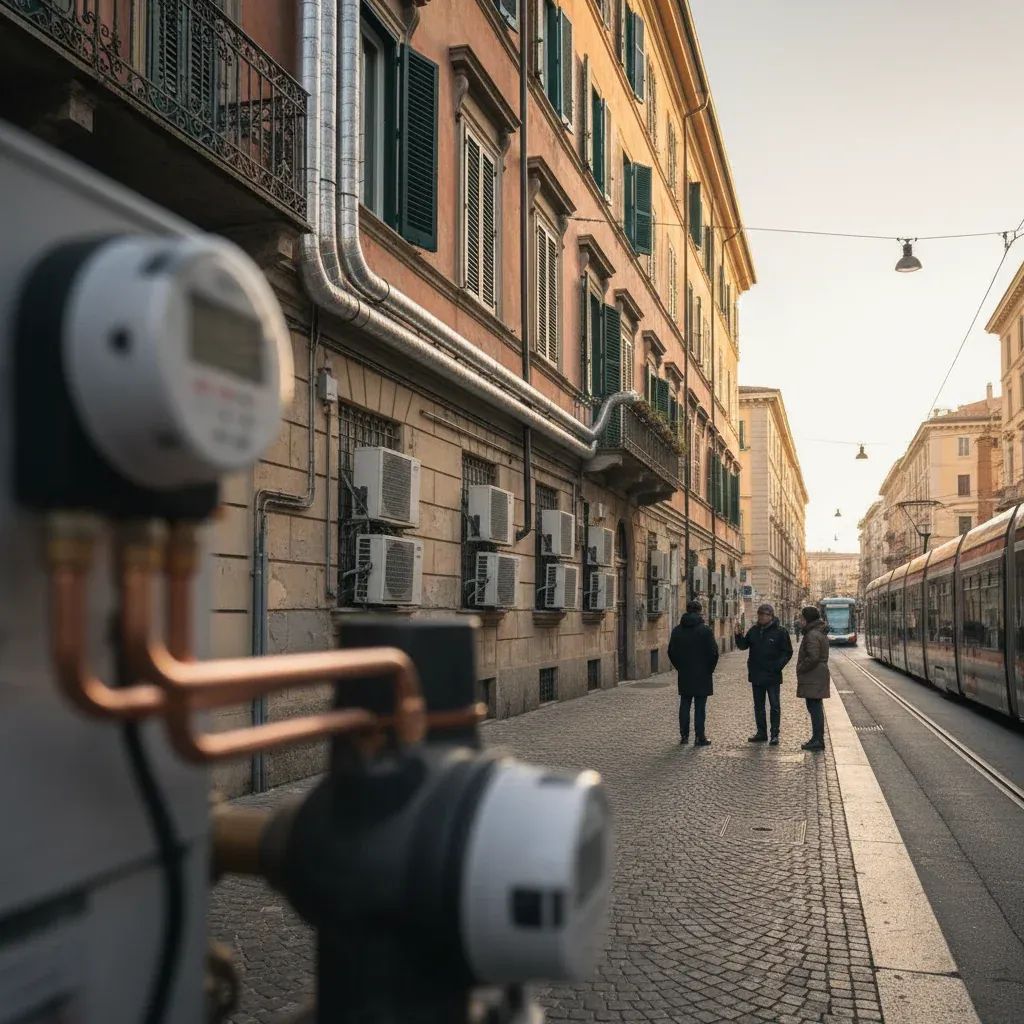
The Italian government is racing to contain the economic fallout from oil prices that surged past $117 per barrel on Tuesday, as a two-day ultimatum from former U.S. President Donald Trump to Iran expired without resolution—threatening the closure of the Strait of Hormuz and potentially cutting off a fifth of the world's oil and liquefied natural gas supply.
Why This Matters:
• Fuel costs are spiking: Italy's heavy dependence on imported energy makes it one of Europe's most exposed economies to the current shock—analysts have slashed 2026 growth forecasts to just 0.4%.
• Your utility bills are rising: Electricity bills for vulnerable households are set to climb 8.1% in the second quarter, despite emergency government subsidies.
• Inflation is back: S&P Global Ratings warns Italy faces above-average inflation pressures compared to other advanced economies, complicating household budgets and business planning.
• Supply chain disruptions loom: Beyond energy, the strait carries a third of global fertilizer trade and key commodities—threatening agriculture, semiconductors, and manufacturing.
Crude Hits Multi-Year Highs Amid Geopolitical Brinkmanship
West Texas Intermediate (WTI) crude jumped 5% to $117 per barrel on Tuesday morning, while Brent climbed 1.58% to $111. The rally follows a volatile trading session Monday that saw prices swing between $110 and $116.55 before settling at $115.33—a level not seen since the early 2020s.
The spike is directly linked to the expiration of Trump's ultimatum, issued Saturday, demanding Iran reopen the Strait of Hormuz within 48 hours or face military strikes on power plants and bridges. Iran rejected the demand, calling the threats "stupid," and severed direct communication channels with Washington. Indirect talks mediated by Pakistan on Sunday failed to produce a breakthrough, with Tehran rejecting a 45-day ceasefire proposal in favor of a permanent settlement.
The strait, a narrow waterway between Iran and Oman, is the world's most critical energy chokepoint. Approximately 11 million barrels per day of crude and vast quantities of LNG from Qatar, the UAE, and Saudi Arabia pass through it. Any prolonged closure would remove roughly 20-25% of global maritime oil trade from circulation—a disruption on par with the energy crises of the 1970s.
What This Means for Residents and Businesses in Italy
Italy's economy is particularly vulnerable. Unlike the U.S., which has significant domestic production, Italy imports nearly all its oil and gas. The Italian Ministry of Environment and Energy Security has acknowledged the exposure, though officials insist the country is better prepared than in past crises thanks to diversified supply routes, regasification terminals, and agreements with Algeria, Qatar, and the United States.
Still, the impact is already being felt. Diesel and gasoline prices at the pump are climbing, with forecasts suggesting diesel could exceed €1.90 per liter if crude stays above $115 for several weeks. For logistics companies, trucking fleets, and commuters in rural areas without robust public transit, this represents a direct hit to disposable income and operating margins.
The Italian Cabinet has deployed a suite of emergency measures through the so-called "Decreto Bollette" (Bills Decree). Key provisions include:
• A €115 one-time subsidy for 2026 to recipients of the social energy bonus.
• Voluntary contributions from energy suppliers to households with an annual ISEE (economic indicator) under €25,000 who do not qualify for the social bonus.
• Reductions in general system charges on electricity bills.
• Incentives for small and medium enterprises (SMEs) to sign Power Purchase Agreements (PPAs) with renewable energy producers, locking in lower long-term rates.
Despite these interventions, the Italian Regulatory Authority for Energy (ARERA) has confirmed that electricity bills for vulnerable customers will rise 8.1% in Q2 2026. Consumer advocacy groups are calling for more aggressive action, including decoupling electricity prices from gas benchmarks and expanding the social bonus.
Europe Scrambles for Contingency Plans
The European Commission has urged member states to prepare for a "potentially prolonged disruption" of energy supplies and to adopt voluntary demand-reduction measures. Recommendations include expanded remote work, lower speed limits on highways, increased use of public transport, restrictions on private car use in urban centers, and avoidance of non-essential air travel.
Some European capitals, including Rome, are revisiting the idea of a windfall tax on energy companies that have posted record profits amid the price surge. The European Central Bank (ECB) faces a policy dilemma: elevated oil prices feed inflation, complicating plans to lower interest rates and support growth. The euro has weakened against the dollar as investors seek safe havens.
Italy's exposure is compounded by its industrial base. The automotive, chemicals, heavy manufacturing, and logistics sectors—key pillars of the economy—are energy-intensive and highly sensitive to input cost shocks. Prolonged high prices could force production cuts, layoffs, and reduced capital investment.
Market Analysts See Prices Climbing Further
Financial institutions have sharply revised their 2026 oil forecasts. Bank of America now expects Brent to average $77.50 per barrel for the year (up from $61), while Standard Chartered has raised its estimate to $85.50 (from $70). Barclays projects $85, assuming the strait normalizes within two to three weeks.
However, if the crisis deepens, the outlook darkens considerably. A "severe disruption" scenario—defined as a loss of 6-8 million barrels per day—could push Brent to $113-$127, according to energy consultants. If the strait remains blocked for weeks, prices could hit $150 or even $200, a threshold Iranian officials have publicly suggested the world should prepare for.
Markets are already pricing in a $5-$10 per barrel geopolitical risk premium. Every diplomatic leak or military update triggers violent swings in futures trading, underscoring the fragility of the current equilibrium.
The Broader Economic Threat
Beyond the pump and the utility bill, a sustained oil shock poses systemic risks. S&P Global Ratings has cut Italy's 2026 GDP growth forecast to 0.4%—half its previous estimate. If Brent stays at $125 for the remainder of the year, some models suggest the Eurozone could contract by a full percentage point and slip into recession.
Inflation, which had been easing, is now climbing again. A 50% increase in oil prices typically adds roughly 1 percentage point to the inflation rate. For households, this translates into reduced purchasing power; for businesses, it means compressed margins and deferred hiring.
The International Energy Agency (IEA) reported that global oil supply fell by an estimated 8 million barrels per day in March 2026 due to closures at Iraqi terminals, suspended operations at Qatari and Emirati LNG facilities, and the overall disruption in the Gulf. Even if Saudi Arabia and other producers tap spare capacity, the shortfall cannot be quickly replaced.
Supply chain disruptions extend beyond energy. The strait is a critical artery for fertilizers (accounting for roughly a third of global trade), aluminum, and helium. Shortages of these inputs threaten agriculture, semiconductor manufacturing, and aerospace—sectors already strained by pandemic-era bottlenecks.
What Comes Next
For now, the situation remains fluid. Indirect negotiations between Washington and Tehran are ongoing, mediated by third parties including Pakistan and Oman. Trump has reiterated threats of "complete demolition" of Iranian infrastructure if the strait is not reopened, while Iran has demanded a permanent resolution to the broader conflict, not a temporary ceasefire.
The Italian Ministry of Foreign Affairs is coordinating with EU partners to push for de-escalation. Rome has also activated its strategic petroleum reserves and is exploring emergency fuel-sharing arrangements with France and Germany under existing EU protocols.
Residents should anticipate further increases in energy costs in the coming weeks, regardless of diplomatic progress. The full impact on inflation and growth will depend on how long the current crisis lasts—and whether the Strait of Hormuz remains open or becomes a battlefield.


