
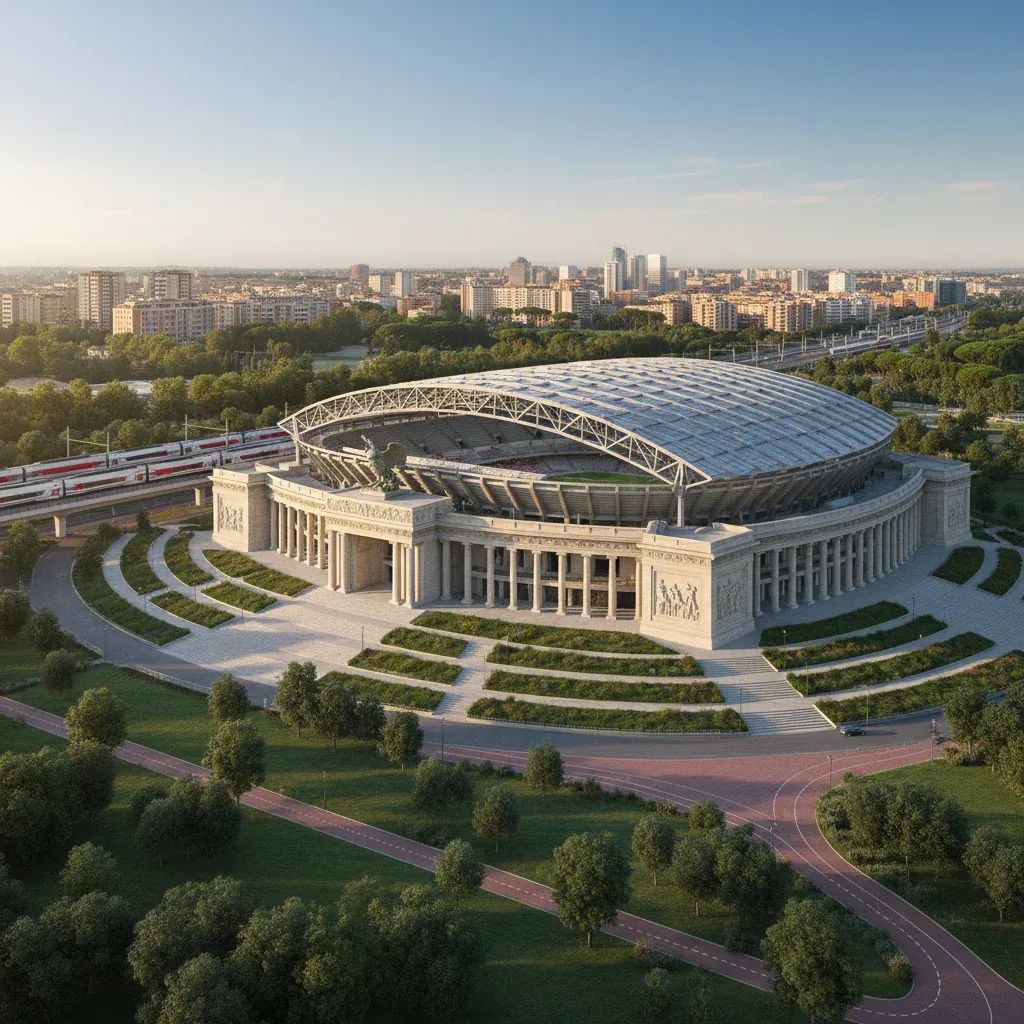
The Municipality of Naples has unveiled a €200M modernization plan for the Diego Armando Maradona Stadium, targeting completion by 2030 and positioning the southern Italian city as a host venue for UEFA Euro 2032. The overhaul will boost capacity from 54,732 to 63,300 seats, remove the athletics track, and install renewable energy systems—a move aimed at enhancing the match-day experience for one of Italy's most passionate football communities while addressing the competing ambitions of club owner Aurelio De Laurentiis.
Why This Matters
• Completion target: 2030, with matches potentially starting for Euro 2032 (Italy co-hosts with Turkey)
• Investment: €200M from Naples City Hall
• Capacity jump: 8,568 additional seats, plus 16 VIP skyboxes
• Club dynamics: SSC Napoli president De Laurentiis is pursuing a separate 70,000-seat stadium project at the former Q8 refinery site in San Giovanni a Teduccio
What the Redesign Delivers
Naples Mayor Gaetano Manfredi and Infrastructure Councillor Edoardo Cosenza presented the plan at Palazzo San Giacomo, emphasizing UEFA compliance and sustainability. The centerpiece is removal of the athletics track, which will bring the stands closer to the pitch and improve the viewing experience for supporters.
The stadium design includes expansion of the existing tiers and renovation of hospitality zones. 16 VIP skyboxes will enhance corporate and premium spectator accommodations. Energy efficiency is a key priority, with renewable energy systems planned to reduce the stadium's environmental footprint and align with UEFA's sustainability requirements for major tournaments.
Leveraging Fuorigrotta's Transit Network
Manfredi emphasized that the Fuorigrotta district benefits from strong public transport connectivity, including metro lines that serve the area. UEFA mandates that at least 80% of spectators reach venues via public transport, and Naples meets this requirement through its existing transit infrastructure and direct links connecting the stadium to the broader city network, including Capodichino Airport.
The timing of construction is planned to minimize disruption to SSC Napoli's fixtures, with the team continuing to play at the stadium during renovation phases—an important consideration for maintaining the club's home advantage throughout the project.
Italy's Multi-City Selection Process
Italy must nominate its host cities for UEFA Euro 2032, selecting from multiple candidate venues nationwide. The national government is supporting the modernization of Italian football infrastructure to meet international tournament standards. For Naples, securing Euro 2032 hosting would represent a significant opportunity for the city's sports infrastructure and economic development.
Naples is among the municipalities competing to host matches, with the Maradona Stadium upgrade representing the city's primary candidacy. The October deadline will determine which Italian cities are selected for the tournament.
The De Laurentiis Dual-Track Strategy
Aurelio De Laurentiis has been pursuing his own stadium development plan, proposing a new 70,000-seat facility at the former Q8 refinery site in San Giovanni a Teduccio. Soil remediation at that location is scheduled to be completed between late 2027 and early 2028, with potential construction extending toward 2032–33.
De Laurentiis has submitted his private stadium project as an alternative proposal within Italy's Euro 2032 bid process, creating a dual-track scenario where UEFA will evaluate both the municipal Maradona upgrade and the proposed new venue. Only one can ultimately be selected as Naples' official Euro 2032 venue.
Mayor Manfredi has expressed openness to dialogue with SSC Napoli, stating that decisions must prioritize the city's interests and the fans' experience, emphasizing that any Euro 2032 championship in Italy should include Naples as a host city.
What This Means for Residents
For Neapolitans, the upgraded Maradona promises practical quality-of-life improvements. Match days currently create congestion in Fuorigrotta; enhanced public transport access and pedestrian infrastructure will provide alternatives to driving. The stadium's improved facilities and energy efficiency can contribute to reduced municipal operating costs over time.
The multi-use activation model—hosting concerts, corporate events, and community activities—aims to extend the stadium's economic and social value beyond match days, potentially attracting tourism revenue and creating year-round programming for residents.
However, residents should understand that the project timeline spans several years during construction, and outcomes depend on securing Euro 2032 hosting rights. The final selection of Naples as a tournament venue will be confirmed through UEFA's official nomination process by October.


