
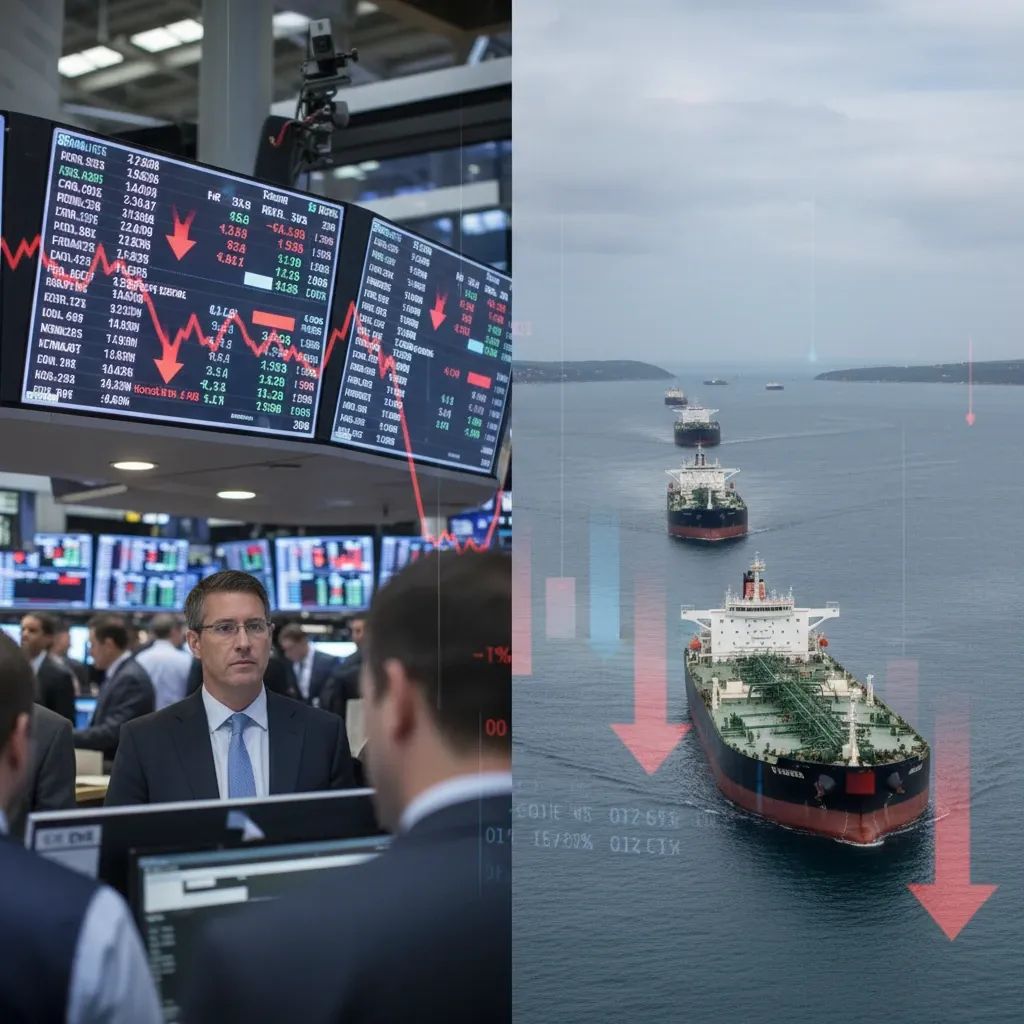
Italy-based investors watched the Milan Stock Exchange climb 0.5% on Friday, fueled by a semiconductor resurgence that rippled across European and Asian markets following strong earnings from Nvidia—but the optimism remains tethered to fragile diplomatic progress between Washington and Tehran that could determine whether energy prices stabilize or spike further.
Why This Matters
• Tech-driven rally: Milan's FTSE Mib jumped as STMicroelectronics surged 3% and aerospace manufacturer Avio gained 3.6%, tracking global chip momentum from strong tech sector earnings.
• Energy price uncertainty: Brent crude hovers above $105 per barrel (+2.4%) while natural gas contracts dipped 1.65% to €48.6 per MWh—volatility tied directly to Middle East negotiations.
• Bond yields compress: Italy's 10-year BTP yield dropped below 3.79% with the spread over German Bunds at 73 basis points, signaling investor confidence despite ongoing economic concerns.
• Euro weakness persists: The single currency slipped to $1.1595, reflecting diverging monetary policy expectations between the European Central Bank and the Federal Reserve.
Global Semiconductor Sector Drives Milan Rally
Tech stocks surged across Europe on Friday following strong earnings reports from major semiconductor companies. In Milan, STMicroelectronics—Europe's largest chipmaker—jumped 3% as investors responded to positive momentum in the global chip sector. Avio, which produces aerospace components, extended gains to 3.7%.
The technology-driven momentum mirrored moves in other European markets, with the DAX in Frankfurt climbing 0.7% and the CAC 40 in Paris up 0.33%.
Automotive and Banking Sectors Join the Advance
Stellantis, the multinational automaker with significant Italian operations, rose 2.3% as investors assessed the company's strategic positioning in the automotive sector. UniCredit, Italy's second-largest bank, added 1.7% as falling government bond yields improved the valuation of its substantial sovereign debt holdings. The bank's exposure to Italian BTPs becomes more attractive when spreads compress—Friday's 73-basis-point differential represents a tighter level.
Outside the main index, Brembo—the Bergamo-based brake manufacturer—surged 4.8% following the announcement of a joint venture in China aimed at capturing market share in emerging automotive segments.
Energy Negotiations Create Market Uncertainty
Despite Friday's equity gains, traders remained focused on ongoing negotiations between the United States and Iran aimed at de-escalating regional tensions. U.S. Secretary of State Marco Rubio acknowledged "slight progress" in talks mediated by Pakistan, with discussions centered on energy security and regional stability.
A potential agreement framework reportedly includes provisions for de-escalation and negotiations over sanctions. However, substantial differences remain between the parties regarding implementation details and compliance measures.
Brent crude's current level above $105 reflects market concerns about potential supply disruptions. The Strait of Hormuz, which handles roughly 21 million barrels per day under normal conditions, remains a focal point for energy market participants monitoring geopolitical developments.
Energy Costs Pressuring Italian Households and Businesses
For Italy—which imports approximately 93% of its energy needs—sustained elevated oil prices create concerns about inflation pressure. Recent consumer price data showed energy costs representing a significant component of overall inflation. The European Central Bank faces competing pressures as it balances growth concerns with price stability objectives.
Energy price uncertainty affects Italian households directly through utility bills and indirectly through business operating costs. Manufacturers in energy-intensive sectors remain particularly exposed to commodity price volatility.
Natural Gas Prices Retreat on Storage Levels
While crude prices remained elevated, natural gas moved lower. TTF contracts—the European benchmark—fell 1.65% to €48.6 per megawatt-hour, continuing a multi-day decline driven by adequate storage levels and milder spring weather reducing heating demand.
Italy's gas inventories currently stand at healthy levels thanks to diversified import sources including Algeria, Azerbaijan, and liquefied natural gas terminals developed after the 2022 supply disruptions. This storage position provides near-term price relief for Italian consumers and businesses.
Global Equity Markets Show Resilience
Equity markets globally have shown relative strength recently, with positive corporate earnings and technology sector momentum supporting investor sentiment. The international backdrop remains important for Italian equities, as many Milan-listed companies generate significant revenues abroad.
What This Means for Italian Investors
Friday's market action reflects the dual forces shaping portfolios for residents in Italy: technology-driven global growth offering opportunity through domestic champions like STMicroelectronics, balanced against energy price volatility that affects household purchasing power and business margins.
The compression in Italian government bond spreads provides tangible benefits—lower borrowing costs for Rome reduce fiscal pressures. A tight spread over Bunds historically correlates with easier credit conditions for Italian small and medium enterprises, the backbone of the economy in regions like Lombardy, Veneto, and Emilia-Romagna.
Interest rate policy at the ECB remains a key consideration for Italian households. Those with variable-rate mortgages face potential payment adjustments depending on monetary policy decisions, making the central bank's interest rate decisions particularly relevant for homeowners.
Precious metals showed mixed movement: gold edged slightly higher while silver posted modest gains. Both metals traditionally serve as positions for investors concerned about economic uncertainty.
Sector Divergence
Not all Milan-listed stocks participated in the rally. Saipem, the oil services contractor, dropped 2.3% despite higher crude prices. Amplifon, the hearing aid retailer, reversed 1.27% after completing a capital raise, with the discount pricing creating technical pressure.
Recordati, the specialty pharmaceutical company, converged toward a pending offer price as regulatory reviews proceed for a takeover transaction expected to close later in the year.
Outlook Hinges on Geopolitical Resolution
European equity markets remain focused on energy security developments and their implications for price stability. The International Energy Agency and other market observers continue monitoring Middle East tensions and their potential impact on global oil supplies.
For Italian households and businesses, the stakes are clear: progress toward energy market stability could support inflation expectations and economic momentum. Conversely, further escalation would pressure inflation and create broader economic headwinds.
The euro's weakness against the dollar—at $1.1595—reflects market uncertainty about relative growth and interest rate trajectories in the U.S. and eurozone. Currency movements matter particularly for Italian exporters and for the cost of energy imports.
With global equity markets sustaining upward momentum and Asian markets responding positively to tech sector developments, the immediate technical picture shows strength. Yet investors understand that durability depends less on quarterly results than on whether geopolitical tensions can be resolved constructively.


