
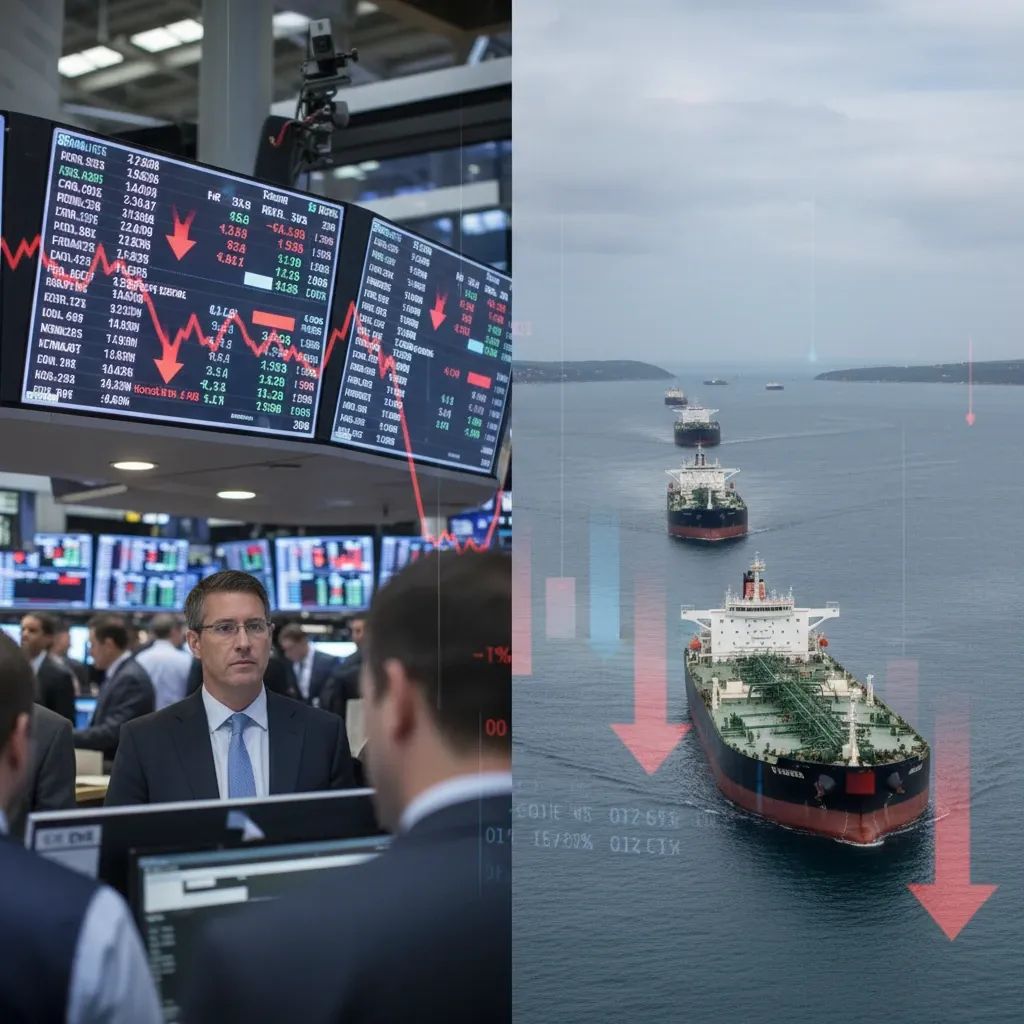
Italian investors woke to a rare convergence Thursday: record-high domestic stocks, falling energy costs, and access to history's largest IPO—all driven by Middle East peace hopes. Italy's main exchange soared to fresh all-time peaks as sentiment shifted from war-driven energy inflation toward a peace dividend from the Middle East, while the largest initial public offering in financial history landed on Wall Street after European closing bells.
Why This Matters:
• Ftse Mib climbed to a record 51,289 points (+1.55%), with Banca Generali marking a historic €60 per share.
• SpaceX priced its IPO at $135 per share on June 11, debuting June 12 under ticker "SPCX"—the biggest listing ever at roughly $75 billion raised and a valuation nearing $2 trillion.
• Oil prices pulled back sharply—WTI to $85 and Brent to $88 per barrel—on growing hopes Washington and Tehran will finalize a cease-fire that could reopen the Strait of Hormuz and allow Iranian crude back onto world markets. The crude decline, if sustained, could ease pressure on Italian fuel prices and household energy bills within weeks, though refined product costs typically lag behind crude movements.
• EssilorLuxottica surged as much as 5% intraday after Oddo BHF called the stock "clearly undervalued," arguing the market overestimates the disruptive threat of AI-powered eyewear.
Peace Optimism Pulls Oil Lower, Lifts Indices Across Europe
The Italy FTSE Mib, France CAC 40 (+1.86%), Germany DAX (+1.76%), and United Kingdom FTSE 100 (+1.63%) all closed Thursday near session highs, powered by expectations that months of brinkmanship between the United States and Iran may finally yield a diplomatic breakthrough. Pakistan's Prime Minister disclosed that negotiators have a "final, agreed text" in hand, while Iran's Foreign Minister stated an accord has "never been so close."
That optimism immediately spilled into commodity markets. Crude oil tumbled—West Texas Intermediate sliding to $85 per barrel and Brent benchmark to $88—on speculation the deal will lift sanctions long enough for Tehran to sell oil for 60 days, ease tensions around the strategically vital Strait of Hormuz, and begin talks on dismantling Iran's nuclear enrichment program. The strait, which carries roughly one third of seaborne global oil and liquefied natural gas, has been largely blocked since February 2026 when joint US-Israeli operations triggered what some analysts term the most dangerous chapter in US-Iran relations since the 1979 revolution.
Energy majors bore the brunt of falling crude prices. Eni shares dropped 3.66% in Milan trading, making the Italian oil-and-gas giant the worst performer on the FTSE Mib. Sector peers across Paris and London also suffered as traders priced in relief from supply disruptions that have driven inflation across the continent for four months.
What This Means for Italian Investors
Italy-based retail and institutional investors can now access SpaceX stock (ticker SPCX) through international brokers and major domestic banks starting from the secondary market open June 12. Major Italian banks and pan-European platforms like Revolut, Hargreaves Lansdown, and eToro will offer access, though residents should verify their specific broker's timeline and any currency conversion fees to ensure smooth purchases. The offering—which valued Elon Musk's aerospace venture between $1.77 trillion and $2.1 trillion—has already made the CEO the world's first trillionaire on paper. Italian savers should brace for heightened volatility during opening sessions, as SpaceX shares will likely experience sharp swings in early trading.
Institutional participation from the European Union, however, faces regulatory headwinds. Fund managers operating under the bloc's Sustainable Finance Disclosure Regulation (SFDR) are debating whether SpaceX governance structures satisfy ESG criteria—a question that could limit pension and mutual-fund allocations and leave more room for US-dominated demand.
The sheer scale of the listing may also siphon attention from smaller IPO candidates in Europe, potentially slowing the pipeline for Milan, Frankfurt, and Paris listings through the second half of 2026. A handful of early-stage venture-capital firms based in Italy and neighboring countries, which backed SpaceX during seed rounds, stand to realize historic returns.
EssilorLuxottica: Oversold on AI Fears, Says Oddo BHF
Shares of EssilorLuxottica, the Franco-Italian eyewear conglomerate, jumped as much as 5% during Thursday trading after investment house Oddo BHF published a note arguing the stock is "manifestly undervalued." The firm trimmed its 12-month price target from €251 to €220 but maintained an "outperform" rating, implying more than 20% upside from current levels. The Milan-listed company represents one of Europe's few indigenous tech-fashion plays, making it a rare domestic alternative to US-dominated AI investments.
The analyst contends that EssilorLuxottica's near-35% decline year-to-date is "excessive" and reflects a market fixation on worst-case scenarios surrounding artificial-intelligence eyewear. Oddo's base case assumes the current valuation already prices in the risks of AI glasses eating into margins while ignoring potential sales upside—a conservative posture that the firm believes the market should reconsider.
In reality, the company's Ray-Ban Meta smart glasses have consistently beaten analyst forecasts by roughly 20% since the second-generation launch in 2024. Third-quarter 2025 results showed AI-enabled eyewear contributing more than four percentage points to overall revenue growth of 11.7%. New "optics-first" models introduced in 2026—Blayzer Optics (Gen 2) and Scriber Optics (Gen 2)—feature slimmer frames, swappable nose pads, and real-time translation across multiple languages, addressing prescription-lens wearers who were largely excluded from earlier iterations. Production of smart glasses will shift to Italy in early 2027, anchoring high-margin assembly inside the European Union.
The pivot toward lifestyle-tech, reinforced by the 2024 acquisition of streetwear label Supreme, positions EssilorLuxottica as a rare European player straddling fashion and wearable computing—a space dominated by US and Asian firms. Yet Oddo BHF warns that the market currently treats the stock as pure optics retail, ignoring the emerging installed base and recurring AI-service revenue streams.
Milan Blue Chips: Cement, Autos, and Bancassurance Lead Gains
Beyond the headlines, Thursday's rally in Italy was broad-based. Buzzi Unicem jumped 5.4%, benefiting from optimism around Germany's newly announced infrastructure spending package, which promises demand for construction materials across the Alpine arc. Stellantis climbed 4.1%, tracking a wider rebound in European auto shares as supply-chain data hinted at easing semiconductor shortages.
In the financial sector, Unipol surged 4% amid renewed merger-and-acquisition chatter—Italian media have speculated the Bologna-based insurer may pursue bolt-on deals in bancassurance. Banca Generali, the wealth-management arm catering to high-net-worth clients, set a historic intraday peak of €60 per share and closed 2.4% higher, reflecting steady inflows from savers seeking alternatives to near-zero deposit rates.
European Equities Outpace Wall Street—For Now
The Nasdaq Composite, which had climbed earlier in the week on earnings optimism, gave up gains in pre-market futures trading as institutional money managers held fire ahead of the SpaceX debut. That divergence underscores a widening performance gap: US large-cap tech indices trade at roughly 23 times forward earnings—well above historical norms—while European benchmarks sit closer to 14.5 times, the cheapest valuation among major developed markets.
Analysts at several investment banks suggest that earnings-per-share growth in the Eurozone could reach 12% in 2026, a sharp acceleration from stagnation in prior years, driven by fiscal stimulus in Germany, moderating energy costs, and delayed effects of European Central Bank rate cuts implemented through mid-2024. The ECB surprised markets June 11 by raising its benchmark rate 25 basis points, citing stubbornly elevated services inflation, yet forward guidance points to a resumption of easing later in the year if wage pressures cool.
By contrast, the US Federal Reserve is expected to hold its policy rate between 3.5% and 3.75% for most of 2026, with at most a single quarter-point cut—a stance that keeps dollar-denominated assets relatively expensive and may tilt rotation toward cheaper European equities.
What Comes Next for Italian Residents
Market participants will watch three catalysts over coming sessions: first, Italian motorists and manufacturers will closely track whether the US-Iran agreement moves from draft text to signed accord—if realized, another leg down in energy prices could ease costs across the transportation and industrial sectors. Second, how SpaceX shares trade once European bourses reopen June 13—any sharp pop or drop will ripple through retail sentiment and could influence flows into riskier growth names, particularly affecting Italian retail investors entering the market. Third, whether EssilorLuxottica can stabilize above €200 and validate Oddo BHF's thesis that AI glasses represent an earnings tailwind rather than a margin trap—a test case for whether European tech-fashion hybrids can compete globally.
For now, Italian savers and fund managers are riding a rare confluence: record domestic equity indices, cheaper crude that eases cost-of-living pressures, and the tantalizing prospect of owning a slice of the world's most valuable space company—even if governance and volatility concerns loom just beyond the launch pad.


