
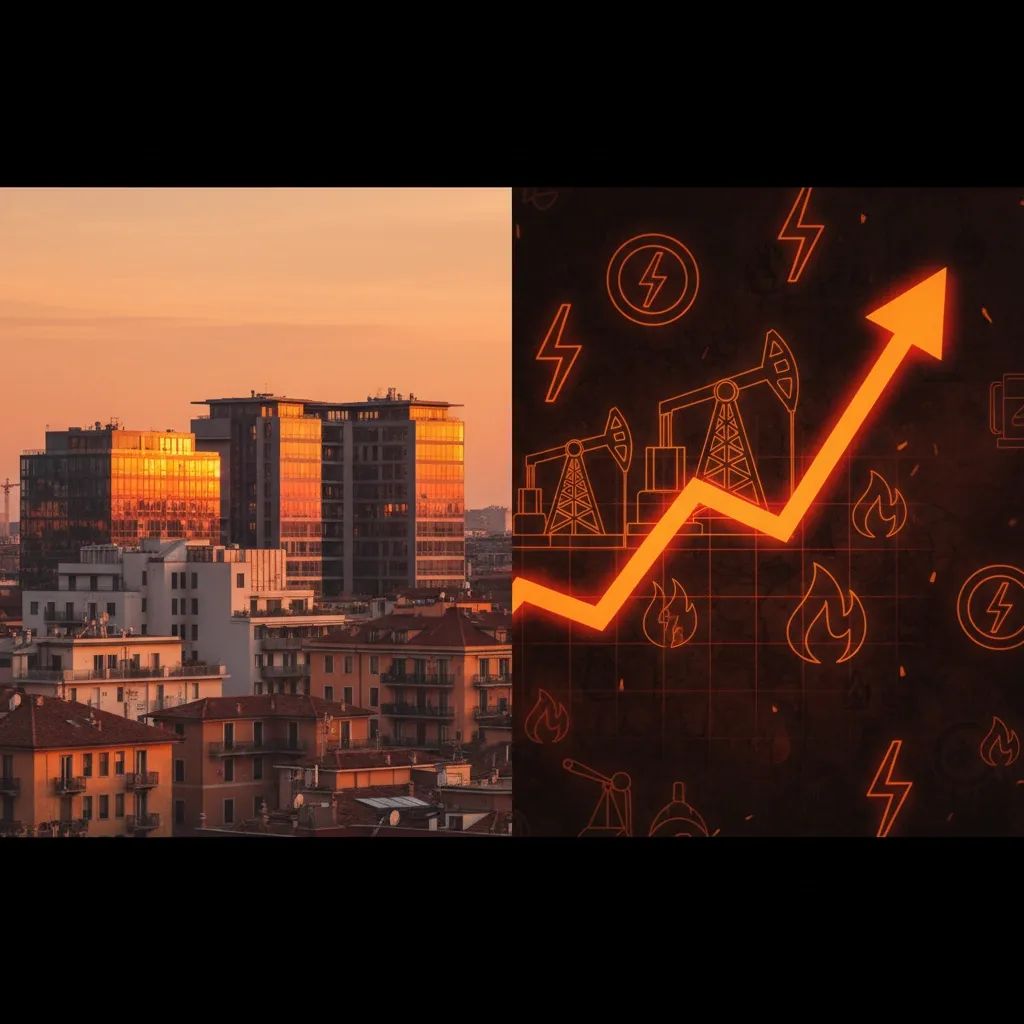
Borsa Italiana shed 1% in Monday trading, dragged down by bank stocks and automakers as geopolitical uncertainty over US-Iran tensions sends energy prices climbing and creates volatility across European markets.
The Market Move and What Drives It
A 1% daily decline is routine market movement, but this particular session reflects real concerns for Italian residents. The underlying driver is a fragile ceasefire between the US and Iran over the Strait of Hormuz—a waterway carrying roughly 21% of the world's oil supply. The truce, brokered on April 8, expires April 22, and current negotiations have stalled. This uncertainty has pushed Brent crude up 6% to $95.85 per barrel and European natural gas up 4.7% to €40.60 per megawatt-hour.
What This Means for Italian Residents
For households and businesses in Italy, Monday's market moves signal one core concern: rising energy costs. A sustained increase in oil and gas prices will translate directly into higher electricity bills, diesel at the pump, and industrial costs within weeks. For families with variable-rate mortgages, any ECB rate hike triggered by inflation concerns could increase monthly payments.
Energy-intensive sectors—metallurgy, chemicals, ceramics, glass, and paper—face margin compression that could slow hiring and investment. Airlines and logistics companies, already burdened by fuel costs, are particularly vulnerable.
Banks and Equities Feel the Pressure
The Italian banking sector bore the brunt of Monday's losses. Intesa Sanpaolo dropped 1.6%, UniCredit fell 1.2%, and BPER Banca lost 0.9%. This reflects mounting concern over rising government bond yields. Italy's 10-year debt yield climbed 6 basis points to 3.72%, increasing borrowing costs for both the state and commercial clients. A higher yield compounds interest expenses on Italy's €2.8 trillion public debt.
Stellantis, the automotive giant, slid 1.4% as European carmakers collectively lost 2.2%. Higher fuel prices typically compress margins for automakers and dampen consumer appetite for vehicles in a market already grappling with elevated financing costs.
Insurance stocks also weakened—Unipol dropped 0.7% and Generali gave up 0.4%. Luxury names retreated modestly: Brunello Cucinelli and Moncler each shed 0.6%, reflecting broader caution on discretionary spending.
Energy Sector Gains Amid Rally
In contrast, Italian energy companies rallied sharply. Eni surged 2.6%, Saipem climbed 1.9%, and Tenaris added 1.3%, driven by rising oil and gas prices. The utilities sector also benefited—A2A rose 0.7%, while Hera and Italgas each gained 0.5%.
The Central Bank Question
The energy shock has scrambled the inflation outlook. Markets are pricing in an ECB rate hike of 25 basis points as early as June, followed by a potential second increase later in the year. The central bank aims to avoid the policy mistakes of 2021-2022, when it underestimated inflation persistence.
Economists now project eurozone inflation will average 2.1% to 2.9% through 2026, largely due to energy shocks. For Italy, the combination of higher rates and elevated energy costs risks a squeeze on both consumer demand and credit availability.
Broader European Losses
The sell-off was not isolated to Milan. The pan-European Stoxx 600 shed 1.1%, Frankfurt's DAX fell 1.6%, Paris lost 1.1%, and Madrid dropped 1.2%, all reflecting the same energy-driven uncertainty.
Looking Ahead
Even if the ceasefire holds past April 22 or a limited agreement is reached, the path to normalization remains unclear. Damage to energy infrastructure in the Gulf region could take months to repair, keeping a risk premium embedded in commodity prices. For Italian savers, business owners, and policymakers, the reality is straightforward: the cost of geopolitical uncertainty is already showing up in energy prices and market volatility. Whether that cost escalates further depends on developments thousands of kilometers away, in a narrow strait that remains the world's most critical energy chokepoint.


