
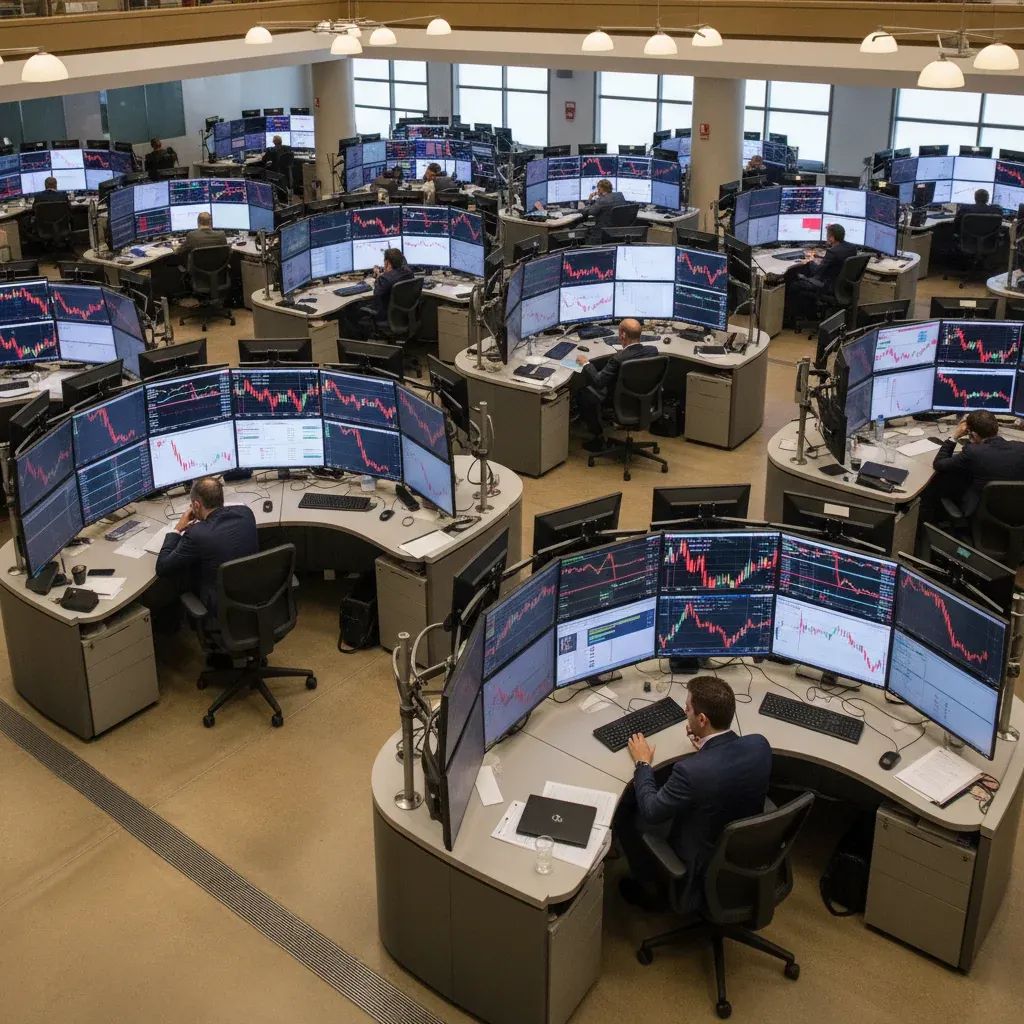
Italy's Milan stock exchange has closed down 0.5%, dragging to a weekly loss of roughly 2.5% as geopolitical uncertainty in the Middle East continues to outweigh optimism on Wall Street. Defense and automotive stocks bore the brunt of the selloff, with Avio plunging 7.15% and Stellantis dropping 4.94%, while broader European indices ended the session in the red despite hopes that US-Iran negotiations might ease tensions.
Why This Matters
• Portfolio impact: If you hold Italian equities or European index funds, the 2.5% weekly decline has likely chipped away at recent gains—especially in defense and auto sectors.
• Energy costs: Elevated oil prices from geopolitical uncertainty are feeding into inflation and affecting household budgets and business margins across Italy.
• Divergence from US markets: While the Nasdaq rallied 0.68% on tech optimism, European bourses ignored the mood—a sign that energy dependency and regional exposure are driving different investor calculus.
Milan's FTSE MIB Weighted Down by Defense and Auto
Piazza Affari's benchmark FTSE MIB index shed 0.5% to close at 47,656 points, with the session's losers clustered in two sectors: defense contractors and carmakers. Aerospace manufacturer Avio led the decline at -7.15%, followed by shipbuilder Fincantieri at -4.6% and defense conglomerate Leonardo at -3%. Luxury automaker Ferrari dropped 2%, while mass-market giant Stellantis fell 4.94%.
Analysts attribute the defense stock weakness to profit-taking after a prolonged rally fueled by heightened military spending expectations. With diplomatic developments unfolding and no immediate escalation in the Iran standoff, traders moved to lock in gains. The auto sector, meanwhile, continues to wrestle with supply chain friction, rising raw material costs, and the capital-intensive transition to electric vehicles—all pressures that remain relevant amid ongoing market uncertainty.
On the positive side, cable manufacturer Prysmian surged 4% and energy services firm Saipem gained 2.7%, buoyed by infrastructure and oil-services tailwinds.
Banking Sector Fails to Attract Buyers
Italy's banking stocks offered little refuge. UniCredit slipped 0.68%, Mediobanca lost 1.13%, and Monte dei Paschi di Siena (MPS) declined 1.12%. Insurer Generali shed 0.6%. Only Banco BPM bucked the trend, edging up 0.4% as speculation persists around potential consolidation moves in the sector.
The subdued performance reflects investor caution over ongoing merger and acquisition uncertainties—the so-called "risiko bancario"—and concerns that geopolitical volatility could impact lending growth and market sentiment.
Continental Selloff: Paris, London, Frankfurt All in the Red
Across Europe, major indices closed lower. Paris fell 0.84%, London dropped 0.75%, and Frankfurt edged down 0.11%. European markets declined as traders reassessed the implications of Middle East tensions for the continent's economy.
The divergence with US markets was notable. While the Dow Jones slipped 0.3%, the Nasdaq climbed 0.68% on strength in tech stocks, particularly those tied to artificial intelligence. European investors, however, remain more sensitive to geopolitical risk and energy market dynamics. US-Iran diplomatic efforts are a key variable investors are watching closely for potential relief in market sentiment.
What This Means for Investors and Savers in Italy
If you hold diversified equity portfolios or pension funds with European exposure, the recent weakness represents a reversal of early-year gains. The 2.5% weekly decline is significant but reflects normal market volatility during periods of geopolitical uncertainty.
For sector-specific exposure, defense stocks may face near-term volatility as traders reassess military spending outlooks. Auto stocks, particularly those like Stellantis with significant capital expenditure programs, remain sensitive to cost pressures in the current environment.
Outlook
European markets are likely to remain sensitive to developments in Middle East negotiations. Any progress in US-Iran talks could ease investor concerns and support a relief rally, particularly in sectors that benefit from improved risk sentiment. Conversely, escalation or breakdown in talks could extend near-term caution.
For residents of Italy, market movements reflect broader uncertainty. The coming weeks will clarify whether diplomatic progress can deliver the kind of stability that supports both financial markets and economic growth in Italy and across Europe.


