
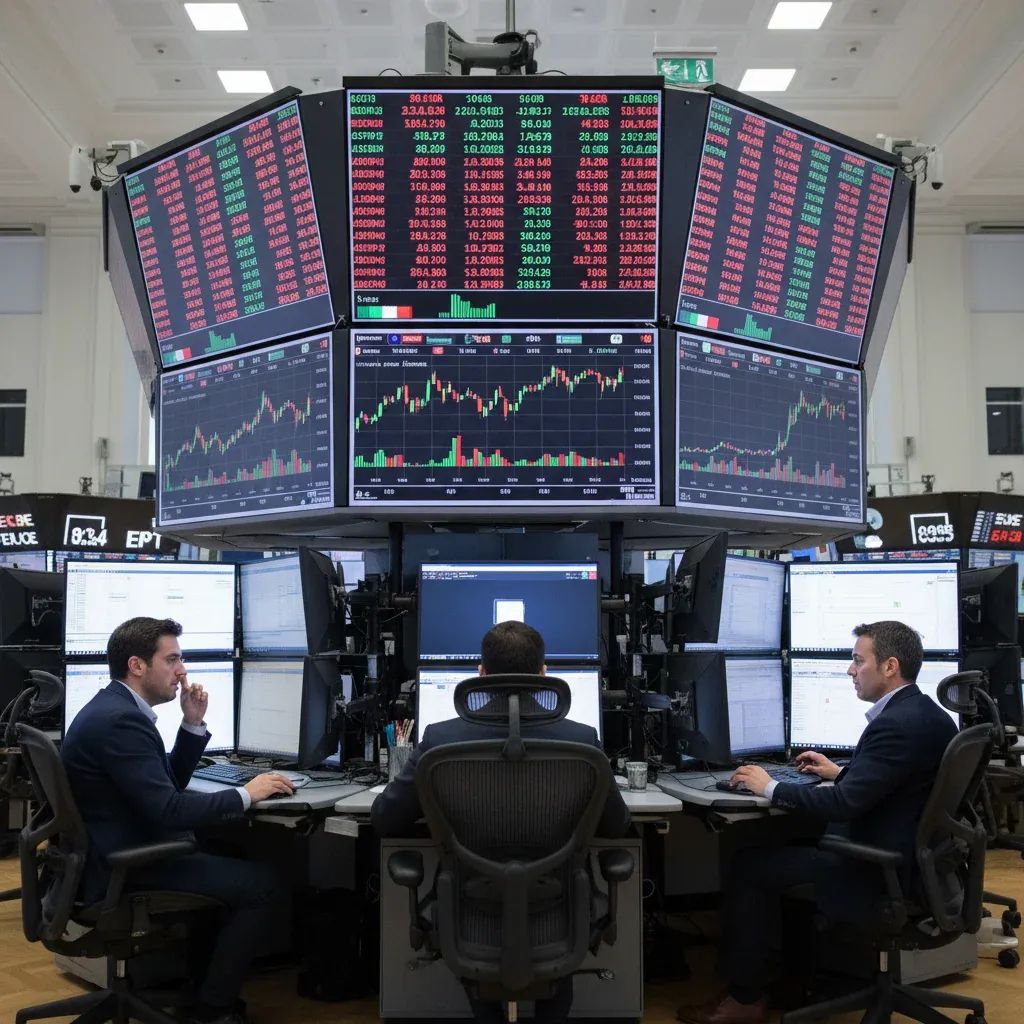
Italy's Milan Stock Exchange has closed at a peak above 53,000 points, ending the session as the top performer in Europe and riding a wave of currency-driven gains and defense sector optimism. The FTSE MIB index climbed 0.79% to settle at 53,102 points, outpacing London, Paris, and Frankfurt as broader European markets struggled to find direction.
Why This Matters:
• Dollar exposure pays off: Italian companies with significant U.S. revenue—including Prysmian, Tenaris, and Diasorin—surged as the euro weakened against the greenback.
• Defense stocks rally hard: Fincantieri (+3.34%), Leonardo (+3.2%), and Avio (+3.3%) benefited from ongoing European rearmament momentum and fresh production contracts.
• Energy sector holds ground: Oil remains below $80 per barrel, but natural gas jumped 3.2% to €41.8 per megawatt-hour, lifting energy shares while mining and leisure lagged.
Dollar Strength Lifts Export Champions
The decisive factor behind Milan's outperformance was the continued appreciation of the U.S. dollar. The divergence between the Federal Reserve's policy stance and the European Central Bank's recent rate increase—a 0.25 percentage point rise to 2.25% in June—has widened the transatlantic policy gap and driven the dollar to strength against the euro.
For Italy-based multinationals, the currency tailwind translated directly into share price gains. Prysmian, the global cable manufacturer with extensive North American operations, surged 4.2%. Oil services firm Tenaris added 1.6%, while diagnostics group Diasorin gained 1%. All three derive a significant portion of revenue in dollars, and the exchange rate shift mechanically inflates euro-denominated earnings when repatriated.
Defense Stocks Extend Rearmament Rally
Italian defense contractors continued their rally, buoyed by geopolitical tension, rising military budgets, and tangible order books. Fincantieri, the state-controlled shipbuilder, jumped 3.34% after announcing fresh naval contracts tied to European and NATO procurement cycles. The company's industrial plan forecasts revenue growth concentrated in the defense and submarine segments, capitalizing on demand from rearmament initiatives and European defense spending commitments.
Leonardo, the aerospace and defense conglomerate, rose 3.2% and remains one of the FTSE MIB's top performers. The group continues to report strength across its helicopters, electronics, and security divisions, with a robust backlog providing multi-year revenue visibility and insulating it from near-term macroeconomic volatility.
Avio, the propulsion specialist, climbed 3.3% in early trading before settling at +1.17% by mid-session. The company announced a fresh contract with MBDA France for solid-propellant motors and aerodynamic surfaces destined for the Aster 30 air defense system, adding to its pipeline of work on the Vega C and Ariane 6 space launch programs. The stock's intraday pullback reflects profit-taking after a strong opening, though the underlying fundamentals remain supportive.
Beyond the core defense trio, Italian postal and logistics group Poste Italiane advanced 2.45%, and engineering contractor Saipem gained 2.85% on the back of higher natural gas prices. Off the main board, construction equipment maker Trevi soared 8.9%.
Broader European Picture: Mixed Signals
Elsewhere in Europe, bourses traded without conviction. London's FTSE 100 slipped 0.16%, weighed down by weakness in consumer discretionary and industrial names. Paris's CAC 40 erased early gains to close nearly flat at +0.01%, while Frankfurt's DAX trimmed its advance to +0.15%. Mining, tourism, and leisure sectors posted the sharpest declines across the continent, reflecting investor caution over higher interest rates and persistent inflation concerns.
The 10-year Italy-Germany sovereign spread widened to 71.4 basis points, underscoring ongoing vigilance around peripheral debt dynamics as central banks adjust policy. Italy's benchmark borrowing cost remains contained by historical standards, but the trajectory of spreads will continue to warrant monitoring.
Commodity and Currency Moves
Brent crude hovered just below $80 per barrel, down 0.3% to $79.60, as markets assessed supply dynamics. Natural gas, by contrast, rebounded 3.2% to €41.8 per megawatt-hour on the Dutch TTF benchmark, reflecting weather-driven demand upticks and lingering geopolitical risk premium.
The euro-dollar exchange rate continues to weaken as policy divergence between the Fed and ECB becomes more pronounced. A weaker euro imports inflation via higher energy and commodity costs—a particular concern for Italy, which remains heavily reliant on imported hydrocarbons.
What This Means for Investors and Residents
For Italy-based equity investors, today's session underscores the importance of sectoral and currency positioning. Companies with dollar revenue streams, robust order books, and exposure to structural spending themes—defense, infrastructure, energy transition—are outperforming domestically focused names. The defense rally appears supported by ongoing European rearmament commitments and international procurement cycles.
Portfolio implications include a tilt toward large-cap exporters and defense contractors, sectors that benefit from both the weak euro and international spending commitments. Conversely, consumer-facing and rate-sensitive names face a tougher environment as central banks maintain tightening cycles, even if the pace varies by region.
For savers and mortgage holders, the current policy environment presents mixed signals. Variable-rate mortgages—common in Italy—will adjust according to ECB policy decisions, which continue to move at a cautious pace relative to international peers.
Outlook: Navigating Cross-Currents
The Milan bourse's resilience today reflects a combination of favorable micro factors—strong corporate execution, contract wins, currency tailwinds—set against a macro backdrop that remains uncertain. The interplay between central bank policies, geopolitical developments, and corporate fundamentals will continue to drive volatility in the months ahead.
Investors should watch for three key variables: the pace of currency movements (euro-dollar dynamics impact earnings for exporters), the trajectory of European defense spending commitments (contract announcements remain market-moving for Italian defense names), and energy price swings (natural gas volatility can quickly shift sentiment in Milan's energy-heavy index).
For now, selective optimism is the order of the day. The 53,000-point milestone is a psychological boost, but breadth across the market remains narrow, with gains concentrated in a handful of themes. Diversification and attention to currency dynamics are prudent strategies as market conditions evolve.


